Skip to content
CUZIPLY
Get a quote
HARDWOOD PLYWOODFurniture · cabinetry · millwork

Hardwood Plywood for Furniture, Cabinetry & Millwork.

Available to order — made to order

Give your cabinetry, furniture and millwork the wood appearance your customers choose. CUZI PLY manufactures hardwood plywood in our own factory, pairing named hardwood faces with poplar, combi, eucalyptus or all-hardwood cores. Choose the face for the finish and the core for panel weight, machining and hardware. Our factory team helps you compare samples, agree the construction and prepare repeat orders with the processing, product documents and export packing you need.

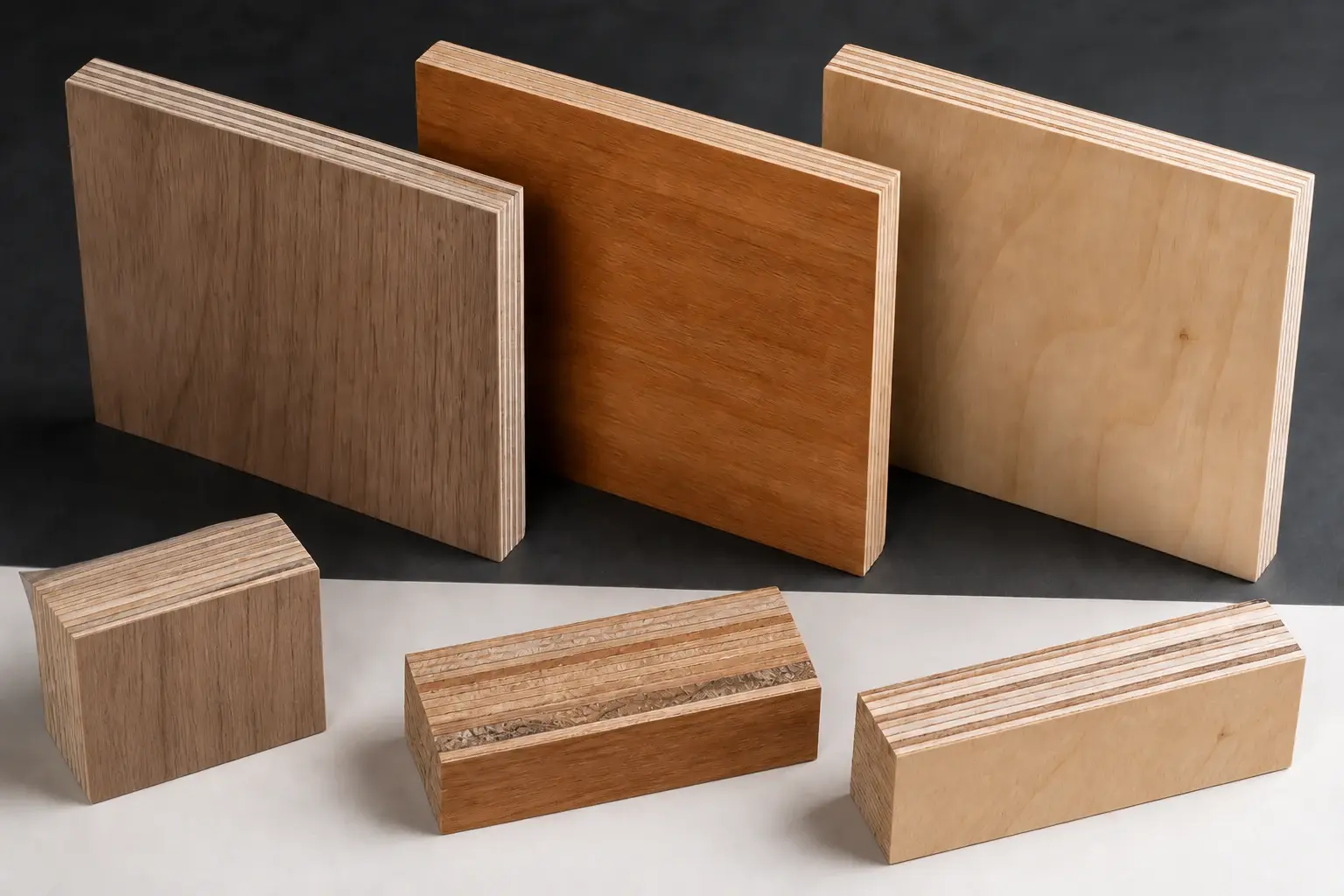
Hardwood plywood with decorative veneer faces and eucalyptus, hardwood-combi and multi-ply cut edges
Hardwood face & core constructionsChoose the hardwood species and face grade for the colour, grain and finish you want. Match the core and thickness to component weight, machining and visible-edge requirements.
Species options
Eucalyptus · meranti/lauan · oak · maple · walnut
Reference
1220×2440×18 mm
Production lead time
7–15 days · Made to order
Density targets
560–650 kg/m³
Moisture targets
8–12% by construction
Thickness
3–40 mm
CONSTRUCTION OPTIONS

Choose the hardwood panel for the furniture you want to make.

Compare everyday furniture, calibrated cabinet panels and selected visible millwork. Choose the face for the appearance, then match the core and processing to your components and budget.

Hardwood-faced utility

Hardwood-Faced Plywood for Everyday Furniture

Get the named wood face you need over a utility core for everyday furniture and concealed parts. Match surface preparation and panel weight to your finish and budget.

Face veneer species
Eucalyptus or agreed mixed hardwood trade name.
Core species
Poplar/mixed hardwood or combi, fully disclosed.
Thickness range
3–25 mm standard production range.
Thickness tolerance
Order target ±0.50 mm after sanding.
Density target
560–590 kg/m³ target for hardwood-faced utility construction.
Use
General furniture, concealed cabinet parts, interior fit-out and routine machining.
Documents
Bond and emission test documents available for the confirmed construction.
FOB China price
USD 320–390/m³2026-08-21 · 1220×2440×18 mm
Discuss this construction
Calibrated combi

Calibrated Hardwood-Combi for Cabinets & CNC

Pair selected wood faces with a calibrated combi core for repeat cutting, routing and drilling. Agree the finished thickness, machined edge and hardware fit around your component.

Face veneer species
Selected eucalyptus, meranti/lauan family or other named hardwood.
Core species
Eucalyptus/hardwood-combi calibrated core.
Thickness range
6–30 mm calibrated production range.
Thickness tolerance
Order target ±0.30–0.50 mm by thickness.
Density target
590–620 kg/m³ target for calibrated hardwood-combi construction.
Use
Repeat cabinetry, millwork, transport interiors and machined components.
Documents
EN/ISO appearance, dimensional, bond and emission documents available by order.
FOB China price
USD 400–500/m³2026-08-21 · 1220×2440×18 mm
Discuss this construction
All-hardwood precision

Selected Hardwood Plywood for Visible Millwork

Choose selected faces and a high-ply or agreed precision core for clear-finished millwork and visible edges. Coordinate grain, colour and repair limits with your machining and finish.

Face veneer species
Project-selected oak, maple, walnut, eucalyptus or tropical hardwood face.
Core species
All-hardwood/eucalyptus high-ply or agreed precision core.
Thickness range
9–40 mm high-density project range with panel properties specified for the chosen thickness.
Thickness tolerance
Project target ±0.30 mm with the measurement method agreed before production.
Density target
620–650 kg/m³ target for selected high-ply hardwood construction.
Use
Visible millwork, furniture with demanding hardware requirements and precision interior parts.
Documents
Destination documents, chain-of-custody claim and project tests confirmed with the approved sample.
FOB China price
USD 510–610/m³2026-08-21 · 1220×2440×18 mm
Discuss this construction
FACE & FINISH

Choose the hardwood face your customer will see.

Oak, maple, walnut, eucalyptus and meranti/lauan options bring different grain and colour to the finished surface. Compare the named face and back species, veneer cut, matching and permitted repairs under your intended stain, paint or clear finish. Then select the core separately for panel weight, machining, visible edges and hardware. CUZI PLY helps you put the appearance and complete construction into one order specification.

Compare the sample with your finished part

  • Visible faces: compare grain, colour and repairs under your finish.
  • Cut edges: check the core, routed profile and edge treatment.
  • Hardware: check hole positions and assembly on a representative component.
MATERIAL SPECIFICATION

State the face, back and core species separately.

Commercial species
Choose the named face and back species for the grain and colour your furniture needs. Both are stated in our quotation.
Species / origin confirmation
Request botanical names, material-source records and destination sourcing documents with your enquiry when needed.
Face / back appearance
Compare veneer cut, matching, grade, natural colour and repairs with a sample under your intended finish.
Core construction
Select poplar, combi, eucalyptus or all-hardwood construction separately from the face; agree the veneer sequence and repair limits.
Actual weight
Compare the measured sheet, pack or finished-component weight for factory handling, hardware and shipment planning.
WOOD VENEER CHOICES

Choose the wood face for your finished furniture.

CUZI PLY manufactures hardwood-faced and decorative veneer plywood in our own factory in Linyi, Shandong, China, with 10 production lines. Choose natural wood faces around the furniture, cabinetry or millwork you want to make, then select the back and plywood core separately.

Red oak & white oak

For oak plywood or oak veneered plywood, specify red oak or white oak rather than an unspecified oak face. Choose the veneer cut, grain direction and colour range with the intended stain or clear finish. Coordinate adjacent doors, end panels and visible edges with the same appearance reference.

Maple

For maple plywood and maple veneered plywood, agree the named maple species, veneer cut and colour selection for your cabinet fronts or furniture surfaces. Check the face under your intended coating, and state whether both sides will be visible. The maple face does not prescribe the internal core.

Walnut

For walnut plywood and walnut veneered plywood, agree the named walnut species, natural colour spread and permitted sapwood. Give the layout for connected furniture fronts or wall panels so veneer sequence, grain direction and replacement-part requirements can be included in the order.

Beech & ash

Choose beech plywood or ash plywood with the face and back grades, veneer cut and finish you need. Specify the visible sides of doors, furniture parts or interior panels. Compare cut edges, hardware and component fit on the selected core and thickness, separately from the surface species.

Sapele & teak

For sapele plywood, sapele veneered plywood or teak faced plywood, name the actual face species and material source. Coordinate grain, veneer joints, finishing and adjacent panels. For humid or wet-service components, specify the complete bond, coatings, cut-edge protection and installation conditions.

Meranti, lauan, bintangor & basswood

For meranti plywood, lauan plywood, bintangor faced plywood or basswood plywood, state the required face appearance and named material. Meranti and lauan are commercial names used for groups of timbers; include the botanical identity or sourcing documents your destination needs. Choose the back and core for your machining, weight and budget.

Hardwood faced plywood has a named hardwood surface over the specified core. All hardwood plywood requires hardwood throughout the agreed veneer construction, not just on the visible face. We state the face, back, internal species and lay-up together so your chosen appearance and machined edges belong to the same panel.

Decorative veneer plywood and natural veneer plywood use real wood faces on a plywood substrate. A woodgrain paper or laminate is a different surface. Compare surface options, prefinished plywood and hardwood and softwood constructions for your supplied finish and core.

COMPLETE SPECIFICATION

Compare the complete panel, not just the wood face.

Use the detailed comparison to choose species, core, dimensions, machining and documents. Start with what you know; our factory team helps complete the specification.

Compare the full hardwood plywood specificationsOpen all 43 fields to compare species, grades, core construction, dimensions, machining and documents.Show comparisonHide comparison
Specification fieldHardwood-faced utilityCalibrated combiAll-hardwood precision
Product constructionDeclared hardwood or eucalyptus face over a disclosed utility core.Selected hardwood face over calibrated eucalyptus/hardwood-combi core.Selected hardwood faces over an all-hardwood/eucalyptus high-ply precision build.
Face veneer speciesEucalyptus or agreed mixed hardwood trade name.Selected eucalyptus, meranti/lauan family or other named hardwood.Project-selected oak, maple, walnut, eucalyptus or tropical hardwood face.
Species and material-source documentsCommercial name recorded; botanical confirmation available where due diligence requires it.CUZI PLY species declaration and approved sample included with the order.Botanical name, origin information and permitted substitutions agreed before production.
Back speciesUtility hardwood or compatible balancing back.Selected hardwood back matched for balance and finish duty.Project-selected back species and appearance range approved with the face.
Face and back appearance gradesBB/CC or CUZI PLY grading convention with actual defect limits.B/BB or custom production grade linked to a physical sample.A/B or project appearance class with colour, cut and repair scope.
Veneer cut / match / colour rangeRotary-cut utility appearance; random matching accepted where concealed.Selected rotary or sliced face with an agreed colour spread.Cut, sequence, matching and finished appearance approved as one reference set.
Face veneer thickness/referenceCommercial face reference measured after sanding.Selected veneer reference with machining/finish allowance.Selected face veneer assessed with the finish sample; material changes agreed before production.
Core speciesPoplar/mixed hardwood or combi, fully disclosed.Eucalyptus/hardwood-combi calibrated core.All-hardwood/eucalyptus high-ply or agreed precision core.
Core constructionUtility calibrated core for general components.Low-gap, repair-controlled production core.Density-controlled, void-limited high-ply construction for demanding joinery.
Lay-up / ply scheduleActual thickness-specific schedule recorded.Balanced schedule fixed after sample approval.High-ply sequence and veneer thickness map recorded for each batch.
Core gap / overlap / repair limitsFull-edge utility reference with permitted repairs.Measurable gap, overlap and repair limits sampled during production.Machined-edge gap and repair limits stated; material substitutions require your agreement.
Bond / exposure requirementMR/interior bond for protected dry use.MR or exterior phenolic bond matched to the component duty.Your specified bond with test conditioning and acceptance defined.
Emission requirementE1 testing available for the confirmed adhesive and construction.E0/E1 or applicable US requirements selected by construction.NAF/ULEF or another Your specified method considered for the confirmed construction.
Density target560–590 kg/m³ target for hardwood-faced utility construction.590–620 kg/m³ target for calibrated hardwood-combi construction.620–650 kg/m³ target for selected high-ply hardwood construction.
Actual sheet/panel weightReference sheet weighed and recorded with the quoted density.18 mm sample mass recorded for hardware and shipment planning.Actual parent-panel and component weights used for handling and payload calculations.
Mechanical / component test requirementComponent testing available when the end use requires it.Construction-specific bending or panel test agreed by end use.Your specified test plan tied to species, lay-up, thickness and sampling.
Fastener / screw-holding evaluationFastener and pilot-hole coupon made from the ordered construction.Edge distance, pilot hole, hardware and repeated insertion trial.Joint assembly or pull-out test completed to the buyer's stated method.
Edge machining / toolingCarbide tooling and supported cutting method reviewed.Edge routing, feed, tool life and dust extraction approved on a sample.Production tooling settings and visible-edge quality approved with the first production sample.
Surface sandingCommercial sanded surface.Calibrated fine sanding for paint, veneer or clear-seal trial.Precision sanding and face protection matched to selected species.
Finish / prefinish requirementStain or paint compatibility checked before production.Finish sample covers colour, pore, adhesive and sealer response.Prefinish or premium clear/stain sample retained with the approved face set.
Regular sheet sizesCompare the three regular sizes. Plan the sheet format with thickness, cutting yield and packing.
Custom sheet sizesCompare the five made-to-order sizes. Plan the sheet format with thickness, cutting yield and packing.
Thickness range3–25 mm standard production range.6–30 mm calibrated production range.9–40 mm high-density project range with panel properties specified for the chosen thickness.
Thickness toleranceOrder target ±0.50 mm after sanding.Order target ±0.30–0.50 mm by thickness.Project target ±0.30 mm with the measurement method agreed before production.
Length / width tolerancePanel size tolerance agreed with trim basis.EN 315-aligned or buyer-specific method recorded.Parent panel and machined component tolerances separated by drawing datum.
Squareness / edge straightnessAgreed panel dimensions measured clear of handling damage.Inspection includes squareness and edge straightness.Machining datum and assembly-fixture verification complete the geometry check.
FlatnessFlat on aligned supports with the flatness inspection method agreed.Straightedge/support method and deviation target stated in the inspection plan.Part fixture verifies panel and component flatness before production.
Moisture target10–12% target for routine furniture and fit-out components.9–11% target for calibrated machining and finishing.8–10% target for selected high-ply components and controlled finishing.
Edge treatmentRaw sanded edge; optional compatible protection.Machined edge preparation and optional seal by end use.Visible or high-duty edge profile, sealing and damage limits controlled.
Cut / CNC optionsStraight cut or basic CNC after a tooling trial.Nested CNC with agreed tooling, support and edge-quality sample.Complex profiles produced from an approved machined sample and current drawing.
Drilling / fixing optionsPilot hole and fixing requirements defined by the hardware.Hole position, edge distance and screw trial checked.Hardware joint, repeat installation and component-duty inspection specified.
Face and core reference sampleSpecies/colour face and full-edge core sample.Selected face/core master retained for repeat orders.Sequenced face, dense-core edge and finished appearance master set retained.
Machined reference sampleOne routed and drilled coupon.Representative edge, hole and fastener coupon from the approved build.Complete component or joint first production sample approved before batch production.
Inspection planSpecies, face, edge, moisture and dimensions sampled.Density, weight, core, machining and bond checked by batch.Inspection covers species documents, component results and approved changes.
ApplicationsGeneral furniture and concealed fit-out substrates.Recurring millwork, transport interiors and industrial components.Visible millwork, hardware-intensive furniture and precision fit-out parts.
Target marketsMiddle East, Latin America and general distributors.Australia, Central Asia and specification-led component buyers.Projects requiring selected species, visible finishes and additional documents.
Product standards and test documentsBond and emission tests available for the confirmed construction.EN/ISO appearance, dimensions, bond and emission documents available on request.US/EU market, chain-of-custody and project tests arranged for the approved construction.
PackagingDry flat pallet with aligned supports.Moisture barrier, edge guards and payload-aware pack separation.Face separators, machined-part protection and high-density handling plan.
MOQOne production lot.One export pack or agreed repeat-order quantity.MOQ confirmed after species, machining and sample approval.
Loading quantity / payload calculationActual density, dimensions and legal payload determine quantity.Weighed sheet and pack geometry used for the loading plan.High-density components, supports and destination limits determine loading quantity.
Lead time7–15 days7–15 days7–15 days
Quotation unitUSD/m³.USD/m³; defined machining quoted separately.USD/m³ or finished-component basis with the conversion stated.
Batch identification and agreed material changesSpecies and core substitutions require written acceptance.Batch number links species, density, sample and inspection results.Species, core or process changes require buyer approval before production.
APPEARANCE GRADES

Choose the appearance your finished furniture needs.

  • BB/CC
  • B/BB
  • A/B

Compare grain, colour, repairs and sanding under the paint, stain or clear finish you intend to use. Keep the agreed face and back sample as your repeat-order reference.

Hardwood-faced utilityBB/CC or agreed utility appearance

Grading convention
Our quotation names the grading convention and lists the permitted face and back defects.
Face / back construction
Declared hardwood or eucalyptus face over a separately declared back and utility core.
Appearance & repair limits
State allowed knots, splits, patches, repairs, colour variation, sanding marks and exposed-edge defects.
Reference sample
Compare a face, back and full-edge sample under the paint, laminate or finish you intend to use.
Species details
Face, back and core species are stated separately from the appearance grade.
Finish / use
Concealed furniture parts, painted surfaces and everyday furniture with agreed surface preparation.
Repeat-order reference
Include the grading convention, defect limits and sample reference in the quotation.

Calibrated combiB/BB or agreed production appearance

Grading convention
The selected grading convention is paired with written defect limits and a physical master sample.
Face / back construction
Selected hardwood face and coordinated back over a calibrated hardwood-combi construction.
Appearance & repair limits
Define knots, repairs, veneer joints, colour range, sanding, telegraphing and machined-edge appearance.
Reference sample
Keep the agreed face, back and cut-edge sample with your finish reference for repeat orders.
Species details
Species, veneer cut and face/back position are controlled independently of the grade shorthand.
Finish / use
Visible cabinet and millwork parts with the selected veneer, coating or clear finish.
Repeat-order reference
Include the grading convention, defect limits and approved sample in repeat-order specifications.

All-hardwood precisionA/B or project appearance class

Grading convention
The project appearance class names the grading convention, selected species and accepted natural characteristics.
Face / back construction
Project-selected face and coordinated back over the approved all-hardwood or high-ply construction.
Appearance & repair limits
State permitted natural character, repairs, splices, colour sequencing, veneer cut, sanding and exposed-edge quality.
Reference sample
Compare a matched face sample set and a finished production component where appearance is critical.
Species details
Declared species, origin requirements and core construction remain part of the order specification.
Finish / use
Visible millwork and precision components with agreed finish and appearance limits for replacement parts.
Repeat-order reference
Include the appearance class, permitted repairs, finish sample and replacement-part requirements in the quotation.
YOUR COMPONENT & FINISH

Plan the face, core and component together.

  1. Face & finish

    Which wood species, grain, colour and finish will your customer see?

    Compare the face and back under your intended coating, with agreed repair limits.
  2. Core & edge

    Will the edges be visible, banded or machined for hardware?

    Choose the core around panel weight, routed edges and assembly requirements.
  3. Machining & hardware

    Which profiles, holes, fasteners and joints need accurate fit?

    Check the selected construction on a representative component with your intended hardware.
  4. Repeat orders

    Which appearance, species and component details need to stay consistent?

    Keep the agreed construction and finish sample as the reference for future production.
VENEER MATCHING

Plan grain and colour across adjoining panels.

Give us the visible-face layout, veneer cut and matching method for cabinet doors, furniture fronts or a continuous panel run. Include the panel sequence, grain direction, joint positions and finish reference so the supplied sheets work together after cutting.

Book-matched veneer

Consecutive leaves are turned over in pairs to create a mirrored grain arrangement. Specify where the pattern centres and how it continues across panels. Check the pair under your intended finish and lighting before setting the colour and appearance range.

Slip-matched veneer

Consecutive leaves are placed side by side in the same orientation for a repeating grain arrangement. State the leaf sequence, panel direction and cut layout. Keep the intended veneer joints aligned with the doors, panels or components you will assemble.

Reconstituted wood veneer

Reconstituted veneer plywood uses real wood recombined and re-sliced to produce a selected grain and colour pattern. Specify the veneer pattern reference and actual source species. A walnut-look pattern does not mean natural walnut timber, and reconstituted veneer is not printed woodgrain paper.

Agree the face-veneer thickness, sanding allowance, balancing back and supplied finish. Natural veneer varies between logs, so agree the colour range and matching reference for repeat orders and replacement parts. Link the panel sequence and part numbers to cut sizes and CNC components so nesting preserves the face layout.

OUR VENEER PLYWOOD MANUFACTURE

Order the veneer face and the complete panel from our factory.

We manufacture natural and reconstituted veneer plywood, pairing selected wood faces with the plywood construction your production needs. Our quotation names the supplied veneer, core, bonding, processing and finish rather than treating the face name as the entire specification.

Select & match the faces

We agree the natural species or reconstituted pattern, source information, veneer cut, thickness and face/back appearance. For matched work, your layout sets the grain direction, leaf arrangement and panel sequence.

Build the specified panel

We pair the selected veneer with the agreed poplar, combi, eucalyptus or all-hardwood construction. Include the balancing back, adhesive, moisture and product-document requirements for your component and service conditions.

Prepare, check & protect

We prepare the ordered surface and dimensions, check the agreed appearance and component measurements, and protect the faces for packing. Matched-panel identification helps keep the order together from our factory to your workshop.

Order full sheets or the agreed cut-to-size parts, routed and drilled components or edge-banded parts. Specify finished-part tolerances separately from sheet calibration. We list the supplied operations in your quotation and prepare the agreed plywood parts for your assembly and installation process.

HARDWARE & JOINTS

Check the panel with your intended hardware and joint.

Share the assembly drawing and intended hardware with our factory team. We can help match the core, thickness and machining to your joint requirements.

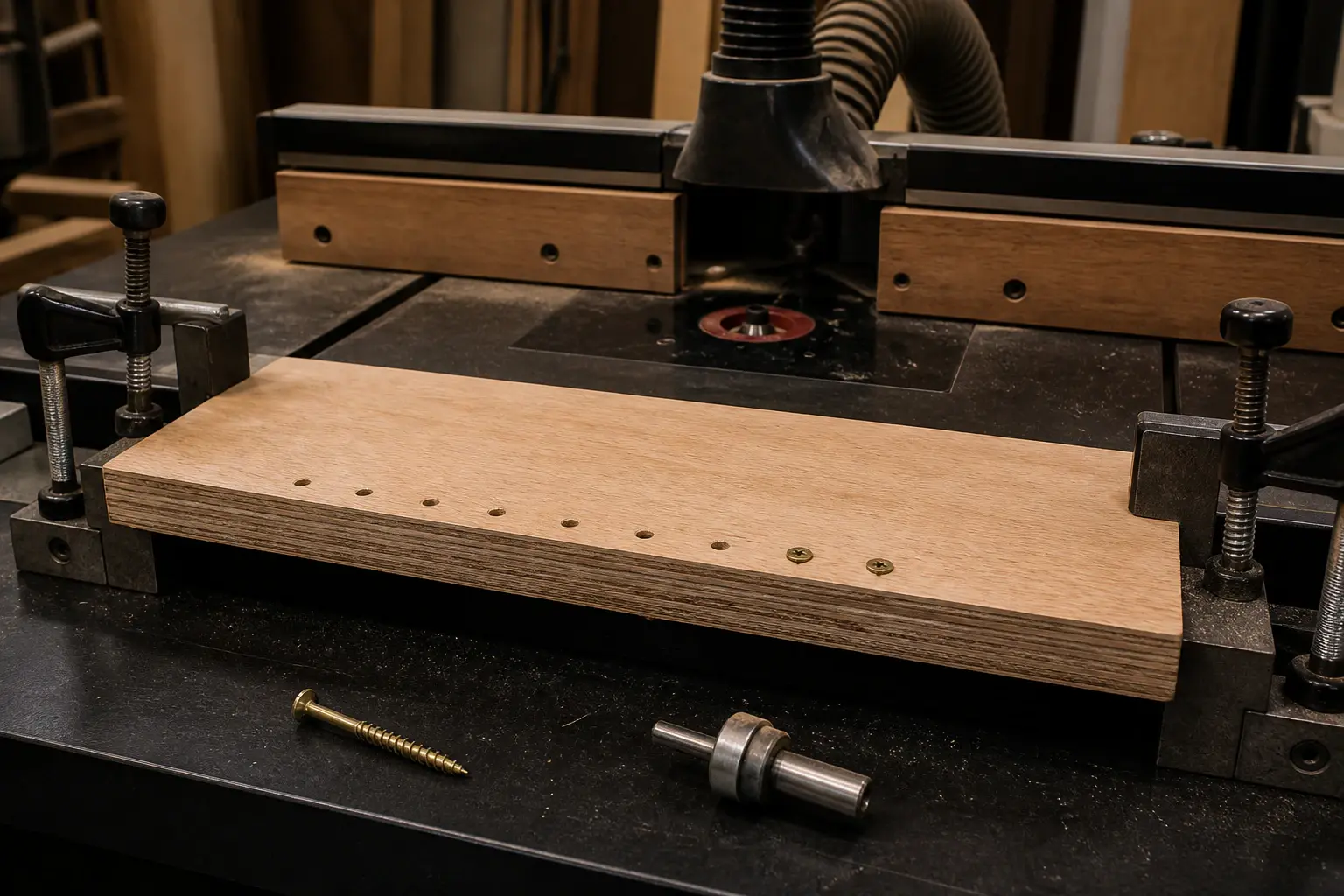
Hardwood plywood held on a routing table with pilot holes and screws at the cut edge
Pilot holes & joint checksPlan pilot holes, edge distances and fasteners for the selected core and thickness. Check the assembled joint for fit and splitting before repeat production.
PANEL WEIGHT & COMPONENTS

Plan panel weight around your production and installation.

Our constructions span density targets of 560–650 kg/m³ and moisture targets of 8–12%, with a separate range for each option. Compare an actual sheet or component sample for handling, machining supports, hardware and packing. Tell us where the panel will be used and finished so our factory team can help agree the construction, moisture and measurement requirements.

Panel weight & handling

Compare the chosen core and actual sheet weight with your machining supports, handling equipment and installation.

Weigh a representative sheet or component and plan the pack and loading quantity.

Hardware & joints

Pilot holes, edge distance, fasteners and core continuity affect the assembled joint.

Check the intended hardware on a sample of the selected construction and thickness.

Face & finish

Grain, veneer cut, natural colour and repairs shape the visible finish your customer sees.

Compare a matched face set and finished sample before agreeing the appearance.

Bond & exposure

Select the bond with the complete construction for the dry, humid or wet-service conditions you describe.

Agree the adhesive, applicable testing, coating and edge protection for the intended use.

For cabinet fronts, furniture interiors or millwork exposed to splashes and cleaning, coordinate the bond, coating, balancing back, cut-edge treatment, holes and joints with ventilation and support. A decorative hardwood face does not by itself specify outdoor durability or an assembled joint rating. Plan cabinet and kitchen components, doors and interior panels or shopfitting parts around the complete construction and installed conditions.

WEIGHT PLANNING

Compare handling weight on the same sheet size.

For a 1220×2440×18 mm sheet, the calculated volume is 0.0535824 m³. Applying each construction's density target gives the estimates below; weigh the actual sheet or component before setting handling equipment, hardware or shipment quantities.

Hardwood-faced utility
30.0–31.6 kgCalculated at 560–590 kg/m³
Calibrated combi
31.6–33.2 kgCalculated at 590–620 kg/m³
All-hardwood precision
33.2–34.8 kgCalculated at 620–650 kg/m³

Use these calculated weight estimates for initial handling and packing plans. Confirm the actual weight and joint performance with your selected construction, fasteners and component.

SIZES & FORMATS

Plan sheet sizes around your cutting layout and components.

Place your parts with the face grain, matching sequence, routed edges and trim allowance in mind. Specify sheet dimensions separately from finished-part dimensions.

Regular sheet sizes

  • 1220×2440 mm
  • 1250×2500 mm
  • 1525×3050 mm

Made-to-order sheet sizes

  • 1250×3050 mm
  • 1250×3660 mm
  • 2100×2800 mm
  • 1830×3660 mm
  • 1250×3800 mm

Thickness ranges are 3–25 mm for hardwood-faced utility, 6–30 mm for calibrated combi and 9–40 mm for selected high-ply construction. Choose thickness and tolerance around the machined part, fixing and finish.

Custom dimensions are a manufacturing choice, with product documents matched to the construction and use. Send your cutting layout and quantity mix; we agree full-sheet support, face protection, pack dimensions and loading for larger formats.

FOB China price

FOB China price

Reference panel: 1220×2440×18 mm hardwood plywood, one full-container basis, USD/m³.

Reference date: 2026-08-21. FOB China prices are based on a full-container order. Your selected construction sets the minimum order; see the ordering conditions above. We confirm current panel and processing prices, delivery terms and the validity period with your quotation.

USD 320–390/m³

Declared hardwood face, disclosed utility core and commercial tolerance.

USD 400–500/m³

Selected species, calibrated combi core and machining/fastener checks.

USD 510–610/m³

Selected high-ply hardwood construction, controlled density, appearance and inspection requirements.

FOB China prices use the same 1220×2440×18 mm panel and USD/m³ unit. One sheet equals 1.220 × 2.440 × 0.018 = 0.05358 m³; multiply the cubic-metre range by 0.05358 for a sheet reference, then confirm species, core, machining, quantity, packing, trade term and destination in the quotation.

Quotation variables: Face and back species, grade, core construction, density, weight, bond, emission requirement, machining, fastener checks, size mix, quantity, packing and destination.

Compare the same face and back species, veneer cut, core, thickness, finish, machining and delivery terms. Include cutting yield and the finished-component cost when deciding between constructions. Compare plywood price bases or plan your order from our factory.

FOB China price USD 320–610/m³

MACHINING & FINISH

Check the plywood with the hardware and finish you will use.

Share your routed profiles, hole positions, pilot holes, edge distances and intended fasteners. A representative component lets you compare cut edges, drilling, assembled joints and the finish on the selected core and thickness. We help agree the machining and inspection requirements for repeat orders; proposed material or process changes are discussed with you before proceeding.

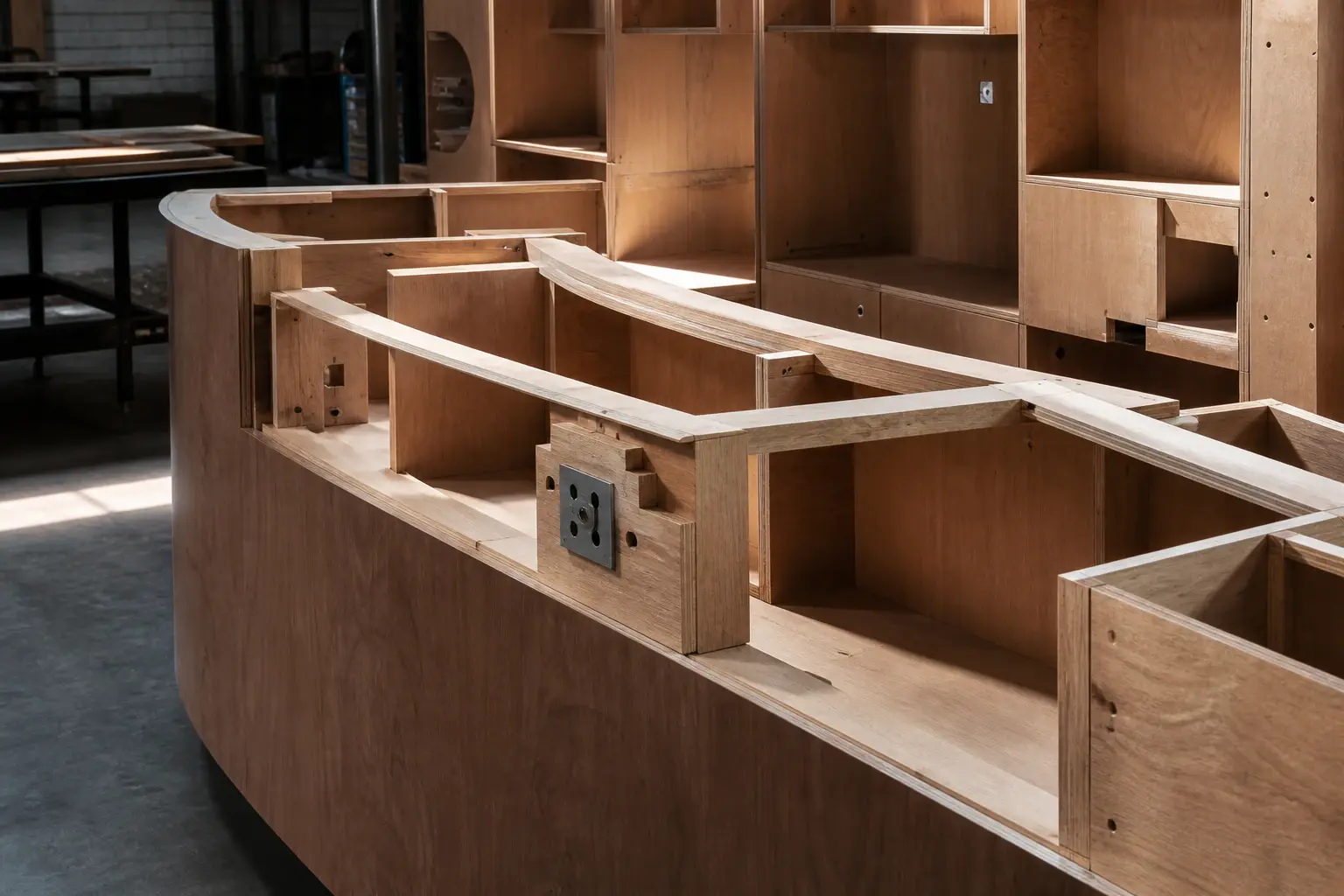
Partially assembled hardwood plywood millwork showing curved edges, joints and hardware blocks
Hardwood millwork componentsSpecify routed profiles, visible veneer faces and edge finishing together. Include hole positions and hardware requirements so the machined parts fit your intended assembly.
PRODUCT DOCUMENTS & PRODUCTION

Review the reports your project and destination need.

Tell us the application and required standards. Our factory team helps match the construction with available appearance, dimensional, bond, emission, sourcing and shipment documents.

PFS Corporation CARB hardwood plywood certificate for LINYI CUZI PLYWOOD CO.,LTD
Certificate of Conformance · JPG · 783 KB
PFS CORPORATION · MANUFACTURER CERTIFICATION

CARB Hardwood Plywood Certificate

Read the PFS Certificate of Conformance for Phase 1 & 2 hardwood plywood with a veneer core (HWPW-VC), issued to LINYI CUZI PLYWOOD CO.,LTD.

Product coverage
Phase 1 & 2 · HWPW-VC
Issued / stated validity
12 March 2026 · one year from issue

For furniture and cabinetry orders, share the emission requirement and destination with us. We confirm the supplied product, required labels and purchase-order documents before production.

ISO 2426-2 hardwood appearance

Available on request

Appearance classification is paired with the stated species, grading convention and physical sample.

Use the appearance class to agree natural features and manufacturing defects on each hardwood face. State the veneer cut, colour, matching and permitted repairs alongside your finish reference.

EN 314-1 / EN 314-2 bond testing

Available on request

Test method and requirement apply to the confirmed adhesive and panel construction.

Specify the bond class and test conditioning for the panel's dry or wet-service duty. Request the result for the selected adhesive and construction.

EN 315 dimensional tolerances

Available on request

Panel dimensions, squareness and edge straightness are measured by the stated method.

Agree sheet tolerances and the measurement method. List finished-part tolerances separately when you need factory cutting, routing or drilling.

EN 636 use conditions

Order-specific

Selected according to the intended dry, humid or exterior use when applicable.

Match the selected plywood to dry, humid or exterior conditions. For load-bearing parts, include the required structural properties and joint design.

EN 717-1 / E1

Available on request

Chamber testing applies to the confirmed adhesive and panel construction.

Request the chamber-test result and panel identity for the emission requirement in your indoor furniture or millwork specification.

TSCA Title VI / CARB

For applicable US orders

Producer, third-party certifier, labelling and records are confirmed for the regulated construction.

For applicable US supply, request the TSCA Title VI certification details, third-party certifier, required labels and shipment records. Agree any CARB requirement with the order.

FSC / PEFC transaction claim

Available on request

Available for eligible materials when the complete chain-of-custody transaction is maintained.

For a certified-material order, state the FSC or PEFC claim you need. Match the eligible material and certificate scope with the claim on the sales documents.

Australia importer due diligence

Importer confirmation required

Species and supply-chain information supports the importer's due-diligence process.

For Australian supply, agree the species, origin and supply-chain information your importer needs for timber due diligence.

EU import and trade review

Importer/customs confirmation required

Product classification, origin, producer and applicable trade measures are confirmed for the shipment.

For European supply, agree the product description, origin and shipment documents with your importer or customs adviser before ordering.

If your North American specification uses ANSI/HPVA HP-1 face and back grades, give us the required designation rather than converting BB/CC, B/BB or A/B by shorthand alone. Read DHA's hardwood and decorative plywood standard, ISO's hardwood surface-appearance scope and EPA's US emission requirements alongside the product documents for your order.

  1. Discuss your furniture, millwork and finish
  2. Choose the face, back and complete core
  3. Compare face, full-edge and finish samples
  4. Agree machining, hardware and component measurements
  5. Check moisture, weight and the first production component
  6. Inspect and protect the panels or parts for export
PLAN YOUR ORDER

Order the face your customer sees and the panel your workshop needs.

Start with the furniture or millwork application, sheet or part dimensions, thickness, quantity and destination. We help complete the species, core, finishing and machining details for your factory quotation.

Cabinet doors & visible furniture

Name the face and back species, visible sides, veneer cut and matching. State whether you need raw panels, finish preparation or prefinished supply. Compare the stain, paint or clear finish on the selected face, including colour, repairs and edge treatment.

CNC parts & hardware

Start with your component list and quantities. Add finished-part dimensions, grain direction, profiles, holes, visible edges and hardware details when known. Before machining, we agree the drawing, tolerances, pilot holes and edge distances, then check a component with your intended fasteners or hinges.

Millwork & repeat stock orders

List sheet quantities by species, construction, size and thickness. For matched panels or replacement parts, agree the colour spread, veneer sequence, finishing reference and permitted natural features. Keep those details with the order and pack labels for repeat production.

For a sample request, tell us whether you want to check the wood face, cut edge, finish or hardware fit, plus the thickness and delivery country. We confirm sample and courier costs, preparation and dispatch. Your quote sets out the order quantity, production schedule, payment, packing and delivery terms; production time is separate from shipping transit.

BUYER QUESTIONS

Hardwood Plywood

Questions before you order.

What is Hardwood Plywood used for?

Our hardwood plywood range serves furniture, cabinet parts, millwork, interior fit-out, transport interiors and machined components. Choose the face for the visible surface and planned finish, then match the core, thickness and calibration to machining, hardware and handling. Tell our factory team what you want to make; we help compare constructions and prepare the panel and processing for your order.

Does a hardwood face mean every core ply is hardwood?

The face and core are specified separately. A hardwood face can cover a poplar, mixed-hardwood, combi or eucalyptus core. Our selected precision options include all-hardwood/eucalyptus high-ply or an agreed precision construction. We name the face, back and core in the quotation so you can compare the complete panel, weight, machined edge and cost.

Can I order oak, maple, walnut, eucalyptus or meranti/lauan faces?

Discuss your preferred species with our factory team. We supply eucalyptus, meranti/lauan-family and other named hardwood faces, with project-selected oak, maple, walnut or tropical hardwood for the selected construction. Agree the veneer cut, matching, natural colour range, back species and finish with a sample. If botanical names or material-source documents are needed, include those requirements with the enquiry.

How should I choose BB/CC, B/BB or A/B appearance grades?

Compare BB/CC or an agreed utility appearance for concealed and everyday furniture parts; B/BB or an agreed production appearance for repeat cabinet and millwork work; and A/B or a project appearance class for selected visible surfaces. We pair the stated grading convention with permitted knots, repairs, veneer joints, colour and sanding. A face, back and finished sample helps agree the appearance your order needs.

Which sizes, thicknesses and tolerances can I order?

Regular sheet sizes: 1220×2440, 1250×2500, 1525×3050 mm. Available on request: 1250×3050, 1250×3660, 2100×2800, 1830×3660, 1250×3800 mm. Our thickness ranges are 3–25 mm for hardwood-faced utility, 6–30 mm for calibrated combi and 9–40 mm for selected high-ply construction. Thickness targets are ±0.50 mm, ±0.30–0.50 mm and ±0.30 mm respectively, subject to the agreed sanding, thickness and measurement requirements. State sheet and finished-part dimensions separately. Custom sizing is a manufacturing choice; product documents follow the applicable construction and intended use.

Can you CNC-cut, route or drill panels for my furniture components?

Yes. We supply cut-to-size panels and agreed CNC nesting, routed profiles, drilling and edge preparation. Start with your component, thickness and quantity; share a drawing and hardware details if available. Before machining, we confirm the drawing, core, calibration and finished-part tolerances. A machined part or joint lets you check pilot holes, edge distances and fastening with your actual hardware. Machining costs are stated separately in the quotation where applicable.

Can Hardwood Plywood be stained, painted, clear-finished or prefinished?

Yes. Compare the selected wood species, veneer cut, colour and permitted repairs under your planned coating. A finished sample helps agree stain colour, sanding, pore appearance and sealer response. Tell us which faces and edges remain visible, and whether you need raw panels, finish preparation or a prefinish option. The quotation states the supplied finish and face protection.

How should I compare panel density, moisture and weight?

Density targets are 560–590 kg/m³ for hardwood-faced utility, 590–620 kg/m³ for calibrated combi and 620–650 kg/m³ for selected high-ply construction. Moisture targets are 10–12%, 9–11% and 8–10% respectively. Use the actual sheet or component weight to plan handling, hardware and export loading. We confirm the targets and measurements for your chosen face, core, thickness and end use; density alone does not establish a joint or structural rating.

Which bond, emission and sourcing documents should I request?

Tell us the destination, dry or wet-service conditions and any project standard or emission limit. We help match the selected panel with applicable appearance, dimensional, bond and emission documents, including the specified EN/ISO or US TSCA Title VI/CARB requirements. Request any FSC or PEFC transaction claim with your enquiry so eligibility can be confirmed for the order. For load-bearing use or demanding joints, include the required panel properties and component testing.

Can I request a wood-face, cut-edge or finished component sample?

Yes. Send the intended use, preferred wood species, thickness, core or finish, and delivery country. We confirm sample availability, any sample and courier costs, and dispatch arrangements. Compare a face and full-edge sample for appearance and construction, or a routed, drilled, assembled or finished component for the details you plan to repeat in production.

What are the FOB China prices and minimum order quantities?

The FOB China prices are USD 320–390/m³ for hardwood-faced utility, USD 400–500/m³ for calibrated hardwood-combi and USD 510–610/m³ for selected high-ply hardwood construction. The basis is 1220×2440×18 mm and one full container. Our order quantities are one production lot after face and core sample agreement for utility panels, one export pack or an agreed repeat-order quantity for calibrated panels, and a quantity confirmed after species, machining, finish and document requirements are agreed for precision work. Ask for a current quote for your actual construction, quantity and delivery terms.

What do you need for a quote, and how long does production take?

Start with the application, sheet size, thickness, quantity and destination. Add your face or core preference, machining, hardware, finish, required documents and target date when known; our factory team helps complete the details. We manufacture to your order with a production lead time of 7–15 days. We confirm production, packing, payment and delivery terms with your quotation. Shipping transit time is separate.

What should I specify for red oak, white oak, maple or walnut plywood?

Name the actual face and back species, veneer cut, colour range and matching method, and identify every visible side of your furniture or millwork. Specify the plywood core separately, including its species, construction and required machined-edge quality. Our factory manufactures named hardwood-faced panels, including beech, ash, sapele, teak, meranti/lauan, bintangor and basswood options. The face name does not automatically mean the whole core uses that species. Your quotation records the supplied combination, sizes, finish and sourcing documents.

How do book-matched and slip-matched plywood veneers differ?

Book matching turns consecutive leaves over in pairs for a mirrored pattern. Slip matching places successive leaves side by side in the same orientation for a repeating pattern. Give the visible-panel layout, grain direction, matching method, veneer-joint positions and finish reference. Include the sequence across adjoining doors or panels and link it to cut-part numbers so nesting and assembly preserve the appearance.

Is reconstituted veneer plywood the same as woodgrain paper?

No. Reconstituted veneer is real wood recombined into a controlled pattern and re-sliced into a veneer face. Printed woodgrain paper is a different surface. Specify the pattern reference, actual raw species, face thickness, balancing back, core, adhesive and finish. An oak-look or walnut-look pattern does not establish natural oak or walnut species. CUZI PLY manufactures both natural and reconstituted veneer plywood with the supplied construction stated in your order.

Can I order 4×8 sheets or 3/4-inch hardwood plywood?

Yes. Send inch or millimetre requirements and the finished thickness your joints and hardware need. Exact 3/4 inch is 19.05 mm, while 18 mm is a different metric thickness; exact 4×8 ft is 1219.2×2438.4 mm. Your quotation confirms the actual sheet dimensions and thickness tolerance after calibration or applied finishes. Include cut-part sizes, grain direction, rebates, edge banding and hardware clearances for your components.

Talk directly to our factory

Let’s plan your plywood order.

Tell us what you’re making, the quantity and destination. Our team will help you choose a panel and prepare a quote.