Plywood vs OSB: choose for the job, not the name.
For sheathing and subfloors, compare structural-rated plywood and OSB against the same project requirements. Either can be a practical choice when its grade, supports, fixing and moisture conditions suit the assembly.
For crates, fitted parts and visible interiors, look beyond the raw sheet price: compare the face, cut edge, joints, finish and usable parts you will get. CUZI PLY manufactures plywood with the construction and processing selected for that job.
Veneers or strands: the grade still matters.
Plywood uses layers of wood veneer; oriented strand board uses layers of wood strands. Neither material name alone defines the grade, moisture suitability or performance of the panel you will buy.
On a phone, swipe across the table to compare both materials.
| Your decision | Plywood | OSB |
|---|---|---|
| Construction | Wood veneers bonded in layers. Species, veneer arrangement, core quality and face/back grade define the offered panel. | Oriented wood strands bonded in layers. Select the product grade and declared properties, not only the strand appearance. |
| Structural use | A structural plywood grade can suit sheathing, subfloors and other designed uses. A furniture or packing grade is not automatically a structural substitute. | A suitable structural OSB grade can serve the same types of assembly. Check the actual rating, thickness, orientation and project requirements. |
| Moisture | Select the bond and construction for the conditions, with protection for edges, joints and penetrations. | Select the grade for the conditions. Moisture-resistant OSB is not waterproof; plan storage, temporary exposure and the protected assembly. |
| Visible face and edge | Choose natural veneer faces, sanding, overlays or a selected layered edge to suit the finish. | A visible strand surface may suit the design. Confirm the surface preparation, coating or covering and the cut edge. |
| Supports and fixings | Specify support spacing, load direction, supported joints and the fastening schedule for the panel and assembly. | Specify the same assembly details. Do not carry a fixing or span arrangement across to another product without checking it. |
| Weight and handling | Depend on the core, finished thickness and format. Use the offered density or sheet mass, not a generic plywood value. | Depend on the product, thickness and format. Compare same-size panels and include coatings, hardware and packaging. |
| Total cost | Compare usable parts, machining, finishing, installation, packing and delivery as well as the board price. | An economical board price may suit the job. Include the grade, edge treatment, floor or surface preparation and delivery on the same basis. |
For structural panel selection, APA’s plywood and OSB guidance considers the application, exposure, structural requirements and specification together.
Choosing a plywood or OSB manufacturer?
Separate the two materials in your enquiry. Ask for the actual producer, manufacturing location, panel grade, product standard and relevant properties, then check the documents and any marking required for your project.
Compare the offered thickness, format, quantity, packing and delivery terms as well as the board specification. A company offering both materials may manufacture them at different plants or source one from another producer; identify who makes the panel you will receive.
At CUZI PLY, our factory quotation covers the plywood veneer face, core, bond and processing for your order. Send the requirements of the OSB panel you are comparing and we will help specify a plywood alternative. Meet our plywood factory and see our manufacturing and inspection checks.
The best board is the one that fits the work.
A roof deck, a reusable case and a visible furniture face should not be selected by the same shortcut. Use the part and its conditions to narrow the comparison.
Roof decking and sheathing
Compare rated panels for the roof assembly. Support spacing, design loads, deflection limit, strength axis, edge support and the roof covering. Plan storage, construction exposure and the time before weather protection; follow the chosen panel's joint and fastening requirements.
Wall sheathing and bracing
Compare the complete framed wall. Panel grade, framing, openings, orientation, supported joints and the fastening schedule. For a bracing or shear-wall design, use the required panel properties and system details rather than matching thickness alone.
Subfloors and floor bases
Compare panels intended for the floor system. Joist spacing, loads, thickness, edge support or tongue-and-groove detail, moisture and compatibility with the finished flooring.
One-way crates and export cases
Compare the panel as part of the crate design. Payload, frame, lifting and stacking, fasteners, transport exposure, cut yield and handling. A sheet alone does not determine a safe case load.
Reusable cases and fitted components
Compare repeat-use joints, surfaces and hardware. Cut edges, fittings, screw locations, damage repair, coverings and finished component mass. Match the construction to how the case will be used.
Visible furniture and interior panels
Choose the appearance and finish first. Natural veneer or strand texture, covered or exposed edges, machining, coatings and the destination emission requirements.
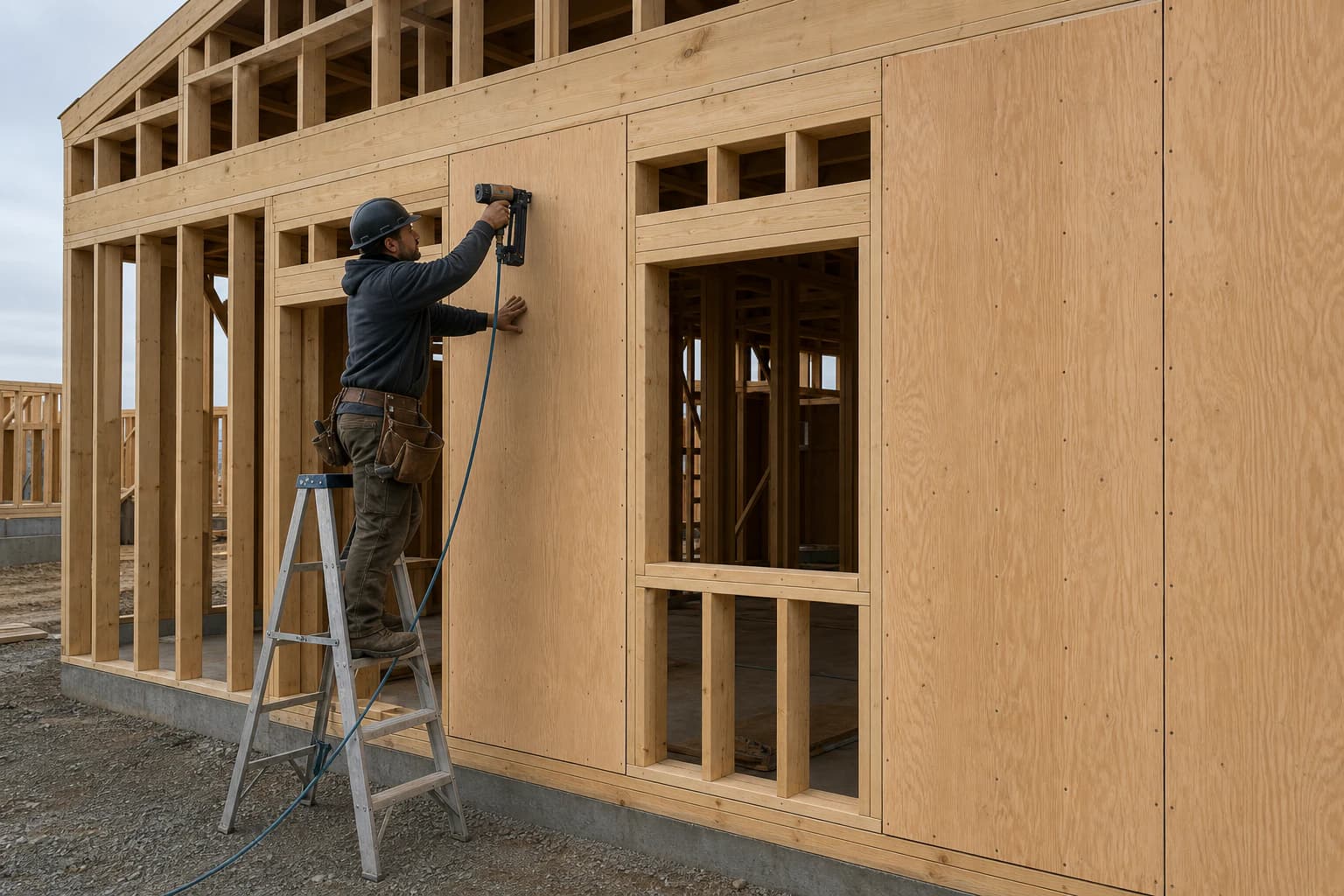
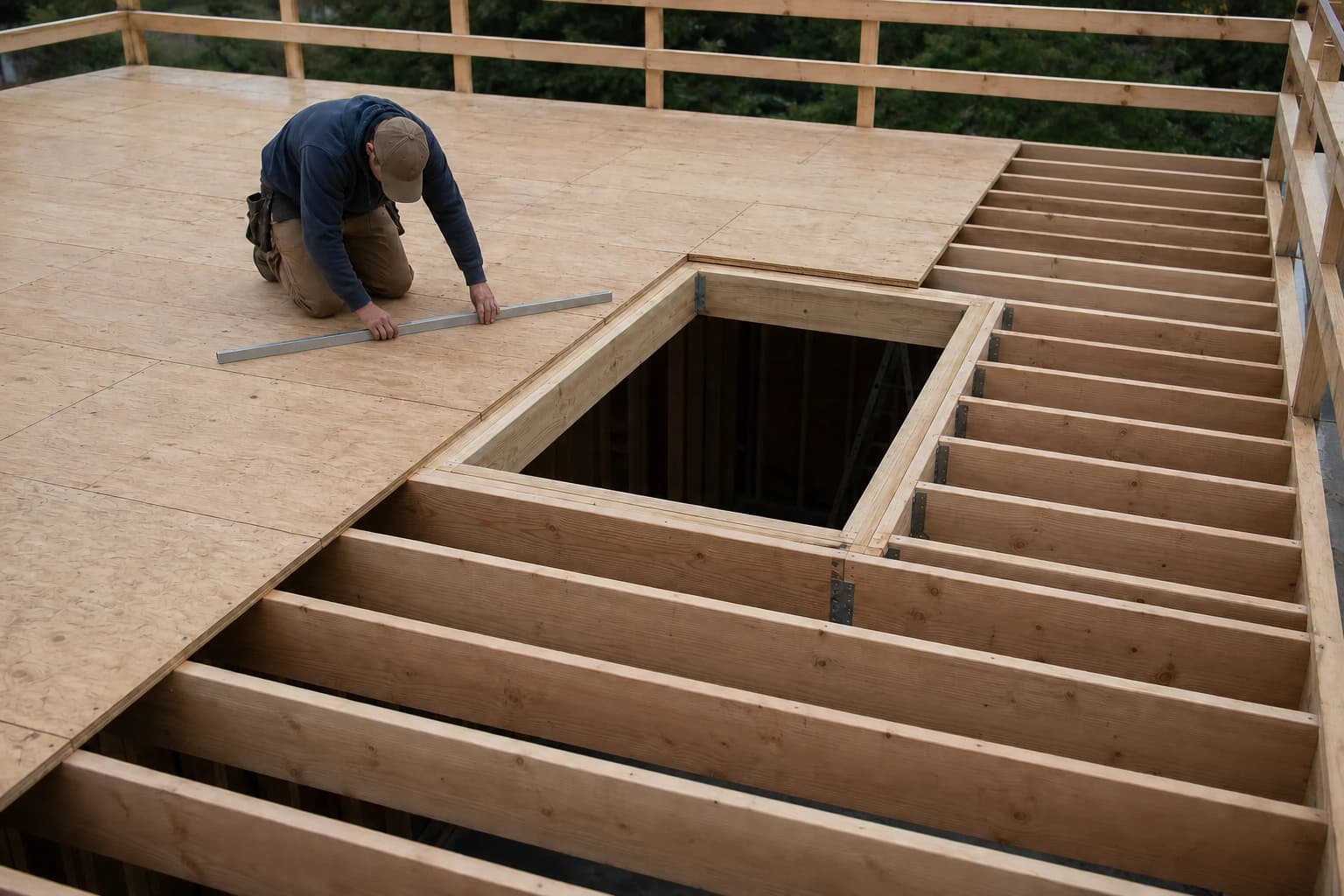
For plywood products and assembly planning, see Structural Plywood, Structural Construction and Packing Plywood.
Moisture-resistant is not permanently waterproof.
Describe the storage, construction exposure and conditions after installation. Include wet edges, trapped water, cut-outs and the time before the panel is covered or protected.
Limited construction exposure or long-term weather?
In APA’s system, Exposure 1 is intended for construction moisture or similarly limited exposure, not permanent weather exposure. Exterior is a separate bond classification; neither label alone establishes decay resistance or the complete assembly design.
Check the classification of the actual panel. For plywood, see APA’s bond-classification guidance; for OSB, see its OSB product guidance.
What OSB/2, OSB/3 and OSB/4 describe
Under EN 300, OSB/2 is load-bearing for dry conditions, OSB/3 is load-bearing for humid conditions, and OSB/4 is heavy-duty load-bearing for humid conditions. OSB/1 covers general-purpose and interior fitments in dry conditions.
Humid-condition grades are not waterproof boards. The European Panel Federation’s OSB guidance describes these categories and the need to protect panels from wetting. Do not translate them directly into an APA exposure label.
For plywood bond selection and protected exterior components, see Bonding & Emission Options and Marine vs Exterior Plywood.
Read the grade within its own material and standard.
Keep the European product classifications and North American performance ratings separate. Similar intended uses do not create a direct conversion between OSB/3, P5 particleboard and a plywood grade.
OSB under EN 300
OSB/1, OSB/2, OSB/3 and OSB/4 describe different intended uses and moisture conditions. Specify the required OSB grade, thickness and properties for the assembly; a humid-use grade is not a waterproofing system.
Plywood under EN 636
EN 636 covers plywood for general-purpose and structural applications in dry, humid or exterior conditions. Name the intended use and required structural properties with the plywood specification. An OSB grade is not a plywood classification.
North American performance-rated panels
PS 2 is a performance standard for wood structural panels, including plywood and OSB. PS 1 is a structural plywood standard. Read the offered panel's product standard, end-use grade, Performance Category, span rating and exposure classification with the project requirements.
P5 particleboard is another material
P5 under EN 312 describes load-bearing particleboard for humid conditions. It is not OSB/3 or a plywood grade. Compare the actual product, properties, supports and finished-floor or wall system when considering a replacement.
Confirm the grade, declared properties and any required marking on the offered product before ordering. Use these with the project specification and installation details.
Same thickness does not mean the same structural specification.
Use the actual structural grade, relevant panel properties or end-use rating with the drawing. The panel’s strength axis, support spacing, joints, loads and fasteners belong in the same comparison.
Walls and bracing
Coordinate framing, panel orientation, openings, supported joints and the fastening schedule. A sheathing panel may also be part of a designed bracing or shear-wall system; changing the board can require more than matching its thickness.
Roofs and floors
Check the panel rating and properties for the support arrangement, load and deflection requirement. Include edge support, tongue-and-groove or blocked joints where the system calls for them. The designer confirms the assembly, not a generic material ranking.
Product documents for the destination
Identify the required product standard, grade, declared properties and applicable certificate or test information with the offer. The project design and installation requirements are separate from the material species and appearance.
Substituting an existing specification
Give us the current board description and what the replacement must achieve. Compare the offered plywood with that specification, and agree a change with the project designer where required. Do not replace a rated panel with a furniture or utility grade just because both are called plywood.
Custom sheet dimensions are a production choice, not automatically a different material category. They still affect handling, joints, support layout and cutting yield; use the applicable product documents with the actual assembly design.
Our Standards & Certifications page helps identify the plywood documents to discuss, while Structural Plywood covers the panel options.
Choose the surface, cut edge and joint together.
What works behind a wall covering may not give the face or machined edge you want to sell. Compare the finished part with the actual tooling, coating, covering and fittings.
Visible faces and finishing
Plywood offers choices of face veneer, sanding and overlays. An OSB strand texture can also be a deliberate visible finish. For either board, agree flatness, surface preparation, edge treatment and compatibility with the coating or covering.
A selected plywood layered edge and an OSB cut edge look different. If an edge is visible, assess it after routing, sanding and finishing; if covered, include the edging and labour in the comparison.
Fixings, fittings and machining
State the screw, nail, staple or fitting, its location and the support or frame. Check the real joint and the fastening requirements for the chosen panel; no universal fastener-holding number applies to all plywood or OSB.
For repeated components, agree finished dimensions, thickness, hole exits, profiles and tolerances. Our factory can quote plywood sheets or processed parts from the same drawing and construction.
For crate parts, use Industrial Packaging & Export Cases. For finished plywood faces, compare Surface & Overlay Options and Furniture Grade Plywood.
A cheaper sheet can still be the right choice—or a false saving.
Use current quotations for the same grade, dimensions, quantity and delivery basis. Choose where a feature improves the assembly or reduces work; do not pay for a visible veneer face that will be completely hidden unless other requirements justify it.
Usable sheets and parts
Compare the cutting layout, trimming allowance, permitted repairs and waste. A format that produces more accepted parts can change the cost per component without changing the unit sheet price.
Preparation and installation
Include machining, edge preparation, coatings, covering, fasteners and assembly labour. For a floor, include the preparation and any underlayment needed by the finished-floor system.
Weight and logistics
Use the offered density or sheet mass for each actual product. Compare the same dimensions and include fittings, coverings and packing. Confirm pack size and weight for transport and unloading.
Order and delivered price
State the mix, quantity, destination and timing. Compare packing, freight and delivery terms; identify destination costs rather than assuming they are included. Our plywood quotation confirms construction, processing, order quantity, sample arrangements and production timing.
CUZI PLY plywood formats: regular 1220×2440, 1250×2500, 1525×3050 mm; on request 1250×3050, 1250×3660, 2100×2800, 1830×3660, 1250×3800 mm. These are our plywood production formats, not a universal OSB size schedule. See Plywood Sizes & Thicknesses and the Plywood Price Guide to plan the quote.
Compare the assembly, then agree the plywood order.
Send the existing board specification, drawing and destination requirements. Our factory team helps identify the plywood construction, processing and order conditions to compare with the OSB offer.
Keep the assembly the same
Compare the same roof, wall, floor or crate design. State loads, support spacing, strength axis, joints, fasteners and moisture exposure. Include the roof covering, floor finish or crate frame rather than comparing a sheet in isolation.
Match the properties and documents
Use information for the offered grade and thickness. Compare test method, direction, conditioning and the type of reported value; a minimum classification value, declared design value and individual test result serve different purposes.
Check the finished part
Assess cutting, hole exits, edge preparation, coatings and the real fixing or fitting. Confirm dimensions, flatness and compatibility with the finish; a piece used for workmanship checks does not establish a structural capacity.
Compare the complete delivered order
Use the same quantity, currency, cutting yield, processing, packing and delivery basis. Include installation and any required surface or floor preparation. Check product availability, production timing and transit separately.
Compare cost per usable component or installed area: divide the included material, processing, preparation, installation and delivery costs by the components that meet your specification or the area covered by the completed system. Use the same specification and cost basis for both offers.
For a material change, compare the required properties and check the chosen panel in the actual assembly. See Plywood Testing Methods for selecting product information and Storage & Handling for preparing plywood for use.
- Order quantity & mix
- Tell us the sheet size, thickness mix and quantity you need. We confirm the minimum order and available mix for your selected construction.
- Production lead time
- We confirm the production schedule with your specification, order quantity and sample requirements. Production lead times are planning estimates, not transit times.
- Price & quotation unit
- Currency and price unit stated in your quotation. Your quote is based on the agreed dimensions, construction and quantity. Processing and requested testing are stated separately where applicable.
- Samples
- Tell us the plywood, thickness, finish and delivery country. We confirm sample availability, any sample and courier costs, and dispatch arrangements before proceeding.
- Packing & delivery
- We agree export packing, labels and the loading plan for your order. Share the destination country, named port or delivery point and preferred delivery term. Freight, insurance, duties and taxes are included only when stated in the quotation.
- Payment & order confirmation
- We agree the payment method, currency and any deposit and balance schedule in the quotation or proforma invoice. Your order confirmation sets out the product, quantity, packing and delivery arrangements.
Plywood and OSB selection
Questions before you choose.
Is plywood better than OSB?
Neither is the best choice for every job. Structural-rated products of either material can suit walls, roofs and floors when the grade and assembly requirements are met. Plywood also gives you choices of face veneer, inner construction and layered-edge appearance. Compare the actual grade, moisture conditions, supports, finish and complete installed or component cost.
Is plywood stronger than OSB at the same thickness?
Thickness alone cannot answer that. Use the offered panel’s relevant strength and stiffness values or end-use rating, load direction, support spacing, edge support and fixing arrangement. The project designer checks the assembly. Do not infer a universal strength ratio from the material name or substitute a non-structural board for a rated panel.
Can I replace OSB with plywood in roof or wall sheathing?
A suitable structural plywood product may be an alternative, but confirm the project’s grade or rating, thickness, strength axis, support spacing, fasteners, joints and exposure requirements. If the specification names a particular product or system, agree the substitution with the project designer. A similar sheet size or an exterior bond does not establish an equivalent assembly.
Is OSB/3 waterproof?
No. OSB/3 describes a load-bearing board for humid conditions under EN 300; it is not a promise of unrestricted outdoor or soaked service. Choose the grade for the use and follow the product’s storage, edge, protection and installation guidance. Plywood also needs the appropriate bond, construction and assembly protection for its exposure.
Is Exposure 1 the same as Exterior?
No. In APA’s wood structural panel system, Exposure 1 covers construction moisture or similarly limited exposure, not permanent weather exposure. Exterior is a different bond classification. These labels do not by themselves specify decay resistance, structural capacity or the complete protection system, and they should not be treated as direct replacements for European grade labels.
Which is better for a subfloor?
Compare the actual floor-rated panel with the joist spacing, loads, thickness, edge detail and finished-floor system. Both plywood and OSB can suit a specified floor assembly. Check flatness, joints, moisture condition and the flooring manufacturer’s substrate requirements before installing the finish; a subfloor is not automatically the right direct base for every tile, resilient or other covering.
Which is lighter, plywood or OSB?
Use the density or sheet mass for the products being offered. Plywood cores and OSB products vary. For a fair comparison, keep the finished length, width and thickness the same. Include coverings, fittings and packing if you are planning handling or shipment weight.
Is OSB always cheaper than plywood?
Not for every delivered order or finished component. Prices vary by grade, dimensions, quantity and market. Compare usable cut parts, preparation, edge details, fasteners, finishing, installation, packaging and delivery. Ask our factory for a current plywood quote on that same specification rather than applying a fixed price difference.
How do I request a plywood alternative or sample?
Tell CUZI PLY the current board specification and what the replacement must achieve: use, dimensions, loads or hardware, moisture, finish, quantity and destination. We manufacture the plywood and help select the face, core, bond and processing. For samples, we agree the construction, piece sizes, any costs and courier arrangements before sending them.
Is OSB/3 the same as P5 chipboard or structural plywood?
No. OSB/3 is an EN 300 oriented-strand-board grade; P5 is an EN 312 particleboard type. Plywood has its own product specifications, including EN 636 for European applications. Similar humid-use descriptions do not make the materials or panel properties identical. Match the chosen product to the actual supports, loads, joints, exposure and finish.
What should I check when comparing plywood and OSB manufacturers?
Identify the producer, manufacturing location and material of the offered panel separately. Ask for the actual grade, product standard, thickness, relevant properties, product documents and any required marking. Confirm the available format, quantity, packing and delivered quotation. For a plywood alternative, CUZI PLY's factory quotation identifies the veneer face, core, bond and processing for your order.
How do I make panel performance figures comparable?
Use properties for the actual grade and thickness, with the test method, direction, conditioning and type of value identified. Minimum classification values, declared design values and individual test results are not the same thing. The project designer uses the appropriate properties with loads, spans, supports, joints and fasteners. Workmanship checks on a finished part do not replace structural design information.
Tell us what your plywood needs to do.
CUZI PLY manufactures your plywood. Share the existing board specification or the new component requirements; we will help choose the construction and processing and prepare a factory quotation.
- Assembly or component, size, thickness and quantity.
- Supports, fixings, moisture, finish and performance requirements.
- Required product documents, destination and target delivery date.
For a plywood comparison, name the construction and the machining or finish you want to assess. We agree piece sizes, any costs and courier arrangements with you.