Film faced vs marine plywood: choose for the surface and the job.
Choose film faced plywood for the working surface you need; choose marine plywood for the veneer construction your component requires. Film faced describes an overlay. Marine describes the base plywood and its relevant product requirements. They can overlap, but a dark film does not identify the inner core or establish marine grade.
For concrete forming, start with the concrete finish, supports and site method. For marine joinery, start with the veneers, coating, joints and wetting conditions. CUZI PLY is your plywood manufacturer and direct supplier, with 10 production lines in Linyi, China. We help you choose the face, core and processing for the job, then quote your order directly from our factory.
Film faced plywood vs marine plywood at a glance.
Compare equal dimensions and the complete specification. An overlay, marine construction, structural grade and finished coating answer different buying questions.
On a phone, swipe across the table to read every column.
| Buying consideration | Film faced plywood | Marine plywood |
|---|---|---|
| What the name describes | An overlaid plywood surface, usually specified with resin-treated paper film for concrete forming or another working-face use. | A selected plywood construction and, when required by the project, a named marine product standard. |
| Face and finish | Specify the overlay material, finish, colour, working face and reverse-face arrangement. | Specify the veneer species, appearance grade and preparation for the coating, bonding or visible finish. |
| Core | Name the inner species, lay-up, joints and quality needed for the forming or component duty. | Name the inner veneers, arrangement, joints and quality required by the selected marine construction. |
| Bond and moisture | Specify the panel bond separately from the overlay. Include edges, new cuts, holes and surface damage in the protection plan. | Specify the durable bond and complete component protection; marine does not mean unprotected wood cannot absorb water. |
| Structural role | Use the formwork design, loads, supports, panel direction and relevant grade or properties. | Use the component design and required panel properties when the part carries load. |
| Typical purchasing start | Slab or wall shuttering, required concrete finish, surface care and handling between pours. | Marine joinery, coated wet-service parts or a component drawing that calls for a marine construction. |
| Fabrication | Agree cut quality, drilling, edge treatment and the compatibility of any adhesive or coating with the overlay. | Agree machining, joints, fasteners, finish and protection of the exposed veneer edges. |
| Documents and cost | Compare the ordered overlay, core, bond, grade, dimensions and forming requirements on the same delivered basis. | Compare the ordered veneer construction, applicable product requirements, finish and delivered component cost. |
An overlay and a marine base panel can be specified together.
Keep the underlying veneer construction and the surface specification separate. This lets you compare what the panel is made from with what its working face must do.
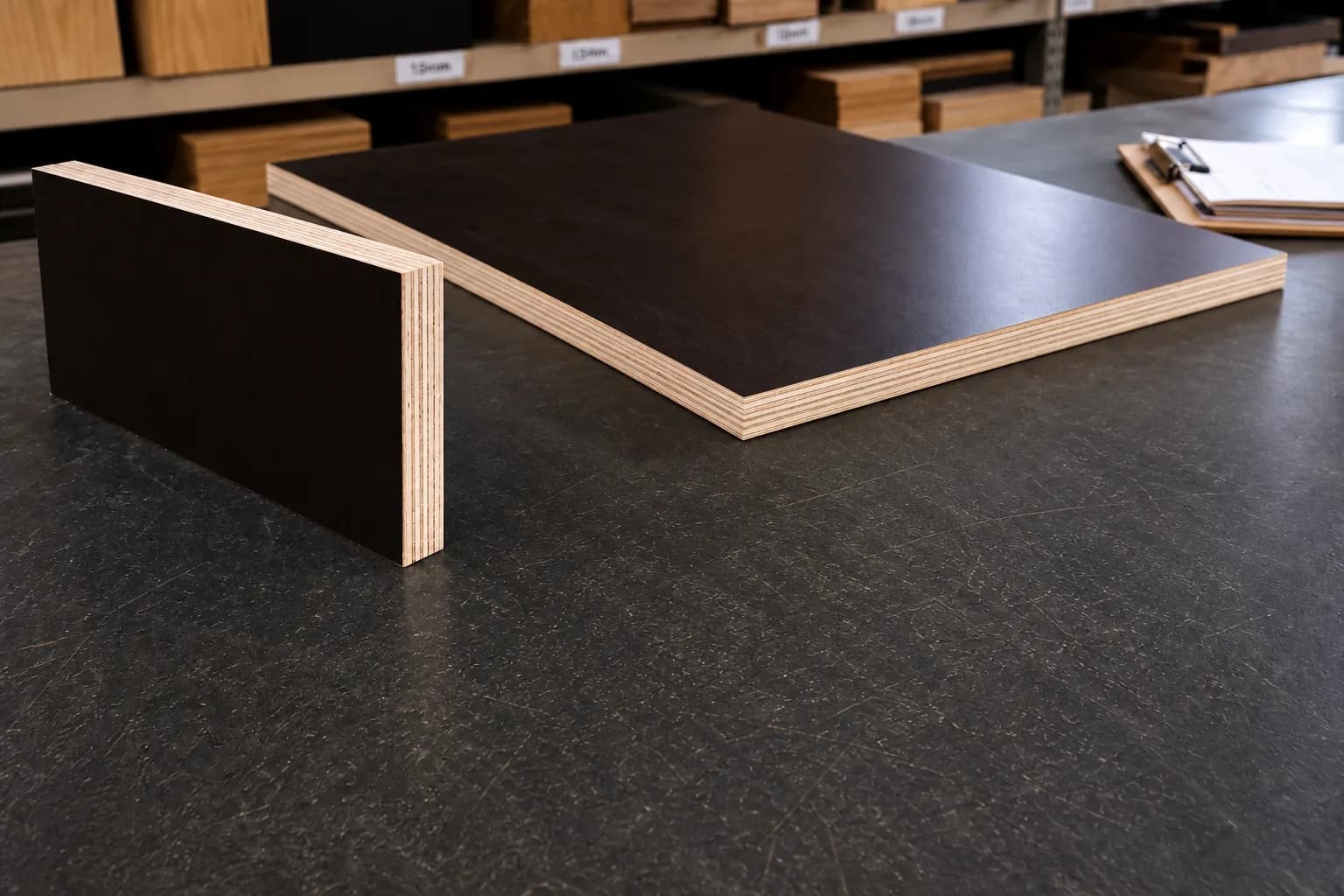
Film faced plywood working faces and layered edges
Choose the working face, core, bond and edge protection together. Match the panel to the concrete finish, supports, release agent and handling on your site.
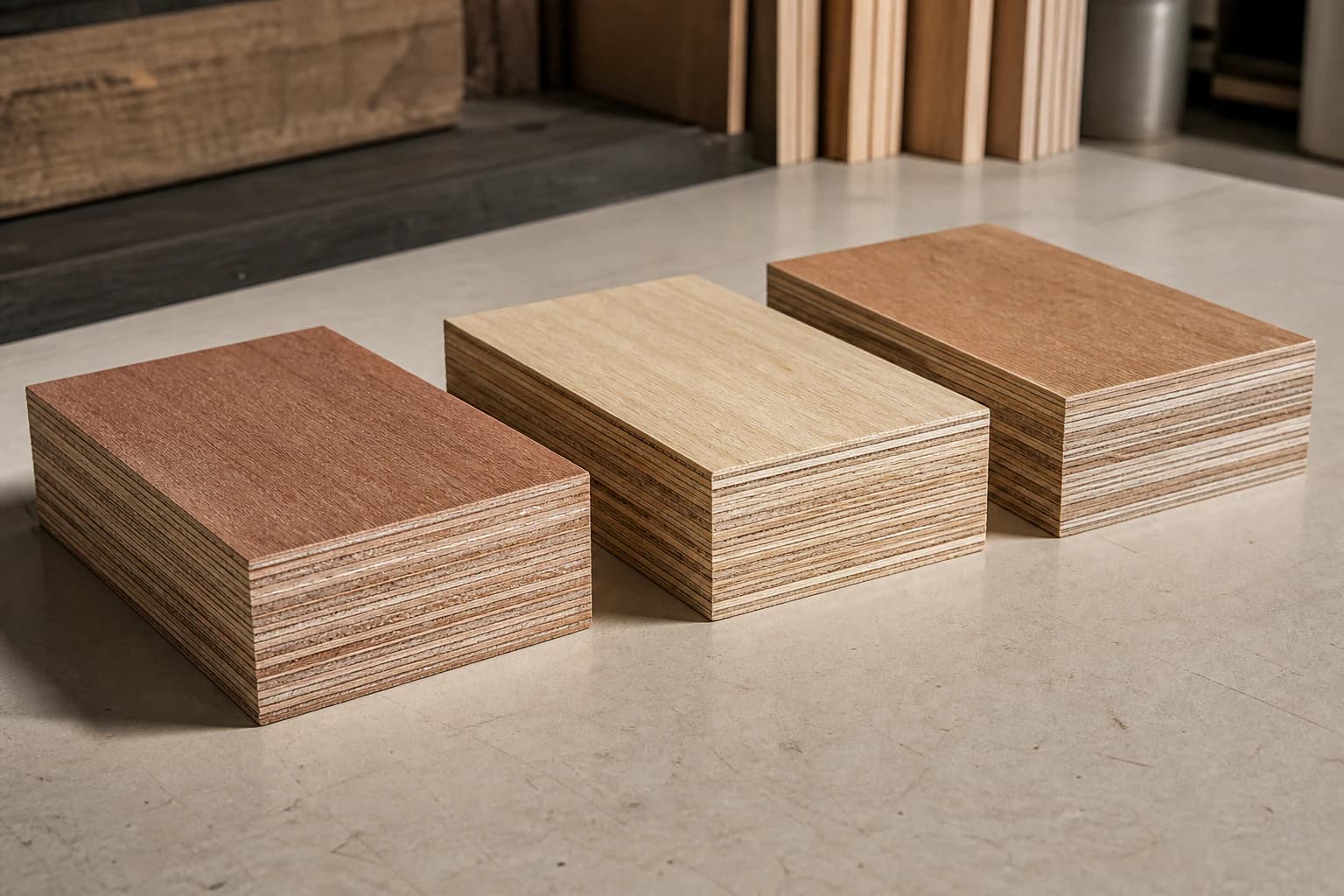
Marine plywood veneer faces and inner construction
Choose the face and inner veneers for the marine component. Include the coating, joints, cut-edge protection, weight and product requirements in your order.
Specify the face and inner veneers
For film faced plywood, name the overlay material and finish, working and reverse faces, inner species, veneer arrangement and bond. Brown and black are colour choices, not core quality or marine grades. PP-faced panels have their own surface specification rather than phenolic-paper film weight.
For marine plywood, agree the face, back and inner veneers, joints, repairs and bond required by the selected construction. Then select the coating or overlay around the component. Compare our Film Faced Plywood and Marine Plywood options.
Check the completed component
A film over a selected marine base does not remove the need to protect cuts and joints or choose compatible adhesives and coatings. If the drawing specifies a marine construction, keep that requirement in the order even when an overlay is added.
For veneer, core and bond details, use Core Materials & Species and Bonding & Emission Options. Our Marine vs Exterior Plywood guide covers the separate marine-versus-exterior choice.
Select the panel for the form, marine part or finished surface.
A slab form, coated hatch and painted sign do not need the same face or fabrication process. Use the job to decide which requirements belong in the quotation.
| Your application | Start with | Include in the enquiry |
|---|---|---|
| Concrete slabs and walls | Film faced or another concrete-form panel suited to the specified finish. | Formwork design, supports, loads, dimensions, bond, working face, release agent and cleaning. |
| Architectural concrete finish | The forming overlay and grade selected for the agreed concrete appearance. | Gloss or matte result, joints, pour conditions, release-agent compatibility and a test pour where required. |
| Marine cabinets, lockers and hatches | A marine veneer construction with the required surface and coating. | Wetting and drying, weight, core, joints, machining, fixings and product requirements. |
| A drawing naming a marine standard | The specified marine construction and applicable product documents. | The exact material and any additional structural, vessel or finished-component requirements. |
| Painted signs or exterior components | An appropriate paint-base panel, such as the specified MDO construction. | Coating system, exposed edges, moisture, support and the selected overlay's finishing guidance. |
| Covered interior or utility parts | Commercial plywood with the chosen core, face and applied finish. | Dimensions, surface preparation, joints, fixings, indoor requirements and complete component cost. |
Changing the material? Keep the required construction and component design in view. A film faced name alone does not replace marine requirements, and a marine name alone does not provide a ready forming face or structural rating.
Phenolic board vs marine plywood depends on what the board actually is.
“Phenolic board” can be used for phenolic-film-faced plywood or for a different resin-based laminate. Ask for the substrate and layer description before comparing it with marine wood-veneer plywood.
For phenolic-film-faced plywood
Specify the resin-treated paper film, finish and nominal film weight alongside the wood core, bond, dimensions and intended duty. Compare overlay continuity, cut edges, surface care and any required test method. A heavier film alone does not identify the plywood's strength or guarantee more pours.
See Film Faced Plywood for the phenolic working-face construction, or Plastic Coated Plywood when the required facing is a polymer system.
For a different phenolic laminate
Identify whether the offer has a wood-veneer core at all. A resin-based compact laminate and phenolic-faced plywood are not the same substrate. Compare the actual thickness, weight, supports, fixing, machining and finish for the part.
For marine plywood, identify the veneers, inner core and applicable product requirements independently of any phenolic surface. The commercial name does not establish a marine certificate or the complete assembly's moisture performance.
Film faced plywood vs formply: surface and forming specification.
Film faced describes the overlay. Formply describes plywood for concrete formwork. The descriptions can overlap, but the forming panel still needs the grade, properties and surface required by the formwork system.
Put the formwork design beside the face
Give the slab or wall application, panel direction, supports, thickness, holes and joint arrangement, with the required loads or design properties. For concrete finish, include the surface appearance, concrete mix, release agent, stripping and cleaning method. The engineer's formwork design determines the required capacity and support arrangement.
APA's concrete-forming guidance treats panel selection, concrete pressures, supports and care together. Where a project calls for Plyform or a specific APA grade designation, include the grade and marking requirement in the enquiry.
Name the required formwork standard
If the project specifies AS 6669 Plywood Formwork or another standard, include it with the grade, surface and product information required by the order. Specify the formwork grade alongside the film colour, core, bond and finish so we can quote the construction your project needs.
CUZI PLY can discuss the film, core, bond, dimensions, grade and documents for your selected construction. Use Concrete Formwork Applications to prepare the forming details; use Structural Plywood for other specified load-bearing panel work.
Film faced plywood vs commercial plywood: compare the finished job.
Commercial plywood is normally ordered with an unoverlaid wood face for the specified utility or interior use. Film faced plywood adds the chosen overlay; it may also have a different core, bond and grade.
Choose commercial plywood for its intended finish
For a covered component, interior part or case, specify face quality, core, machining, joints and the surface you will apply. Include sanding, paint, veneer, laminate or other finishing work in the comparison.
Our Commercial Plywood range can be selected around the component. The trade name alone does not establish a particular moisture class or a ready concrete-forming face.
Choose film faced for the working surface
For shuttering, compare the specified concrete-contact face, core, bond and required panel properties. Include release-agent compatibility, stripping and surface care. A natural veneer face and a resin-treated forming face can produce different results and need different preparation.
When a film faced panel will instead be painted or bonded into a finished component, agree preparation and compatibility of the exact overlay with that coating or adhesive. Do not price it as a finished paint base without those details.
Film faced plywood vs HDO and MDO plywood.
Phenolic paper film, HDO and MDO can all use resin-treated overlays. They are not identical purchasing descriptions: agree the actual overlay, surface finish, grade and intended use.
HDO for the specified hard working face
HDO uses a resin-fibre overlay and is described in Concrete Form and Industrial grades under the applicable specification. For forming, compare the concrete finish, core, bond, panel properties, release agent and care with the phenolic-film option.
Colour or a smooth-looking face does not tell you which overlay is supplied. Name it in the order, including one or both working sides, edge treatment and the required surface tests.
MDO for a paint base or forming face
MDO is described in Concrete Form and General grades. General paint-base MDO and concrete-form MDO address different jobs. Choose the overlay for the primer and topcoat, or the intended concrete finish, rather than treating every MDO sheet as the same surface.
For painting or lamination, include the chosen coating or adhesive, preparation, reverse face and new-cut protection. Compare our HDO/MDO Plywood options with the surface your customer will receive.
The APA HDO/MDO description separates overlay grades and finishing guidance. Use the offered construction's specification and relevant documents for the comparison; the density names describe the overlays, not a universal plywood-core density.
Protect edges and keep the working face fit for the job.
An intact overlay reduces direct contact at the face, but cuts, holes, joints and damage can expose wood. Coordinate protection with the panel, coating and use.
During forming and between pours
Use the release agent and cleaning procedure suitable for the selected face and concrete. Strip without damaging the working surface, inspect edges and holes, and repair protection where required. Store sheets flat and supported with the faces protected from impact and retained moisture.
Panel construction, supports, pour conditions and handling affect reuse. Compare the concrete result and usable panel condition in your process; there is no universal cycle count from film colour, film weight or an HDO/MDO name.
In a marine or coated component
Agree coatings, new-cut sealing, fastener details, joints, drainage and access for maintenance. Include exposure during installation and use, and how the component can dry. Bond durability is only one part of that specification.
For component protection, use Marine & Exterior Applications. For traffic surfaces, compare Anti-Slip Plywood; a smooth forming film does not specify a slip-resistant floor.
Match the documents to the construction and project.
Send the standard or properties your customer specifies with the component and destination. We discuss the suitable construction and available product information with your quotation.
Marine plywood requirements
BS 1088 specifies marine plywood requirements. Its scope also recognises that an end use can need additional properties or requirements. A surface film is not a substitute for the selected marine construction or those component requirements.
For a boat or load-bearing part, include the drawing, veneer construction, bond, thickness, finish and required structural information. Do not infer the complete part's suitability from a marine face or a coating alone.
Formwork, bond and finished surface
State the forming standard and grade, required panel properties and surface performance. If bond testing is specified, include the method and class; keep overlay testing and destination emission requirements separate where applicable.
Use Standards & Certifications and Surface & Overlay Options to prepare the purchase description. We keep the ordered face, core, bond and processing clear so the documents answer the relevant product requirement.
Choose the panel around the result you need.
Tell our factory what the plywood must do in your process. We help compare the working face, inner construction and preparation, then quote the selected panel with its processing and delivery terms.
Give us the forming duty
For slab or wall forms, send the concrete finish, panel direction, support spacing and the design requirements. We compare the working face and plywood construction around your formwork system, not film colour alone.
Specify the marine base before the surface
For a marine component, include the required veneer construction and product standard with the drawing. Tell us whether the face will be painted, bonded or overlaid so we can discuss compatible preparation, machining and edge protection.
Check the surface in your own process
For forming, assess the finish with your concrete and release agent where a test pour is required. For coated or bonded parts, check the intended primer, adhesive and joints on the selected construction before ordering the full quantity.
Keep repeat orders comparable
Agree the face and back, core, bond, dimensions, processing and packing in the quotation. Retain that specification for repeat purchases, with any changes to the finish, quantity mix, required documents or delivery destination clearly identified.
Buying to a drawing? Keep the named marine or forming grade and required properties in the purchase specification. Sheet dimensions can be made to your cutting layout; the product construction and applicable requirements still need to match the job.
Compare panel price with finish, use and delivery.
There is no fixed film-faced-to-marine price premium. Choose the construction your job needs, then compare equal quantities and the work needed to use each panel.
Price the same panel construction
Use equal finished dimensions, core, bond, face/back arrangement and quantity. For film faced panels include the overlay system; for marine panels include the veneer quality and any named product requirements.
Include the finished surface and machining
Account for the concrete finish or component coating you need, along with cutting yield, drilling, edge sealing, joints and preparation. Compare a ready working face with the work needed to finish an unoverlaid panel.
Compare actual service and care
For formwork, consider stripping, cleaning, repairs, storage and the concrete result achieved over use. For a marine component, include coating and maintenance. Use your actual process rather than a universal reuse count or service-life promise.
Align order and delivery terms
Compare quantity mix, currency, protective packing, delivery term and stated destination charges. Separate production timing from transit, and identify requested processing or testing in the quotation.
CUZI PLY plywood formats: regular 1220×2440, 1250×2500, 1525×3050 mm; on request 1250×3050, 1250×3660, 2100×2800, 1830×3660, 1250×3800 mm. Give the finished thickness, construction and quantity by format; choose the sheet around your cutting layout, support and handling needs.
Use our Plywood Price Guide for quotation units and delivery costs. Discuss these shared order conditions with our factory:
- Order quantity & mix
- Tell us the sheet size, thickness mix and quantity you need. We confirm the minimum order and available mix for your selected construction.
- Production lead time
- We confirm the production schedule with your specification, order quantity and sample requirements. Production lead times are planning estimates, not transit times.
- Price & quotation unit
- Currency and price unit stated in your quotation. Your quote is based on the agreed dimensions, construction and quantity. Processing and requested testing are stated separately where applicable.
- Samples
- Tell us the plywood, thickness, finish and delivery country. We confirm sample availability, any sample and courier costs, and dispatch arrangements before proceeding.
- Packing & delivery
- We agree export packing, labels and the loading plan for your order. Share the destination country, named port or delivery point and preferred delivery term. Freight, insurance, duties and taxes are included only when stated in the quotation.
- Payment & order confirmation
- We agree the payment method, currency and any deposit and balance schedule in the quotation or proforma invoice. Your order confirmation sets out the product, quantity, packing and delivery arrangements.
Film faced, marine and overlay choices
Questions before you choose the construction.
What is the difference between film faced and marine plywood?
Film faced describes the plywood's working surface; marine describes a selected veneer construction and relevant product requirements. Film faced panels are commonly ordered for concrete forming, while marine panels are selected for marine components or a named project specification. Compare the overlay, face, core, bond and use rather than treating the two names as opposite grades.
Can plywood be both film faced and marine grade?
An overlay and a marine base construction can be specified together. Identify the underlying veneer panel and its applicable marine requirements separately from the overlay material and surface. The film itself does not make an unspecified core marine grade, and the complete surfaced component must suit its machining, finish and use.
Can film faced plywood replace marine plywood in a boat component?
Not by the film faced name alone. Match the marine construction and product requirements on the drawing, together with the weight, joints, fixings and moisture protection. If the part will be bonded, coated or clear-finished, include the overlay's compatibility and surface preparation. Agree a material change with the component designer before changing the purchase specification.
Is phenolic board the same as marine plywood?
Identify what phenolic board means in the offer. It may describe phenolic-film-faced wood plywood or a different resin-based laminate product. Specify the actual substrate, overlay, core, bond and dimensions. Phenolic terminology alone does not establish a marine plywood construction or certificate.
Is film faced plywood the same as formply?
Film faced describes the overlay; formply describes plywood for concrete formwork. The terms can overlap, but a forming panel still needs the required structural and surface grade, dimensions, supports and product information. If AS 6669 or another formwork specification is required, include it in the enquiry rather than treating any brown or black film as the grade.
What is the difference between film faced and commercial plywood?
The working face is the main starting difference: film faced plywood has the specified overlay, while commercial plywood is normally purchased with an unoverlaid veneer face for the agreed utility or interior use. Their cores, bonds and grades can also differ. Compare the entire construction and include any coating, surface preparation or added layers needed to finish the part.
How should I compare film faced plywood and HDO plywood?
Compare the offered overlay system, grade and intended use, not colour alone. HDO uses a resin-fibre overlay and is offered in concrete-form and industrial grades under its applicable specification. For forming, compare the required concrete finish, core, bond, panel properties, release agent and maintenance. A general HDO name or phenolic film weight is not a fixed reuse promise.
Should I choose MDO or film faced plywood for painting?
Start with the coating system and finished use. General paint-base MDO and concrete-form MDO serve different surface requirements. A film faced surface selected for concrete release is not automatically a ready paint or adhesive base. Agree the exact overlay, preparation, compatible primer or adhesive, reverse face and edge treatment for the finished component.
Does a film or marine label make the whole part waterproof?
No label replaces protection of the complete part. Water can reach wood through cuts, edges, holes, joints and damaged surfaces. Specify the bond and exposure, then coordinate compatible sealing, coatings, drainage and maintenance. Moisture resistance of the glue line does not by itself establish decay resistance or preservative treatment.
How many times can film faced, HDO or MDO plywood be reused?
There is no universal count across panels and sites. The construction, supports, concrete, release agent, stripping, cleaning, edge care and storage affect the result. Tell CUZI PLY your use target and process so we can compare the working face and panel construction. A test pour and your own maintained-panel records are more useful than colour or a generic cycle claim.
Can marine plywood be used for concrete formwork?
A marine description alone does not specify a forming face, structural duty or concrete finish. Compare the actual panel properties with the formwork design, and agree surface treatment, release agent, edge protection and the required forming standard. Use a panel intended for the specified formwork system rather than assuming marine means it is a ready substitute.
What should I send CUZI PLY for a comparable quote?
Send the application, sheet or part size, finished thickness, quantity and destination. For forming add the required concrete finish, supports, grade, overlay and release-agent information; for marine parts add the veneer construction, exposure, coating, weight target and named product requirements. Our factory helps compare constructions and confirms processing, documents, packing and delivery with your quote.
Tell us the job. We will help choose the working face and core.
CUZI PLY manufactures your plywood with the agreed surface, inner construction and processing. Start with the requirements you know; our factory team helps compare options and prepare a clear quotation.
- Forming or component use, finish, supports, loads and moisture conditions.
- Sheet or part dimensions, thickness, machining, face/core and product requirements.
- Quantity, destination, timing and the construction you want to assess.
For a sample, tell us the construction, thickness and finish. We confirm availability, any costs and courier arrangements before dispatch.
Prepare the complete order with How to Specify Plywood. For the separate moisture-service comparison, read Marine vs Exterior Plywood.