How should I plan a plywood range for a Latin American distributor?+
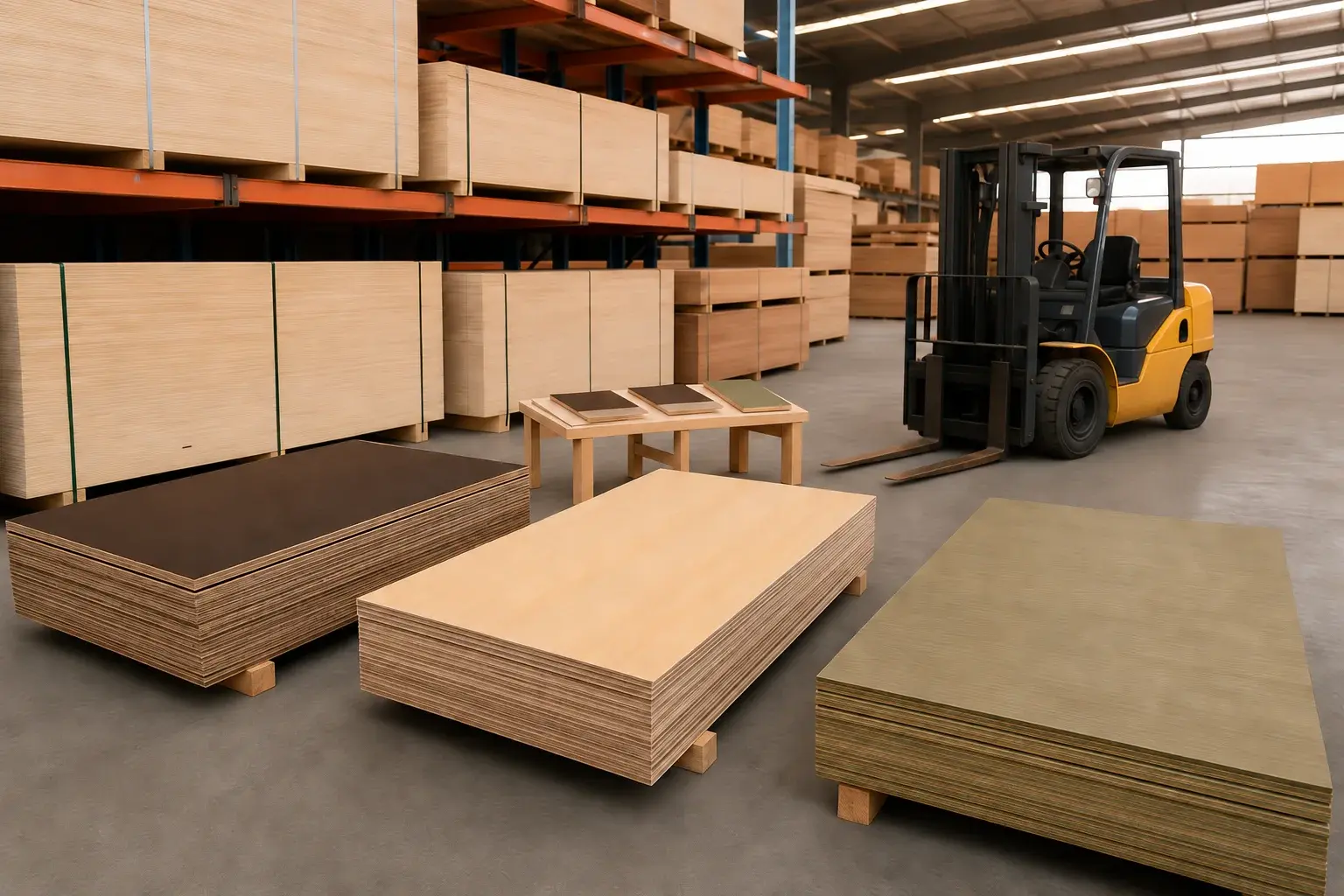
List customer applications, face grades, core types, exact sizes, thicknesses and quantities by stock item. Add warehouse labels and pack separation. We discuss a practical production and container mix, with minimum quantities and loading confirmed for the actual order rather than assuming every product can be mixed in any quantity.
What should be agreed for Spanish or Portuguese order documents?+
Provide the working language and importer-approved product wording, units and pack marks. We confirm that the invoice, packing list and panel specification describe the same goods. Brazilian and Spanish-speaking destination requirements must be checked separately; translated wording does not establish import or project approval.
What changes the price between the destination port and my warehouse?+
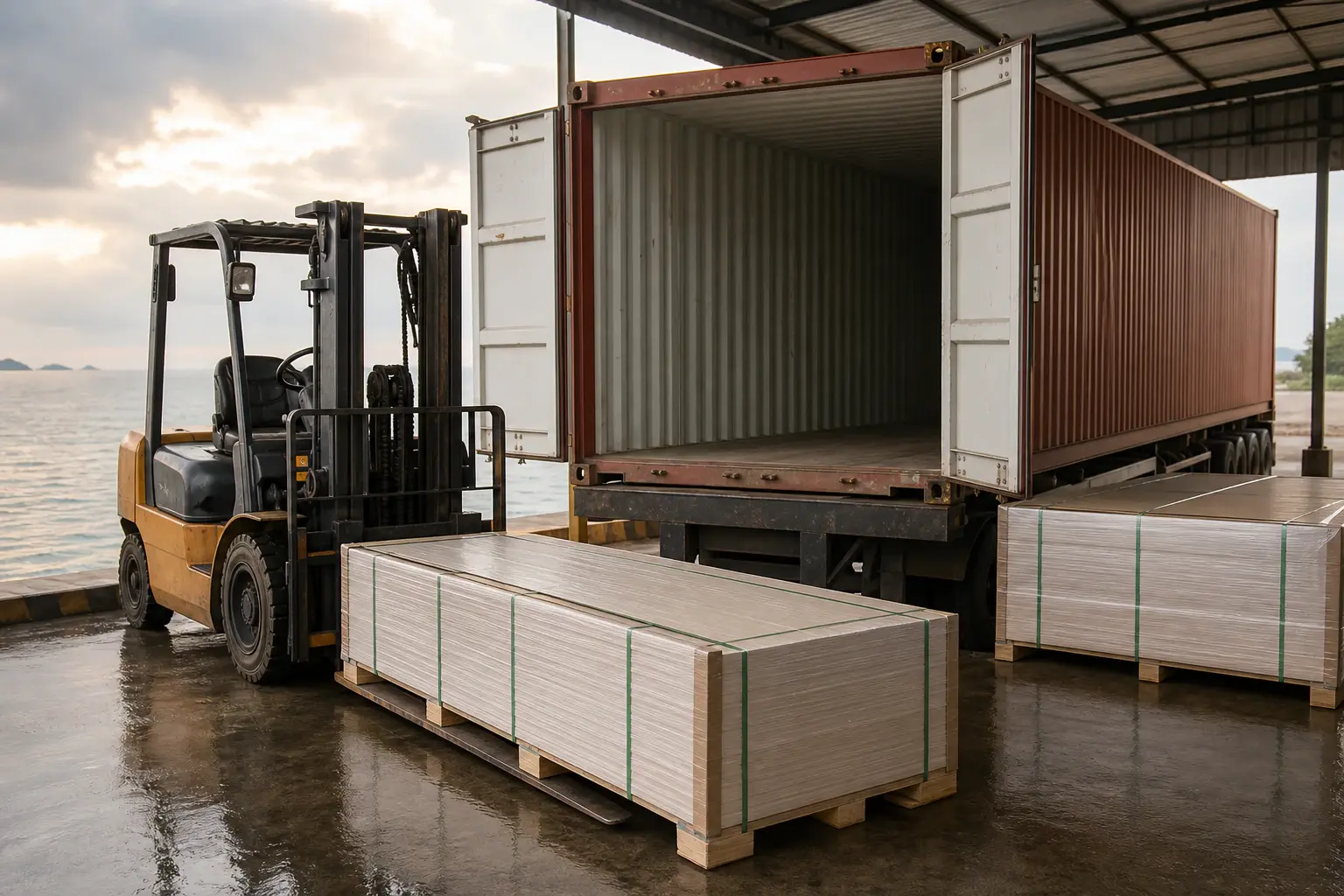
The delivery term and named place determine which services our quote includes. Your importer or broker adds destination duties, taxes, port charges, storage and inland handling as applicable. Give us the final receiving point, equipment and required timing so the packing and delivery proposal fits the whole agreed journey.
How should an importer begin a Latin America plywood order?+
Name the destination country, end use, receiving point and working language. We can then compare suitable panel constructions, documents, packing and shipment options.
Can I use one Spanish specification for several countries?+
Use one technical master specification, then have each importer approve its local product description, invoice wording, pack marks and required documents.
What changes for a Brazil shipment?+
Prepare Portuguese commercial wording for importer review. The importer checks the NCM classification and any administrative treatment in current Siscomex systems, while the buyer names any relevant ABNT or project standard.
Which plywood products work for distribution?+
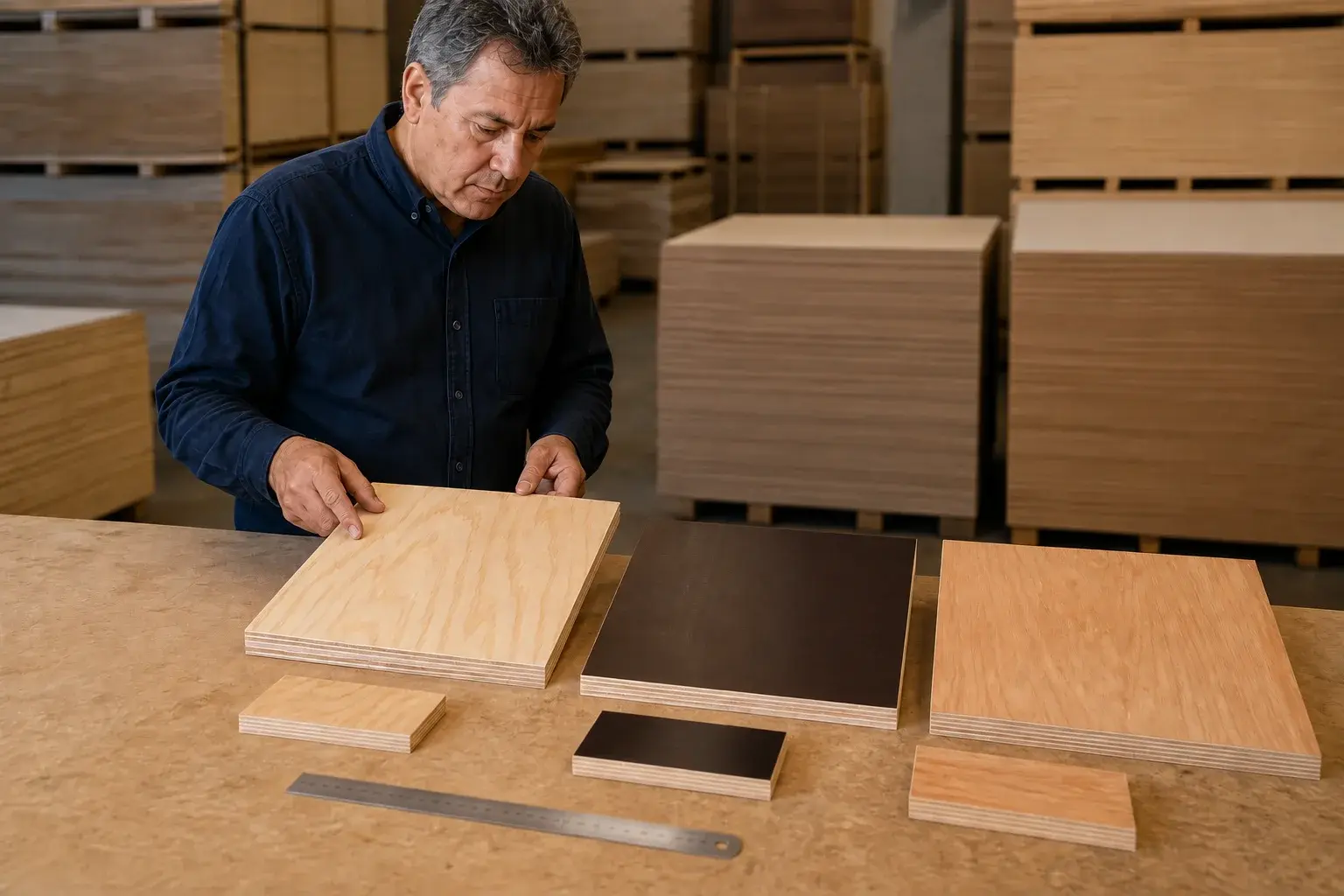
Commercial, poplar and hardwood plywood are starting points for general stock. Compare face grade, core species, bond, actual thickness, moisture, pack quantity and the finish your customers need.
How should I state a 4 × 8 panel size?+
Exact 4×8 ft is 1219.2×2438.4 mm, not 1220×2440 mm. State the actual length, width, finished thickness and tolerance your customers need; we confirm the manufacturing dimensions and units in the quotation.
Which oversize plywood formats can be quoted?+
Regular sheet sizes: 1220×2440, 1250×2500, 1525×3050 mm. Available on request: 1250×3050, 1250×3660, 2100×2800, 1830×3660, 1250×3800 mm. Share the construction, thickness and quantity so we can plan production, packing, payload and unloading for your selected format.
How do I calculate import duties and trade measures?+
Ask the importer or customs broker to classify the exact panel and check live national tariff and trade-remedy systems for the transaction date. Add those charges to the agreed freight and inland-delivery plan.
When can preferential origin be claimed?+
CUZI PLY manufactures in China. Your importer or customs broker checks the applicable agreement, product-specific origin rule and required proof against the actual production facts; a Latin American delivery destination does not itself confer preferential origin.
What information accompanies Baltic Birch plywood?+
CUZI PLY manufactures all-birch plywood in China. Our quotation identifies face and core species, construction, dimensions and finish, with the agreed production, inspection and shipment records. Your importer confirms customs origin, classification and any trade measures using the actual material and production information.
How should ISPM 15 be considered in plywood packing?+
Describe processed plywood packaging and solid-wood pallets, bearers or dunnage separately. Solid-wood components may need treatment and marks under the destination's ISPM 15 rules.
How is a delivered price built?+
Start with the selected panel and pack quantity, then add the agreed freight, port, clearance, inland handling and local charges for the named destination and Incoterm.
What should a Latin America RFQ include?+
Start with the product or application, dimensions, quantity, destination country and delivery city or port. Add your document language, target date and preferred delivery term if known. Our factory team helps complete the specification and commercial conditions with the quotation.