CUZIPLYFactory-direct plywood
Get a quote
FIRE-RETARDANT PLYWOODCONSTRUCTION · TREATMENT · END USE

Fire-Retardant Plywood for Defined Test and project requirements

CUZI PLY fire-retardant plywood starts with a defined plywood substrate and a compatible fire-retardant treatment or treated-veneer process, followed by controlled uptake or recipe, drying, post-treatment moisture conditioning and surface finishing. The finished panel is then represented by a named specimen, test method, mounting and end-use classification requirements. This treatment can reduce ignition and flame-spread behaviour within the tested scope, but a 30-, 60- or 90-minute fire-resistance claim belongs to a complete wall, floor or door assembly—not to a loose plywood sheet.

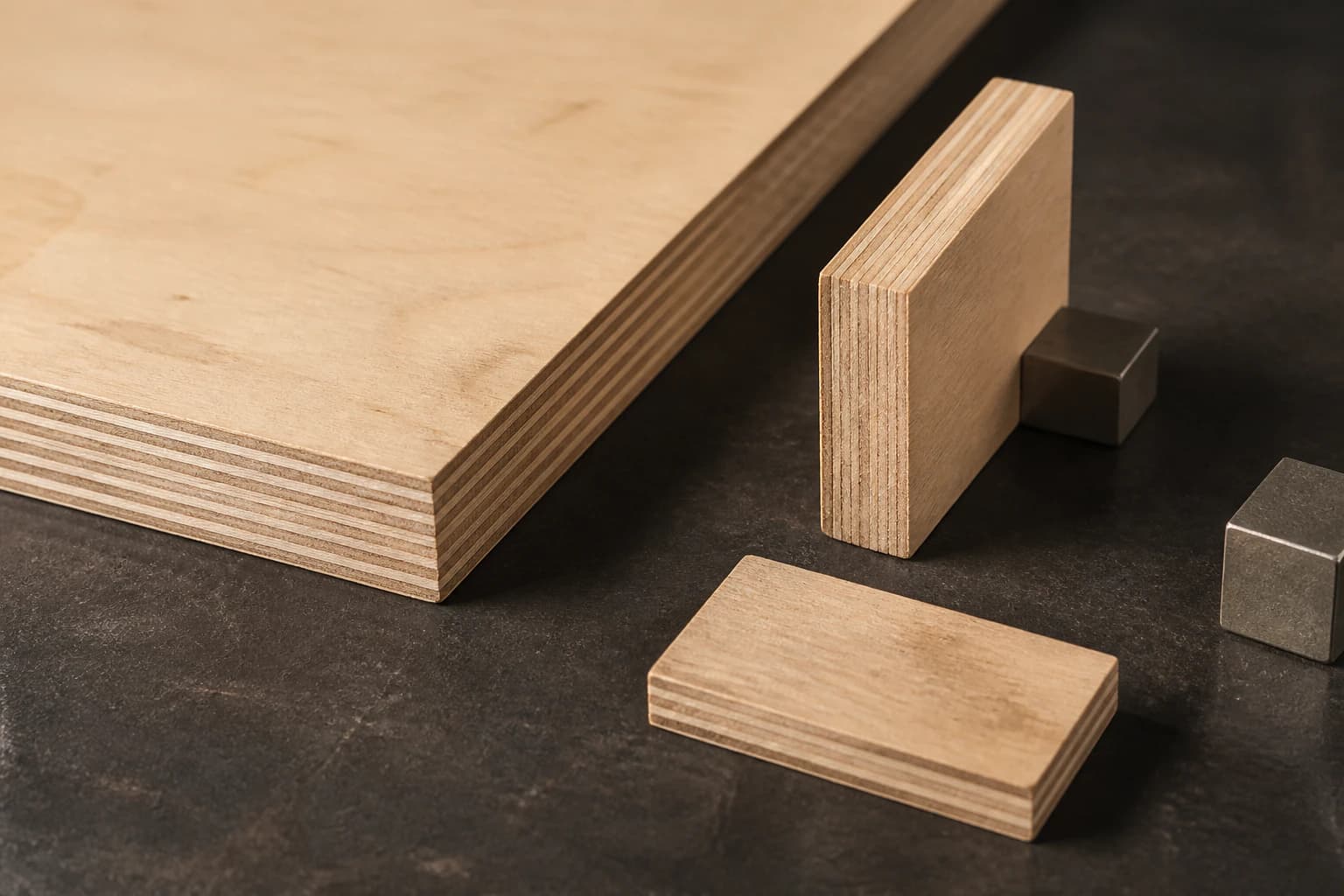
Fire-retardant plywood panel corner and test coupons showing the substrate face and alternating veneer edges
Treated panel constructionFull panel corner, edge build and separate coupons keep treatment and substrate in one construction record.
First question
Reaction to fire or fire resistance
Programme options
Treatment / EN classification / destination project
Reference format
1220×2440×18 mm
Moisture control
Post-treatment drying and conditioned lot release
Planning bands
USD 520–1,500/m³
Supporting documents
Specimen · test · classification · field of application
PRODUCT OPTIONS

Choose the programme that matches the installed use and destination.

Treatment documentation, EN classification and destination-project approval answer different purchasing requirements.

Treatment programme

Interior FR Treatment Program

Define a treated interior panel by substrate, recipe, conditioning, finish and buyer document list.

Use
Commercial interiors, furniture or lining substrates and project fit-out components.
Market
Middle East, Central Asia, Latin America and buyer-defined interior programmes.
Documents
Treatment and project supporting documentation available on request for the exact panel.
EN classification

EN Reaction-to-Fire Program

Freeze the finished panel and end-use condition before selecting tests and classification.

Use
European and EN-referenced wall, ceiling or other applicable product options.
Market
Europe and markets adopting EN test/classification language.
Documents
EN 13501-1 classification requirements available on request for the exact finished configuration.
Destination project

Destination / Project Classification Program

Build Australian, ASTM or buyer-nominated supporting documentation around the installed use and approval pathway.

Use
Projects with nominated NCC, AS, ASTM or complete-assembly requirements.
Market
Australia and other project-led destinations.
Documents
Project-specific qualification with separate product and assembly responsibilities.

Confirm the finished panel and its intended use.

Reaction to fire belongs to the tested finished product. A 30-, 60- or 90-minute fire-resistance rating belongs to a complete tested or assessed assembly—not to a loose plywood sheet.

PERFORMANCE REQUIREMENTS

Name the installed use and document and test requirements before selecting treatment.

The installed use determines which product or assembly question the supporting documents must answer.

The RFQ begins with installed use, reaction-to-fire or complete fire-resistance requirement, nominated method/classification, substrate, thickness, surface, mounting, fixing, air gap, orientation and destination approval. That sequence avoids buying a treatment name that does not fit the test condition.

  1. Installed use

    Wall, ceiling, floor, furniture substrate or complete assembly?

    Place the product in the correct approval pathway.
  2. Performance question

    Reaction to fire or time-rated assembly performance?

    Keep product classification separate from fire resistance.
  3. Finished build

    Which substrate, treatment, thickness and surface are tested?

    Freeze the whole specimen identity.
  4. End-use condition

    How is the panel mounted, fixed and oriented?

    Carry air gap and supporting substrate into the supporting documentation file.
  5. Destination

    Which EN, Australian, ASTM or project requirements applies?

    Do not translate one system's result into another.
FIRE PERFORMANCE

Reaction to fire classifies a tested product; fire resistance evaluates a complete construction.

PRODUCT QUESTION

Reaction to fire

Reaction to fire addresses how the exact material or finished product behaves under nominated test and end-use conditions, including flame spread, heat release or smoke metrics used by that system. Fire resistance concerns a complete wall, floor, roof, door or other assembly and its time-based loadbearing, integrity or insulation performance.

ASSEMBLY QUESTION

Fire resistance

Terms such as fire rated, fire resistant and fireproof plywood can refer to different aspects of fire performance. A treated plywood can enter a rated assembly, but a sheet alone does not create a one-hour construction. The project design and assembly report retain that responsibility.

TIME-RATING SCOPE

30 / 60 / 90 minutes

A time rating is set only for a complete tested or assessed wall, floor, ceiling or door assembly with defined layers, joints, fixings, supports and exposure direction. Do not transfer an assembly duration to the plywood sheet alone.

PANEL CONSTRUCTION

Confirm four connected records before specimen preparation.

A change to one record can alter the test or classification relationship.

Base panel

Species, face/back, core, ply schedule, bond, density, thickness and moisture.

Treatment

Chemistry/system family, application stage, controlled recipe or uptake, conditioning and lot.

Finish

Raw, sanded, paint, overlay or other surface included in the tested finished product.

End-use build

Mounting, fixing, substrate, air gap, orientation and permitted field of application.

TREATMENT + CONDITIONING

Treatment control continues through conditioning and moisture release.

Treatment identity, conditioning state, moisture release and production values remain linked in the supporting order documents.

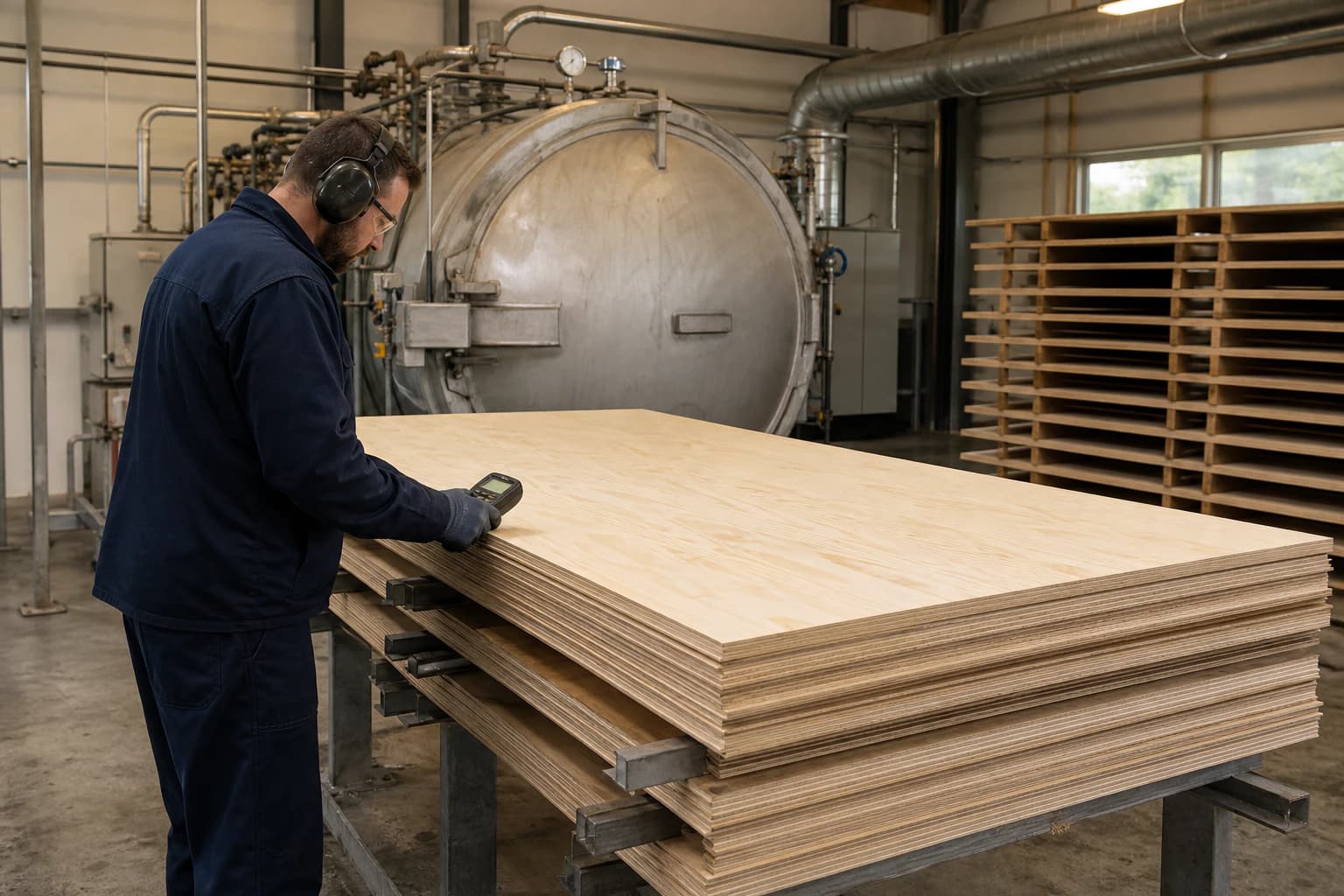
Technician checking conditioned plywood sheets beside a closed pressure-treatment vessel and ventilated drying racks
Treatment and conditioningConditioned panels, a closed treatment vessel and a technician connect process control to the released lot.
FROM SPECIMEN TO PRODUCTION

Any change that touches the tested configuration needs a scope decision.

Confirm permitted changes to the tested configuration before production.

  1. Approve substrate and treatment compatibility
  2. Run the controlled treatment or treated-veneer option
  3. Condition and dry to the agreed moisture state
  4. Finish and machine the representative panel
  5. Prepare traceable specimens from the defined lot
  6. Test and classify under the nominated method
  7. Release production only within accepted variation
STANDARDS & END USE

Match methods, classifications and assembly approvals to the finished construction.

Each programme can be configured for the exact finished construction, test method, classification scope and destination approval requirements.

EN 13501-1:2018

available on request for the exact product construction

Classification uses applicable reaction-to-fire test data for the finished panel and end-use condition.

EN 13823:2020+A1:2022

Available on request

SBI method used where applicable to the selected building-product options.

EN ISO 11925-2:2026

document and test packages configured to order

Single-flame ignitability method paired with the applicable EN classification programme.

EN 13986 construction-product pathway

Project-specific qualification

Applied where the treated panel is an applicable construction product with the required declaration option.

AS 5637.1:2015 + NCC

available on request for the exact Australian lining option

Confirm the current NCC edition adopted by the project jurisdiction, then align the applicable AS 5637.1 wall/ceiling supporting documentation and approval path.

AS ISO 9239.1:2003 + NCC

Available on request

Confirm the current NCC edition adopted by the project jurisdiction; AS ISO 9239.1 radiant-panel supporting documentation remains limited to the nominated flooring system.

ASTM E84 buyer requirements

Project-specific qualification

Surface-burning characteristics remain inside the ASTM method and tested assembly.

Complete fire-resistance assembly

Buyer / project confirmation required

Assembly design, interfaces and time rating are owned by the complete system, not the plywood sheet alone.

FULL SPECIFICATION

Compare treatment, finished build, required documents and test coverage across all three options.

Compare all 23 specification fieldsReview construction, treatment, testing and documents for each option.Show specificationsHide specifications
Decision fieldTreatmentEN classificationProject approval
End-use / project requirementsInterior fit-out, furniture or lining substrate defined by buyerApplicable EN reaction-to-fire product and end-use requirementsAustralian, ASTM or buyer-nominated project classification
Base plywood species and constructionPoplar, hardwood, eucalyptus, birch, combi or specified substrateExact veneer/core/adhesive construction frozen for testingSubstrate and any structural/emission requirement recorded separately
Veneer / core / adhesive compatibilityCompatibility screening before treatment selectionTreatment, adhesive and finished-panel build retained through EN programmeEach performance retained only where supporting documentation covers the combined construction
Treatment chemistry / system categoryImpregnation, treated veneer, additive, compatible surface system or combined optionRecipe/system selected for the exact EN specimen and end useSystem selected for NCC, AS, ASTM or project method and approval processes
Treatment application optionsPanel, veneer or controlled surface application as approvedproduction processes matches classified specimenDestination/project requirements defines where treatment enters manufacture
Process control / uptake or recipe optionApproved recipe, cycle and process acceptance recordCritical process settings and allowed variation linked to test fileBuyer/laboratory documentation plans defines measurable control fields
Post-treatment conditioning and moistureDrying and moisture window confirmed before sanding or finishingConditioning state retained before specimen and production releaseMoisture, equilibrium and destination handling recorded in project technical documents
Thickness and densityProject thickness family and treated density windowTested thickness and applicable field retainedExact thickness/density inside the destination supporting documentation scope
Surface / overlay / paint compatibilityFinish option tested for adhesion and treatment interactionFinished face used for test/classification retained in productionOverlay, paint or HPL system treated as a separate finished construction
Edge and machining ruleCut sequence, dust control, compatible edge finish and touch-up specifiedMachining changes reviewed against classified product scopeSite cuts and penetrations follow project-approved treatment/finish next steps
Standard sizes1220×2440 and 1250×2500 mmConventional formats within test and production processesDimensions retained inside project supporting documentation and logistics plan
Project size scope1525×3050, 1220×3800 or 2100×2800 mm after treatment/flatness validationOversize requires specimen, process and field-of-application reviewWide/long format proceeds only after approval, handling and classification-scope check
Test methodBuyer-nominated treatment or fire-performance checkEN 13823 and EN ISO 11925-2 where applicableAS 5637.1, AS ISO 9239.1, ASTM E84 or nominated method
Classification targetProject fire-retardant treatment targetEN 13501-1 class for the tested finished configurationNCC group/smoke, flooring, ASTM surface-burning or project target
Specimen thicknessRepresentative exact thickness stated in planTested thickness and permitted extensions documentedSpecimen thickness locked to project method and report
Mounting / fixing / air gap / substrate / orientationRecorded when the buyer's document and test requirements requires itAll end-use parameters used for classification are preservedInstalled condition supplied by project designer/laboratory
Field of application / extension optionNo extension assumed beyond the written treatment fileDirect/extended application only where the classification supporting documentation permitsApproval authority confirms transfer across thickness, finish or mounting
Smoke / flame terminology and supporting documentationBuyer target tied to named method and recordSmoke and flame classifications reported with EN result scopeNCC/AS/ASTM terms retained in their own systems without conversion
Treatment durability / service environment optionInterior or other declared service exposure statedTreatment durability reviewed for the exact panel; EN 16755 is context only for wood, not panel classificationDestination climate, finish and maintenance inputs added to project plan
Lot / batch identitySubstrate lot, treatment batch, conditioning and release identitySpecimen-to-production traceability maintainedProject submittal, test reference and shipment lot cross-indexed
TDS / SDS / report / declaration optionApplicable treatment TDS/SDS and controlled production recordTest/classification reports and construction-product documents as applicableDestination reports, declarations and approval schedule assembled by scope
Packing and dry storageFlat supported dry pack protected from re-wettingConditioned panels isolated from moisture and finish damageLot-separated export pack with document and handling controls
Lead-time variablesSubstrate, treatment cycle, conditioning, finish and quantitySpecimen preparation, laboratory schedule, classification and productionProject approval, destination tests, combined performance needs and documents
SIZES & THICKNESS

A larger format enters the programme only after treatment and document review.

Interior FR Treatment Program

  • 1220×2440 mmConventionalRoutine treatment programme size.
  • 1250×2500 mmConventionalRoutine treatment programme size.
  • 1525×3050 mmAfter confirmationTreatment uniformity, conditioning, flatness and handling validated.

EN Reaction-to-Fire Program

  • 1220×2440 mmConventionalSubject to exact test/classification requirements.
  • 1250×2500 mmConventionalSubject to exact test/classification requirements.
  • 1525×3050 mmAfter confirmationSpecimen and field-of-application review required.
  • 1220×3800 mmAfter confirmationProcess, conditioning, finish and classification scope reviewed.

Destination / Project Classification Program

  • 1220×2440 mmConventionalOnly within approved project scope.
  • 1250×2500 mmConventionalOnly within approved project scope.
  • 1525×3050 mmAfter confirmationDestination test and approval review.
  • 1220×3800 mmAfter confirmationLong-panel treatment, handling and report scope validated.
  • 2100×2800 mmAfter confirmationWide-panel process, mounting, packing and classification review.
REFERENCE PRICES

Price follows the substrate, treatment cycle and document and test requirements.

1220×2440×18 mm treated plywood, USD/m³ planning basis

USD 520–750/m³

Substrate, treatment family, uptake/recipe control, conditioning and finish drive the interior programme.

USD 700–1,050/m³

Exact specimen, EN tests, classification, production equivalence and document package shape this band.

USD 950–1,500/m³

Destination methods, approval pathway and combined performance/document needs determine the project requirements.

Indicative prices depend on the plywood construction, fire-retardant treatment, thickness, required tests, finishing, quantity and export packing. Send the destination, delivery terms and required documents for a current quotation. Freight, duties and taxes are included only when stated in the quotation.

Quotation variables: Base plywood species and construction, treatment system, controlled process, conditioning, moisture, thickness, finish, specimen count, test/classification requirements, field of application, documents, quantity, packing and destination approval.

SPECIMEN PREPARATION

Traceable specimens retain thickness, orientation and lot identity.

Specimen dimensions, mounting and conditioning are matched to the nominated test method.

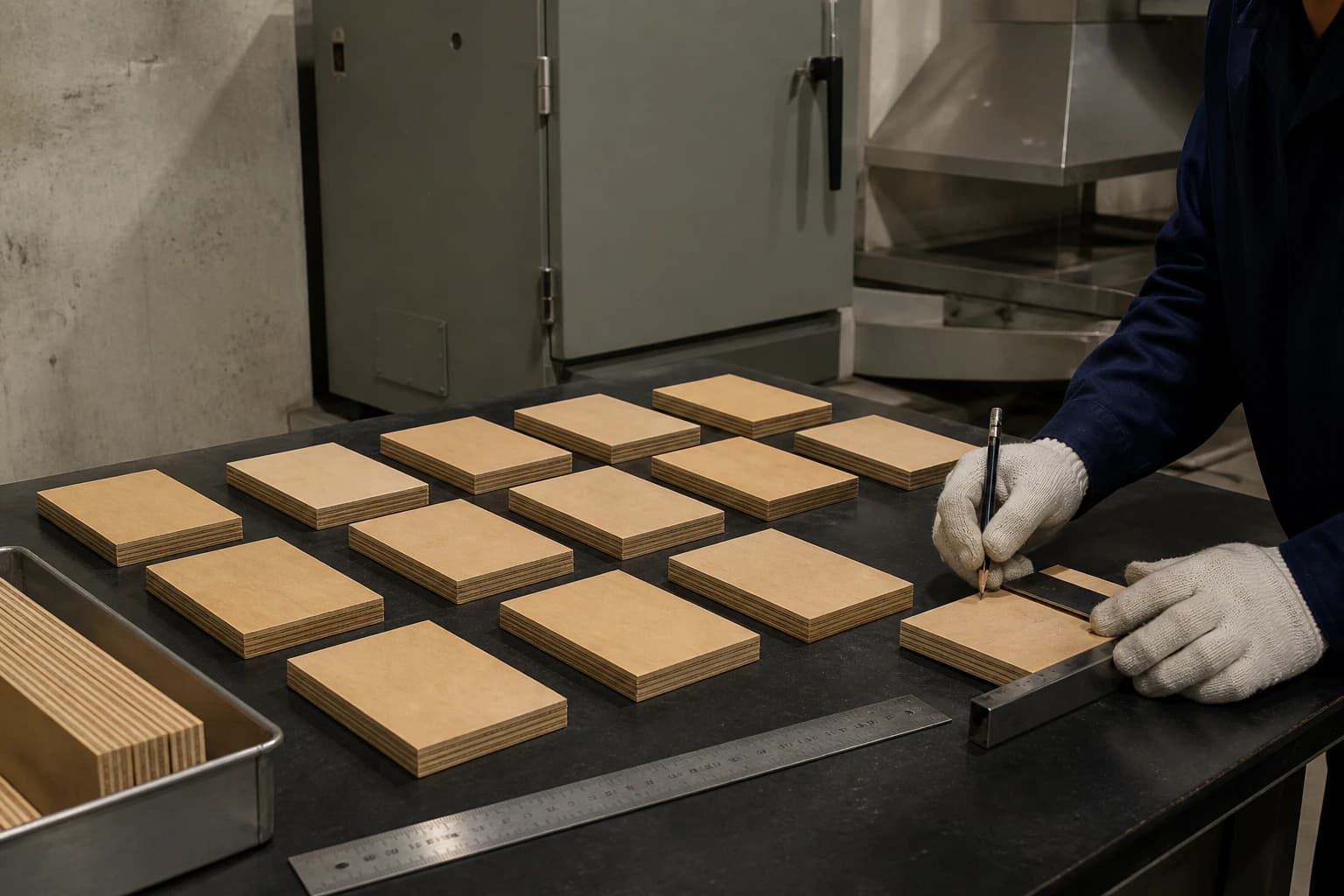
Gloved technician aligning multiple traceable plywood test specimens on a laboratory preparation bench
Test specimen preparationMultiple plywood coupons are aligned on a preparation bench before the nominated test configuration is assembled.
PACKING & DOCUMENTS

Release the dry lot and its document package together.

Treatment records, classification scope, handling and destination approvals remain cross-referenced.

Dry storage

Keep conditioned panels flat, supported, ventilated and isolated from re-wetting or incompatible finishes.

Lot identity

Cross-index substrate, treatment batch, conditioning release, specimens, report and shipment.

Document package

Configure TDS, SDS, test, classification, declaration and destination records to the order.

DECISION QUESTIONS

Before the purchase order

Choose the right specification.

What is fire-retardant plywood?

It is a defined plywood substrate combined with an approved fire-retardant treatment process, conditioning, moisture, thickness, surface and process controls. When a classification is required, the tested finished configuration and end-use condition must match the product supplied.

How do fire retardant, fire resistant, fire rated and fireproof differ?

Buyers use these phrases loosely. Fire-retardant or fire-treated plywood usually describes a product treatment. Fire rated and fire resistant may refer either to reaction-to-fire supporting documentation or a complete assembly. Fireproof plywood is an imprecise commercial term, not an unlimited performance category; the RFQ must name the actual method and scope.

What is the difference between reaction to fire and fire resistance?

Reaction to fire classifies how a tested product behaves under specified exposure and end-use conditions. Fire resistance evaluates a complete assembly over time for criteria such as loadbearing, integrity or insulation. A sheet does not create a one-hour wall, floor or door by itself.

What is required for EN 13501-1 classification?

Define the finished substrate, treatment, thickness, density, surface, mounting, fixing, air gap, supporting substrate, orientation and intended end use. Select the applicable tests, then keep production within the classification and field-of-application scope limits.

How are EN 13823 and EN ISO 11925-2 used in an EN option?

They are test methods used where applicable to the product and target classification. EN 13823 addresses the single burning item test; EN ISO 11925-2 addresses ignitability under a small direct flame. EN 13501-1 uses suitable test data for classification.

Can a low-smoke or smoke-performance target be specified?

Yes. Name the governing test/classification system, metric, finished configuration and acceptance target. Low-smoke wording must remain tied to the applicable report; values and classes from EN, Australian or ASTM options are not treated as interchangeable.

What is required for AS 5637.1, AS ISO 9239.1 or ASTM E84 projects?

Start with installed use and confirm the current NCC edition adopted by the project jurisdiction. Australian wall and ceiling lining options align applicable NCC requirements with AS 5637.1; nominated flooring uses AS ISO 9239.1. ASTM E84 is a separate buyer-nominated surface-burning option. Each needs its own specimen and approval scope.

Does treatment or coating alone determine the finished panel classification?

No. Substrate, treatment, thickness, density, moisture, surface/finish, specimen preparation, mounting, fixing, air gap, orientation and field of application can all matter. Changing one input requires a documented scope decision.

How are cutting, edge finishing, surface finishing and storage controlled?

Record machining before or after treatment, dust and edge handling, compatible touch-up or finish, cure and inspection. Store conditioned sheets flat, dry, supported and protected from re-wetting. Site modifications follow the project-approved next steps and report scope limits.

What information is needed for a Fire-Retardant Plywood RFQ?

Provide installed use; reaction-to-fire or complete fire-resistance requirement; nominated test and classification; base panel; treatment and finish; thickness; mounting, fixing, air gap, substrate and orientation where relevant; machining, quantity, destination, approval process, TDS/SDS and report needs. Our team can recommend the suitable Incoterm for the destination and order volume.

Plywood enquiry

Tell us what you need.

Provide installed use; reaction-to-fire or complete fire-resistance requirement; nominated test and classification; base plywood species and construction; treatment and finish; thickness; mounting, fixing, air gap, substrate and orientation where relevant; machining and site finishing; quantity; destination and approval process; TDS, SDS, test, classification and declaration needs. Our team can recommend the suitable Incoterm for the destination and order volume.

CHAT WITH CUZI PLY

By sending this request, you allow CUZI PLY to use the submitted details to respond. Read the Privacy Policy.