Panel construction
State face and back species or decor, core species, ply build, permitted gaps and repair limits.
CUZI PLY supplies plywood for furniture factories, cabinet makers and joinery production across carcasses, doors, shelves, work surfaces, frames and interior panels. Match each component to its face and core construction, 3–30 mm thickness, typical 8–12% shipment moisture, machining tolerance, hardware, exposed-edge quality, natural or decorative surface, destination documents and export packing. Furniture Grade, Commercial, Poplar, Birch, Hardwood, Melamine, HPL and project fire-performance requirements can be combined within one production programme.
These six inputs connect the component drawing to the construction, machining requirements, surface and destination documents.
State face and back species or decor, core species, ply build, permitted gaps and repair limits.
Use an 8–12% typical shipment target, adjusted for the selected construction and destination conditions.
standard requirements include 1220 × 2440 and 1250 × 2500 mm in 3–30 mm; project sizes follow line and packing checks.
Set finished thickness tolerance, calibration, CNC profiles, drilling pattern, edge quality and sample requirements.
Coordinate natural veneer, paint, melamine or HPL with the reverse face, edge treatment and cleaning duty.
Name the emission, sourcing, fire or project documents required for the exact ordered construction.
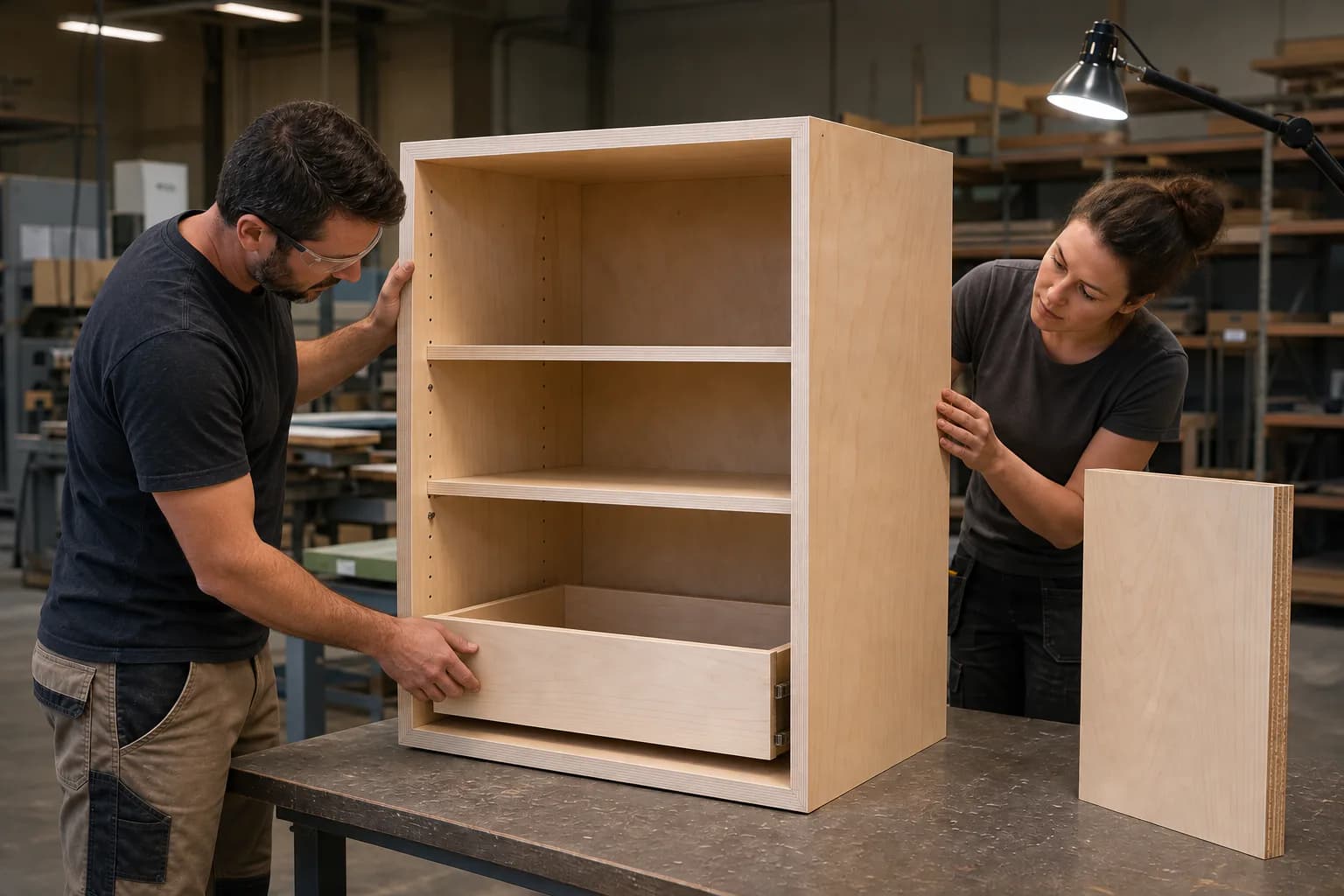
Square, repeatable boxes that combine concealed faces, drilled hardware and assembled joints.
State finished thickness, tolerance, core construction, screw pattern and face/back balance.Visible parts where flatness, surface consistency, hinge machining and edge finish remain prominent.
Coordinate both faces, hinge-cup depth, edge treatment, finish and appearance sample.Horizontal components defined by support spacing, load, edge appearance and long-term flatness.
Provide span, load, thickness, support position and exposed-edge requirement in the drawing.Large visible parts exposed to cleaning, wear, local loads and hardware attachment.
Match surface grade, reverse-face balance, edge profile, support and cleaning chemistry.Concealed shaped parts that favour low mass, repeat cutting and dependable staple or screw fixing.
Confirm core integrity, cut-edge quality, fastener option, stiffness requirement and nesting yield.Machined and fitted parts with visible joints, aligned grain and controlled finish transitions.
Define tolerance, routing quality, veneer direction, joint detail and finished appearance sample.Repeat modules combining visible decor, hardware, cleaning exposure and replaceable field parts.
Specify decor consistency, wear duty, hardware drilling, replacement method and repeat-lot reference.Large aligned surfaces governed by flatness, joints, fixing layout, emissions and project fire requirements.
Coordinate subframe, movement gaps, fasteners, balanced finish and the required assembly documents.Panelized interior elements connected to a frame, doors, trims and the project performance specification.
State frame spacing, joint system, acoustic or fire requirement, thickness and installation tolerance.Mixed visible and concealed parts designed for repeat use, cleaning and planned replacement.
Identify the BOM position, finish, cleanability, hardware, replacement access and project documents.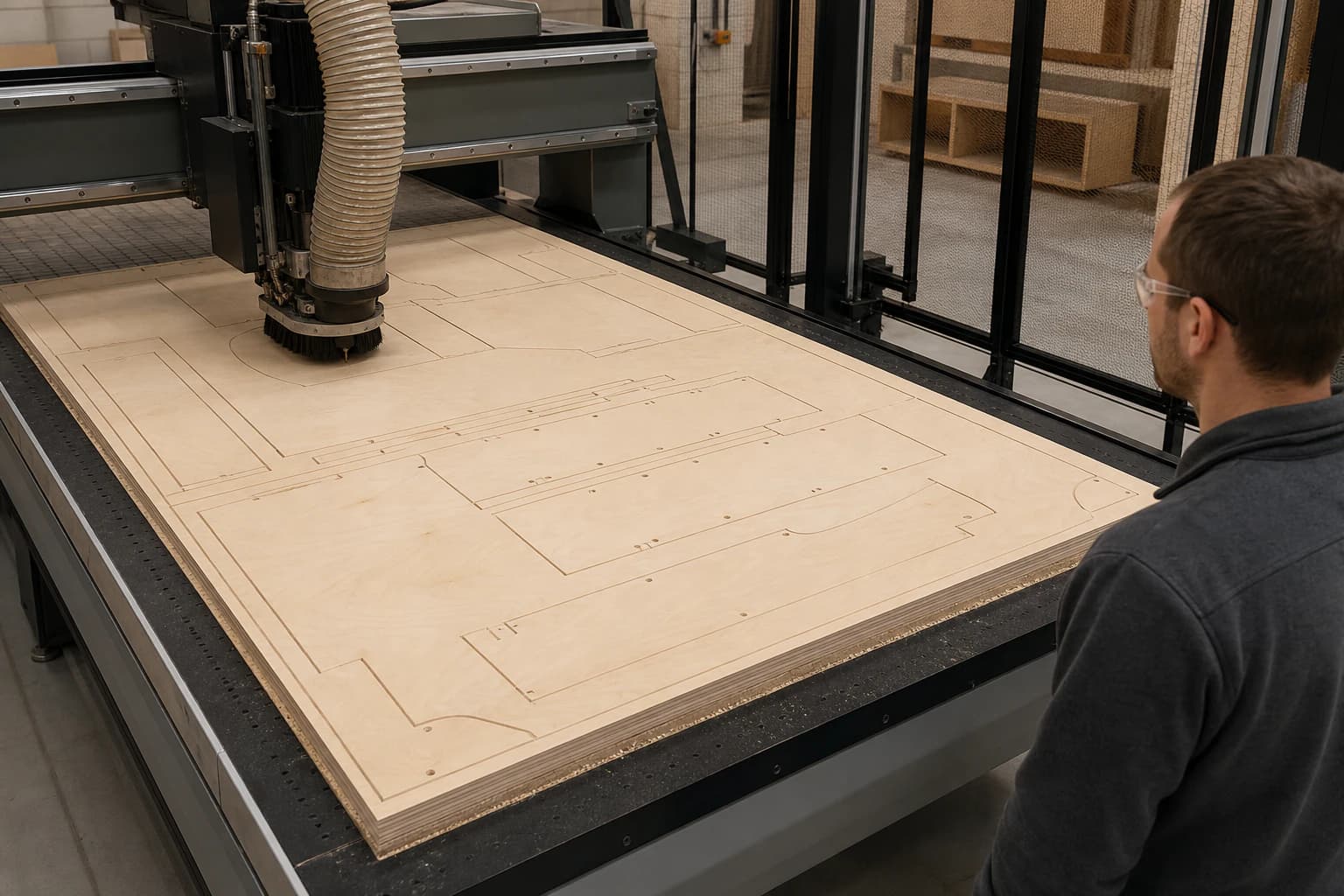
List each component, face visibility, grain direction, hardware, finish, quantity and revision.
Assign face, core, bond, moisture, dimensions and surface options to each BOM position.
Check pack condition, moisture, flatness, thickness and appearance before machining.
Set sheet size, trim, grain direction, part labels and expected material yield.
Run the selected tool, feed and hold-down method on a representative component sample.
Confirm hole diameter, depth, spacing, exit-face quality and hardware position.
Match exposed, banded, sealed or concealed edges to the permitted core appearance.
Combine paint, veneer, melamine or HPL with a compatible substrate and balanced reverse face.
Use the specified pilot hole, screw, hinge cup, insert and edge distance on the selected construction.
Check squareness, joints, movement, panel orientation, shelf fit and drawer operation.
Use cleaning chemistry and temporary protection compatible with the finished surface.
Record appearance, dimensions, labels, pack protection and the agreed repeat-order reference.
Use the linked product pages for specifications and price guidance; this matrix matches each option to the component duty.
| Product option | Best fit | Advantage | Confirm | Consider another option when |
|---|---|---|---|---|
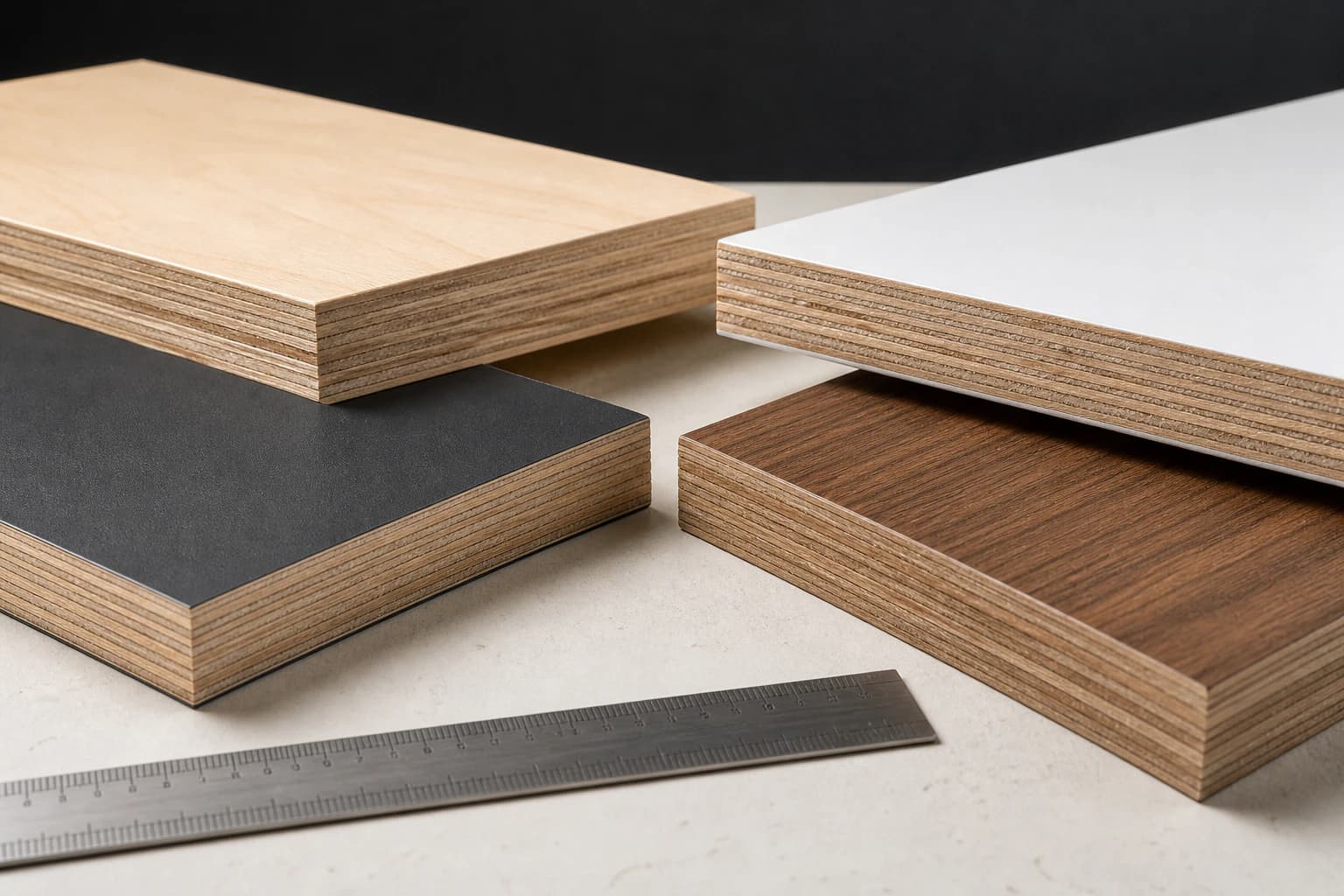
| Furniture Grade Plywood | Visible cabinetry, routed components and repeat production | Calibrated construction, controlled faces and machining-focused options | Core build, face grade, tolerance, moisture and emission requirements | A cost-led concealed component has simpler appearance and machining requirements |
| Commercial Plywood | Concealed cabinet parts, general joinery and value-focused interiors | Broad construction choices in common export formats | Face visibility, core option, thickness tolerance and finish compatibility | Precision exposed edges, tight calibration or a decorative factory face governs the part |
| Birch Plywood | Exposed edges, machined parts and light-coloured natural finishes | Dense face veneers, visible ply structure and clean machining options | Birch scope, face appearance, core repairs, moisture and lot reference | Lower weight, supplied decorative faces or a different colour/species is the priority |
| Baltic Birch Plywood | High-ply components and precision parts using a verified substrate lot | Consistent multi-ply construction for visible edges and demanding machining | Substrate identity, lot, machining scope, destination documents and legal-origin information | An alternative construction provides a clearer destination, availability or weight fit |
| Hardwood Plywood | Dense-core furniture, shopfitting and hardware-intensive components | Higher-density construction options for robust machined joints | Face and core species, density, moisture, finish and machining sample | Component weight or handling favours a lighter poplar or combi option |
| Poplar Plywood | Lightweight carcasses, upholstered frames and handling-sensitive parts | Lower panel mass with selectable face and core controls | Core quality, fastener option, finish, thickness and required stiffness | Visible high-ply edges or heavy hardware require a denser construction |
| Melamine Plywood | Ready-faced cabinet interiors, shelving and modular components | Factory-applied decorative paper surface over a plywood substrate | Decor, texture, face balance, core, edge banding and cleaning duty | A separately specified laminate, natural veneer or painted finish better matches service |
| HPL Plywood | Work surfaces and commercial fixtures exposed to wear and frequent cleaning | Specified HPL face, adhesive, plywood substrate and balancing layer | Laminate grade, reverse balance, bond, edge detail, heat and cleaning exposure | A lighter-duty decorative surface meets the component requirement |
| Fire-Retardant Plywood / FR-HPL option | Project-defined interior products or assemblies with a fire requirement | Panel and finished-build options aligned with the named test methods | Jurisdiction, product or assembly scope, finish build-up and report coverage | The project has no named fire requirement or uses a different tested assembly |
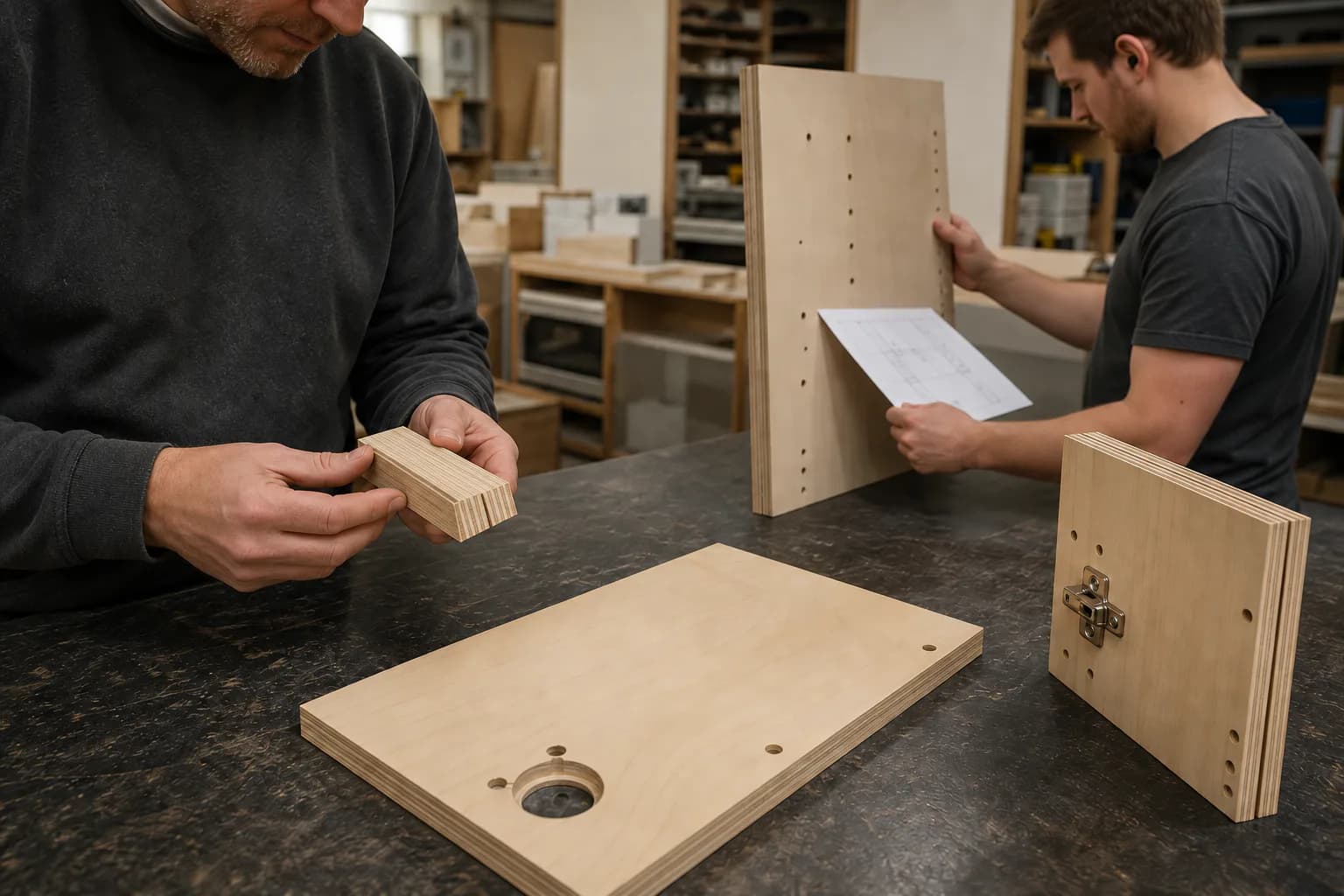
State the face and back grade, permitted repairs, colour range and reference sample for each component.
Specify ply appearance, gap limits, sanding, profile, edge banding or sealing for the finished edge.
Set the shipment moisture target and allow panels to condition under controlled factory conditions before machining.
State nominal and finished dimensions, measurement method and tolerance for cutting, joints and hardware.
Use routed and drilled samples to confirm the core construction visible at profiles and holes.
Record tool, feed, hold-down, entry and exit face, tabs and acceptable edge breakout.
Define fastener, pilot hole, edge distance, direction and repeated installation on the selected construction.
Match paint, natural veneer, melamine or HPL to the substrate, adhesive and intended appearance.
Record both surfaces so pressing, finishing and service conditions support panel flatness.
Specify preparation, adhesive, colour, radius, corner quality and repair method.
Match the surface and adhesive system to the actual traffic, temperature, chemicals and cleaning cycles.
Name the destination requirements and exact panel construction covered by the requested test or regulatory documents.
Define whether the required result applies to the plywood, laminated build-up or complete installed assembly.
Keep the BOM position, panel construction, samples, hardware and change-notification requirements together.
Formaldehyde-emission compliance for covered hardwood plywood products.
Chamber-method formaldehyde-emission testing for the specified panel construction.
Tracking eligible forest-based material through the certified supply chain.
Certified-material and chain-of-custody documentation where required.
Documents for the named plywood, laminate, adhesive or finished assembly.
Product/application: Furniture & Interior Plywood · Destination: confirm with inquiry · Shipping basis: Recommended from component and destination details.
Before the purchase order
Match the carcass drawing to face visibility, finished thickness, tolerance, screw and hinge positions, component weight, finish and destination documents. Furniture Grade Plywood suits calibrated repeat machining; Commercial Plywood suits value-focused concealed parts; Poplar reduces weight; Birch or Hardwood supports denser edges and demanding hardware.
The main production range is 3–30 mm. Standard sheet options include 1220 × 2440 and 1250 × 2500 mm, with larger project sizes checked against construction, press capacity, flatness, machining, packing and payload. A typical shipment moisture target is 8–12%, adjusted to the selected panel build and destination.
Specify the exact face, core, thickness and tolerance, then machine a representative sample using the intended tool, feed, hold-down and entry face. Check dimensions, holes, routed-edge gaps, chip-out, exit-face quality and part fit before repeat production.
The quotation should state ply construction, core-gap and repair limits, sanding, edge profile, finish colour and batch reference. A full-edge sample under the intended clear coat, stain or paint provides the appearance reference for production.
Use the selected panel thickness and construction with the intended screw, pilot hole, hinge cup, insert, edge distance and grain direction. Check clean drilling, repeated installation, thread engagement and the assembled joint on a representative component.
Melamine Plywood suits ready-faced cabinet interiors, shelving and modular parts with specified decor, texture and cleaning duty. HPL Plywood suits work surfaces and commercial fixtures requiring a separately specified laminate, adhesive and balancing layer for heavier wear or cleaning exposure.
Name the destination, applicable regulatory or test methods, exact panel construction and report required. TSCA Title VI may apply to covered US hardwood plywood products, while EN 717-1 provides a chamber test methods for specified European or project requirements.
State the jurisdiction and whether the requirement applies to the plywood, a laminated build-up, a complete cabinet or an installed wall or ceiling assembly. The quotation can then match the product construction and available report scope to that finished use.
Keep the drawing and BOM revision, panel construction, face and edge samples, machining sample, hardware details, finish, labels and packing reference together. Supplier changes to species, lay-up, thickness, surface or process are reported before the next production lot.
Send drawings or a BOM and state each component, visible or concealed use, face and finish, core preference, moisture, CNC and drilling, exposed edges, hardware, emission or fire requirement, sheet and finished dimensions, tolerances, monthly volume, destination and packing.
Plywood enquiry
Send the component drawings or BOM, visible and concealed surfaces, face and finish, preferred core or weight, moisture target, CNC and drilling details, exposed edges, hardware, emission or fire documents, dimensions, tolerances, monthly volume, destination, packing and target date. We will recommend the suitable plywood construction, quotation basis and shipping term for the order.
CHAT WITH CUZI PLY↗