ACX, BCX and CDX plywood: choose the grade for your job.
Choose the face for the finish, the exposure class for the conditions, and the structural rating for the installation. ACX, BCX, CCX and CDX are familiar buying terms, but they are not complete purchase specifications. The first two letters describe outer veneer grades; X is commonly used as an exterior-glue shorthand, not a universal Exterior panel rating.
Start with what you are making and what the finished surface must look like. CUZI PLY is your plywood manufacturer and direct supplier, with 10 production lines in Linyi, China. We help turn the grade description, dimensions and project requirements into a clear factory quotation.
ACX, BCX, CCX and CDX plywood: what to order.
Use the shorthand to start the conversation, then name the actual panel grade, bond and product requirements. Keep appearance and structural performance as separate buying decisions.
On a phone, swipe across the table to read every column.
| Trade description | Outer veneers | Starting choice | Complete the order |
|---|---|---|---|
| ACX plywood | A face / C back | Consider the smoother face for painting or a visible part; agree repairs and finish. | A-C panel grade, surface preparation and stated bond classification, plus the required product standard. |
| BCX plywood | B face / C back | Consider a sound utility face where permitted knots and repairs suit the part. | B-C grade, acceptable face repairs, sanding, core, bond and intended finish. |
| CCX plywood | C face / C back | Consider where neither face needs a decorative finish; agree the permitted open features. | C-C grade and whether it is plugged, touch-sanded or unsanded, with the required rating and exposure class. |
| CDX plywood | C face / D back | A common trade description for Exposure 1 sheathing, normally covered in the finished construction. | The actual rated sheathing grade, span rating, Performance Category and Exposure 1 mark, not just CDX. |
ACX vs BCX plywood: decide from the finished face.
A is a smooth, paint-suitable veneer grade that permits specified repairs; B is a solid face with permitted knots and repairs. C and D allow more utility features. The detailed limits belong to the grading standard, not a photograph.
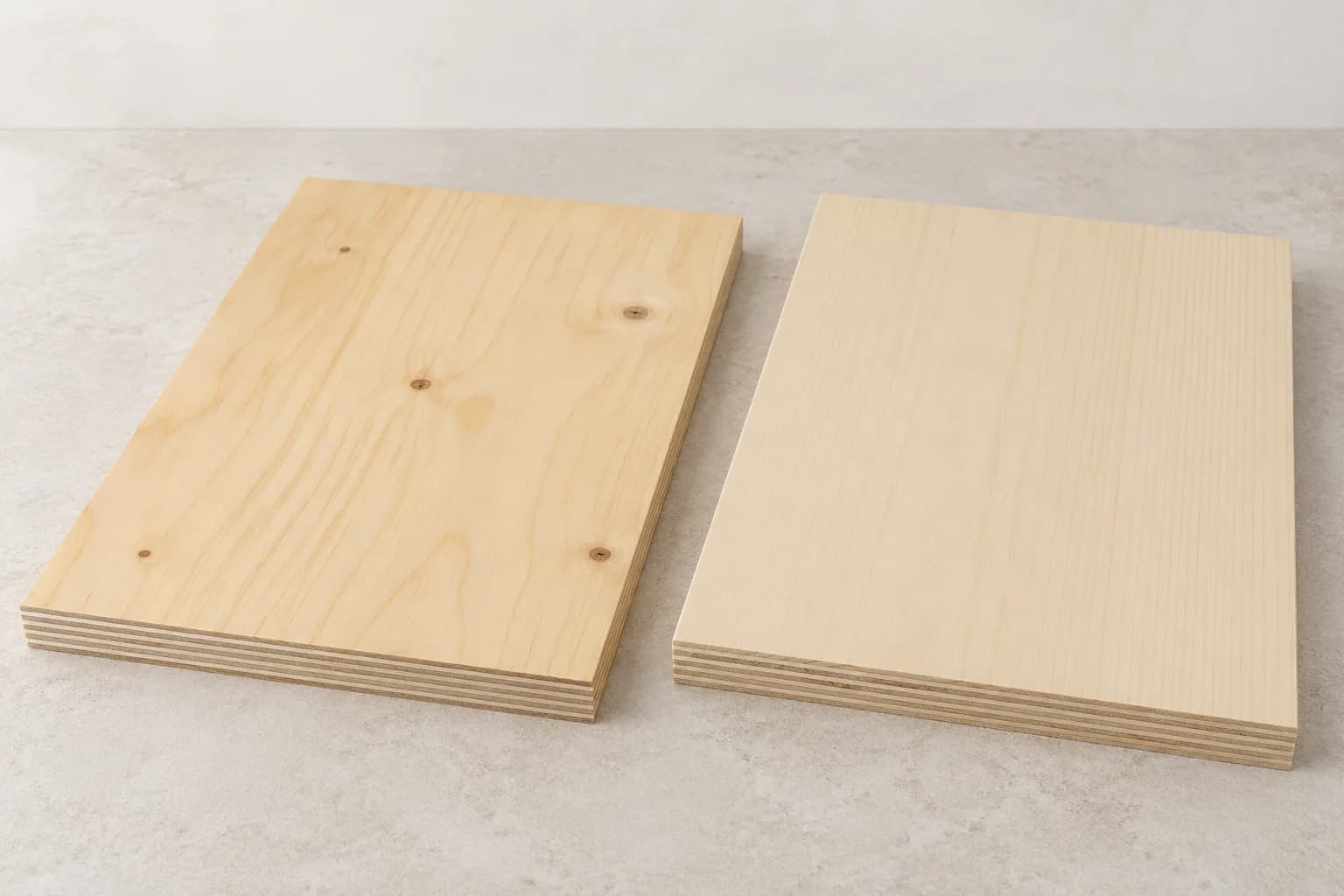
Softwood plywood faces for painted and covered parts
Choose the appearance of each side around your finish. Agree knots, repairs, sanding and the inner veneers before comparing the cost of a painted or covered part.
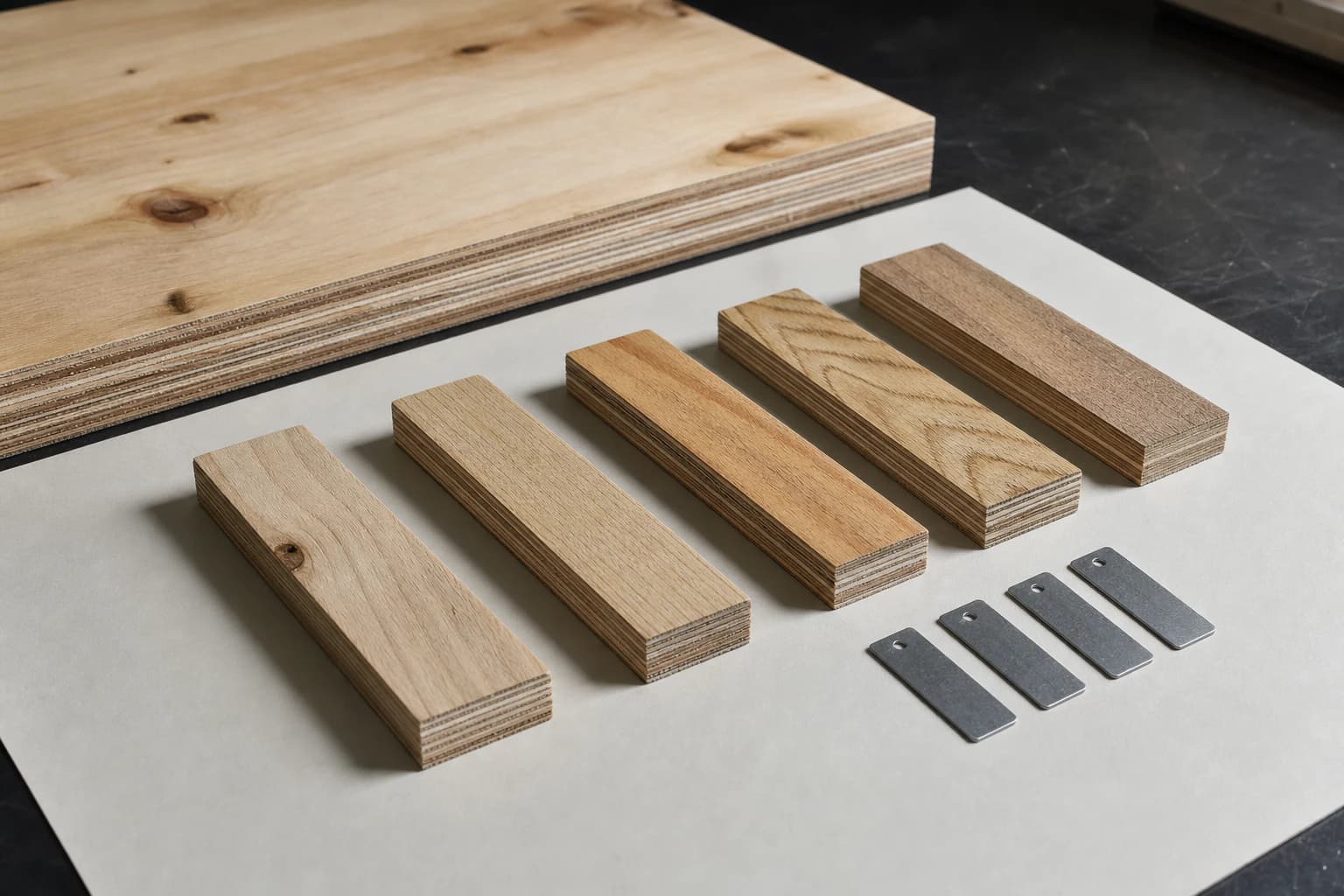
Structural plywood faces and layered edges
For roof, wall or floor work, match the panel specification to the supports, loads and installation. Check the offered product grade, rating and identification separately from its surface appearance.
For painted joinery, agree patches, sanding and edge preparation. For a covered crate or component, choose the surface your cutting and assembly need rather than buying a decorative face you will hide. For clear-coated work, agree grain, colour and permitted repairs: A does not mean a repair-free decorative veneer.
Explore Softwood Plywood and Commercial Plywood for face and core choices. Use Structural Plywood when the order requires structural properties. Product photographs here show surfaces and layers, not grade stamps.
NIST PS 1-22 gives the veneer-grade descriptions and panel-grade combinations.
CDX plywood vs Exterior plywood: the distinction matters.
Exposure 1 plywood
Exposure 1 addresses construction moisture and similarly limited wetting, not permanent weather exposure. CDX commonly refers to this sheathing class. Keep the panel protected in the completed building and plan drying after construction wetting.
Exterior plywood
Exterior addresses longer-term weather exposure. Under PS 1, its veneers are C grade or better throughout; D is not permitted. Specify Exterior explicitly when required, then coordinate coatings, joints, cuts, drainage and maintenance for the assembly.
Exterior-type glue and an Exterior panel are not the same purchasing description. Neither Exposure 1 nor Exterior is a preservative-treatment specification or a complete waterproofing system.
See APA plywood bond classifications. For component protection, read Marine vs Exterior Plywood and compare Pressure-Treated Plywood when preservative treatment is required.
An APA plywood grade stamp answers more than face quality.
APA rated plywood is identified through APA's quality-assurance programme. An APA trademark is not a generic label that any factory can add to a plywood panel. Check the mark on the offered product with the applicable product documents.
| Identification field | What it tells you | Buying decision |
|---|---|---|
| Panel grade | Face/back designation or end-use grade, such as Rated Sheathing. | Name the grade required for your part, rather than appearance letters alone. |
| Bond classification | Exposure 1 or Exterior identifies the intended moisture-exposure class. | Include construction wetting and long-term service conditions. |
| Span rating | Support-spacing designation for the stated panel use and installation. | Match the specified rating to the drawing, strength axis and supports. |
| Performance Category | Thickness-related designation used in US building-code specifications. | State it separately from the decimal thickness declaration and fabrication tolerance. |
| Product standard | The manufacturing/performance standard identified on the panel. | Give the required standard and edition with your project specification. |
| Agency and mill identity | The quality agency mark and manufacturing-mill identification. | Check the actual offered product marking and corresponding documents. |
If your project specifies APA, send that requirement with your enquiry. Ask for the actual offered panel designation, authorized marking and matching product documents before placing a structural order. A face grade or general laboratory report does not replace the required quality-agency identification.
Use APA's trademark-reading guidance and our Standards & Certifications page when preparing the document request.
Plywood span rating and Performance Category.
Read the span rating for its stated use
A sheathing rating such as 32/16 refers to maximum recommended support centres in inches: roof/subfloor respectively, under the specified application conditions. It is not a sheet size or thickness. Single-floor panels carry a single floor-span designation.
Use the actual rating with the strength axis, supports, loading, edge support and fastening specified for the job. Do not apply a roof number to floor joists or infer a load capacity from the number alone. Consult the project design and APA Panel Design Specification for the applicable design conditions.
Read the thickness category separately
Plywood Performance Category is a thickness-range designation linked to US code terminology. It is not an exact measured thickness. The decimal thickness declaration and relevant tolerances are separate details.
For cut parts, grooves and hardware, agree the finished thickness and tolerance needed for the fit. Do not assign a US Performance Category to a metric board simply by rounding millimetres. See APA thickness labeling guidance and Plywood Sizes & Thicknesses.
PS 1 and PS 2: plywood construction and panel performance.
PS 1 covers structural plywood, including veneers, construction, bond, grading and marking. PS 2 sets performance requirements for wood structural panels, including plywood and OSB, for specified sheathing and single-floor uses. Neither is an appearance letter or a synonym for APA membership.
The NIST current standards register lists PS 1-22 and PS 2-18 at this guide's update date. Give the edition required by your project and destination; a newer proposed revision is not automatically the applicable published requirement. The PS 2 product-standard overview describes its performance and marking scope.
For US structural work, request the supplied grade, required agency identification and relevant product documents together. For non-structural furniture or packaging, state the actual intended use and panel specification; a general utility board should not be described as rated building sheathing merely because its faces resemble C-D.
CDX vs OSB: compare rated panels, not shorthand names.
Plywood is built from veneers; OSB uses oriented strands. For a sheathing substitution, compare the required end-use grade, rating, bond class, thickness category, edge arrangement and installation—not CDX against an unspecified OSB sheet.
Then compare cutting, fixing, moisture handling and the total installed cost. If the panel becomes a finished component, also include surface preparation and exposed edges. Our Plywood vs OSB guide gives the fuller application comparison; use Structural Construction Applications to prepare the installation requirements.
Roof and wall sheathing
Compare the specified panel use, rating, exposure class and thickness category. Keep the strength axis, supports, edge support and fastening consistent with the project design; a similar sheet price or face appearance is not the basis for changing the panel.
Subfloor and single-floor work
Distinguish a subfloor below another layer from a specified single-floor panel. Compare the applicable floor rating, panel edges, supports and floor-finish requirements. Do not use the roof number of a two-number span rating as the floor spacing.
Painted or machined components
Compare the finished part, including sanding, paint preparation, cut edges, grooves, fixings and any added surface layer. An A or B plywood face may reduce preparation for your process, but the required finish and permitted repairs still belong in the order.
Put the grade, use and delivery requirements in one enquiry.
Tell our factory what you need to produce or build, then compare offers on the same construction and delivery basis. A familiar grade name is the beginning, not the whole order.
Use and installation
Identify the roof, wall, floor, furniture part or crate. For load-bearing work, send the required structural grade, loads, supports, strength-axis direction, edges and fixing details from the project specification.
Faces, core and finish
State which sides remain visible, the grading system, permitted knots and repairs, sanding, face/core species and finish. For covered components, focus on machining, fit, fixing and the surface your process actually needs.
Product identification
Include the required standard, bond class, rating, Performance Category and quality-agency marking. Ask for the offered panel designation and matching product information before ordering a code-specified structural panel.
Dimensions and delivery
Give finished dimensions and thickness, tolerances, quantity by format, destination and target date. We quote the panel construction, processing, packing and delivery terms together, so you can compare complete offers.
Planning repeat purchases? Keep the agreed face/back grades, core, bond, thickness and processing in your order description. Send the required structural designation and marking with any building-panel order, and let us know about changes to quantities, packing or delivery.
CUZI PLY plywood formats: regular 1220×2440, 1250×2500, 1525×3050 mm; on request 1250×3050, 1250×3660, 2100×2800, 1830×3660, 1250×3800 mm. State actual finished dimensions and tolerances. A nominal 4 × 8 ft description and a metric order format should not be treated as an exact dimensional match without agreement.
Use How to Specify Plywood, Plywood Grades, Cores & Bonds and the Plywood Price Guide to complete the order. These shared conditions keep quotations comparable:
- Order quantity & mix
- Tell us the sheet size, thickness mix and quantity you need. We confirm the minimum order and available mix for your selected construction.
- Production lead time
- We confirm the production schedule with your specification, order quantity and sample requirements. Production lead times are planning estimates, not transit times.
- Price & quotation unit
- Currency and price unit stated in your quotation. Your quote is based on the agreed dimensions, construction and quantity. Processing and requested testing are stated separately where applicable.
- Samples
- Tell us the plywood, thickness, finish and delivery country. We confirm sample availability, any sample and courier costs, and dispatch arrangements before proceeding.
- Packing & delivery
- We agree export packing, labels and the loading plan for your order. Share the destination country, named port or delivery point and preferred delivery term. Freight, insurance, duties and taxes are included only when stated in the quotation.
- Payment & order confirmation
- We agree the payment method, currency and any deposit and balance schedule in the quotation or proforma invoice. Your order confirmation sets out the product, quantity, packing and delivery arrangements.
US grades and order requirements
Questions before you choose the panel.
What does ACX plywood mean?
ACX usually means an A-grade face and C-grade back, with X used as an exterior-glue trade shorthand. Order the actual A-C grade and stated bond classification. Add surface preparation, inner construction and the product requirements for your use.
ACX vs BCX plywood: which should I buy?
Choose around the finish. ACX starts with an A face; BCX starts with a B face. Both shorthand names describe a C back. Agree the appearance and preparation of the visible side, then compare the same core, bond, thickness, processing and delivery.
What are CDX plywood grades?
CDX describes C and D outer veneers in common trade usage. It commonly refers to Exposure 1 sheathing, not an Exterior panel. Specify the rated panel and its marking for structural work; C-D letters alone do not provide a span rating or load capacity.
Does the X mean plywood is waterproof?
No. The shorthand does not describe the complete moisture performance of the panel or finished assembly. Include the stated bond class, exposure, coatings, joints and exposed-edge protection. Bond classification does not supply decay resistance.
Is CCX plywood the same as CDX?
No. CCX describes C-grade outer veneers on both sides; CDX describes a C face and D back. Also specify the actual grade, plugged or unsanded surface, bond classification and structural rating where required. Similar-looking utility faces do not establish equivalent panels.
Can I choose plywood from the photograph alone?
A photograph helps discuss grain, knots, repairs and surface preparation. It cannot identify a product standard, span rating or authorized grade mark. Use the written panel specification and the offered product information to place the order.
What should an APA plywood grade stamp tell me?
Read the end-use grade, exposure class, span rating, Performance Category, decimal thickness, product standard and mill identity together. The APA mark belongs to its quality-assurance programme; it is not a generic logo for any plywood made to an appearance description.
Is a 15/32 Performance Category an exact finished thickness?
No. It is a thickness-range designation linked to US code specifications, not a promise that every sheet measures exactly 15/32 inch. Include the decimal thickness declaration and required fabrication tolerance when the panel must fit grooves, hardware or adjoining parts.
Will a better-looking face give me a higher span rating?
Not by itself. Specify structural performance for the installation separately from face appearance. Keep the required panel grade, rating, thickness designation and installation conditions in the enquiry, even when you also need a paintable face.
How do I request plywood from CUZI PLY for a US project?
Send the use, faces, core, thickness, dimensions, quantity, destination and project product requirements. CUZI PLY is the factory and direct supplier. We set out the offered construction and available product documents with the quotation, including the marking required by your order.
Can CDX plywood and OSB be substituted for each other?
Compare the actual rated products and project requirements, not the two material names. For roof, wall or floor work, keep the end-use grade, span rating, exposure class, Performance Category, panel edges and installation conditions in the comparison. The project designer determines whether the proposed panel meets the specified application. For painted or machined parts, also compare preparation, cut quality, fixing and finished-part cost.
How do I keep a repeat plywood order consistent?
Retain the agreed face and back grades, core construction, bond class, finished thickness, dimensions and processing. For rated building panels, keep the required grade, rating, standard and agency marking in the purchase description as well. Tell our factory about changes to the finish, quantity mix, packaging or destination so the repeat quotation remains comparable.
Send the job requirements. Get a clear plywood offer.
CUZI PLY manufactures your ordered plywood construction. Tell us the grade you are looking for and how the panel will be used; our factory team helps clarify the surface, core, processing and required product information.
- Use, visible faces, finish, core and bond requirements.
- Project standard, grade, rating and required product marking.
- Thickness, format, quantity, destination and target date.
For a sample, name the construction, thickness and finish. We confirm availability, any costs and courier arrangements before dispatch; product-document requirements stay part of the order discussion.