Plywood vs MDF for cabinets and furniture.
Consider MDF for painted, profiled interior parts when a smooth, grain-free surface is the priority. Consider plywood when a natural veneer face, selected layered edge or a particular core construction suits the component.
You do not need to choose one material for an entire cabinet. Decide what the door, carcass, shelf and back must do, then compare the grade, thickness, finish, joints, weight and cost of the actual boards. Our factory team helps you choose the plywood construction and processing that fit your design and production order.
A veneer panel and a fibreboard solve different problems.
Plywood is built from wood veneers; MDF is made from wood fibres. A decorative surface can make them look similar, so identify the substrate as well as the finish.
On a phone, swipe across the table to compare both materials.
| Your decision | Plywood | MDF |
|---|---|---|
| Panel structure | Bonded wood veneers, typically cross-banded. Face species and inner construction are separate choices. | Compressed wood fibres bonded into a panel. Choose the MDF grade for the intended use and processing. |
| Natural appearance | A veneer face can provide the visible wood grain; selected layered edges can become part of the design. | The fibreboard itself has no natural veneer grain. A wood veneer, decorative facing or paint creates the visible finish. |
| Painted profiles | Select a suitable face and core; plan grain, repairs and exposed-layer preparation with the coating. | Smooth faces and routable profiles make MDF a practical option for painted interior parts; cut edges need suitable preparation and sealing. |
| Weight | Varies with the core, thickness, moisture and any facing. Compare actual density or sheet mass. | Varies with the grade and density. Standard and lightweight boards should not be assigned one common weight. |
| Hardware and joints | Check inner joints, the fixing location, fastener and actual thickness against the assembly requirements. | Use suitable screws, pilot holes and fittings for the board and thickness. Test the intended joint, especially edge fixings. |
| Moisture conditions | Choose the bond and complete construction for the exposure, with compatible edge and surface protection. | Select a dry-interior, humid-use or specifically exterior-suitable product as required. A moisture-resistant label is not universal outdoor suitability. |
| Cost comparison | Include face/core grade, machining, finish, yield, documents, packing and delivery. | Include the selected grade, profiling, edge preparation, finish, hardware, yield and delivery on the same basis. |
Compare the construction, grade and finish of the boards you will buy. The European Panel Federation explains MDF fibreboard construction; APA explains cross-laminated plywood. The specified product, supports and assembly determine its use in your component.
Birch plywood vs MDF
Birch plywood is worth considering when a natural wood face or a layered edge is part of the furniture design. MDF is worth comparing for a painted, profiled interior door where a grain-free surface is useful.
A birch face can cover an all-birch or a different veneer core. Specify the inside as well as the face grade, then compare shelf supports, hardware, cut edges, machining and the finished part weight with the MDF grade you use.
Marine plywood vs MDF
Marine plywood has a veneer construction selected for marine requirements; MDF has a fibreboard construction, with separate grades for different service conditions. For a painted cabinet in a humid interior, compare the specified boards and finishes rather than choosing by the word marine or MR alone.
For boat or exposed components, start with the required marine specification, wetting and drying, coatings, protected cut edges and fixings. A humid-interior MDF grade is not a direct substitute for that requirement. Match the chosen product and documents to the finished job.
Melamine plywood vs MDF
Melamine describes a decorative surface, not the material underneath it. Melamine plywood has a plywood substrate; melamine-faced MDF has a fibreboard substrate. The same surface colour can hide different cores, so name both the facing and the board.
For a finished cabinet, compare the reverse face, edge banding, cut quality, hardware positions, thickness and moisture conditions. When comparing cost, use the same finished specification: a raw MDF sheet and a ready-faced plywood panel include different finishing work.
Choose the door, carcass, shelf and back separately.
Spend on what each part needs. A high-quality painted door and a practical hidden panel can belong in the same furniture assembly.
Painted, profiled doors
MDF is worth comparing when you need routed details and a smooth painted appearance. Choose the grade for the interior conditions and plan edge sealing, coating and hinges. A plywood door needs a face and construction that suit the profile and finish.
Cabinet carcasses
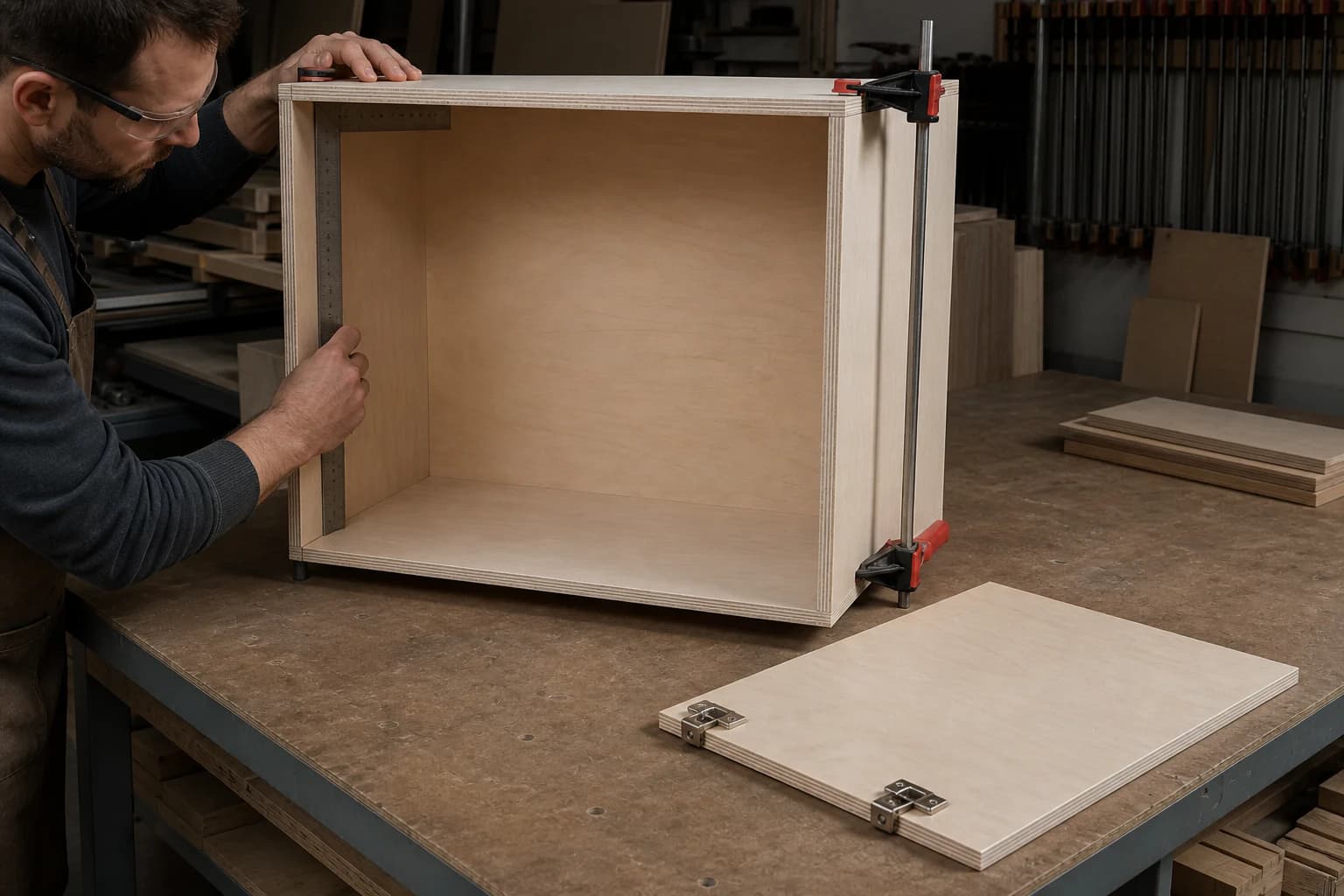
Compare finished thickness, squareness, panel mass, joints, hardware and any visible interior surface. Plywood face and core choices can be tailored to the component; an MDF-based carcass also needs the right board, fittings and finish.
Shelves and spanning parts
State the clear span, support arrangement, expected load and acceptable deflection. Compare the actual board and thickness, not a generic strength ranking. Add front-edge support or other design details where the assembly requires them.
Backs and concealed parts
State whether the back is decorative, encloses the cabinet or contributes to the assembly design. Choose thickness, fixing and moisture suitability accordingly. There is little value in paying for natural face appearance that will be fully covered.
For plywood options and production details, see Furniture Grade Plywood and Furniture & Cabinetry Applications.
Painted detail or natural grain?
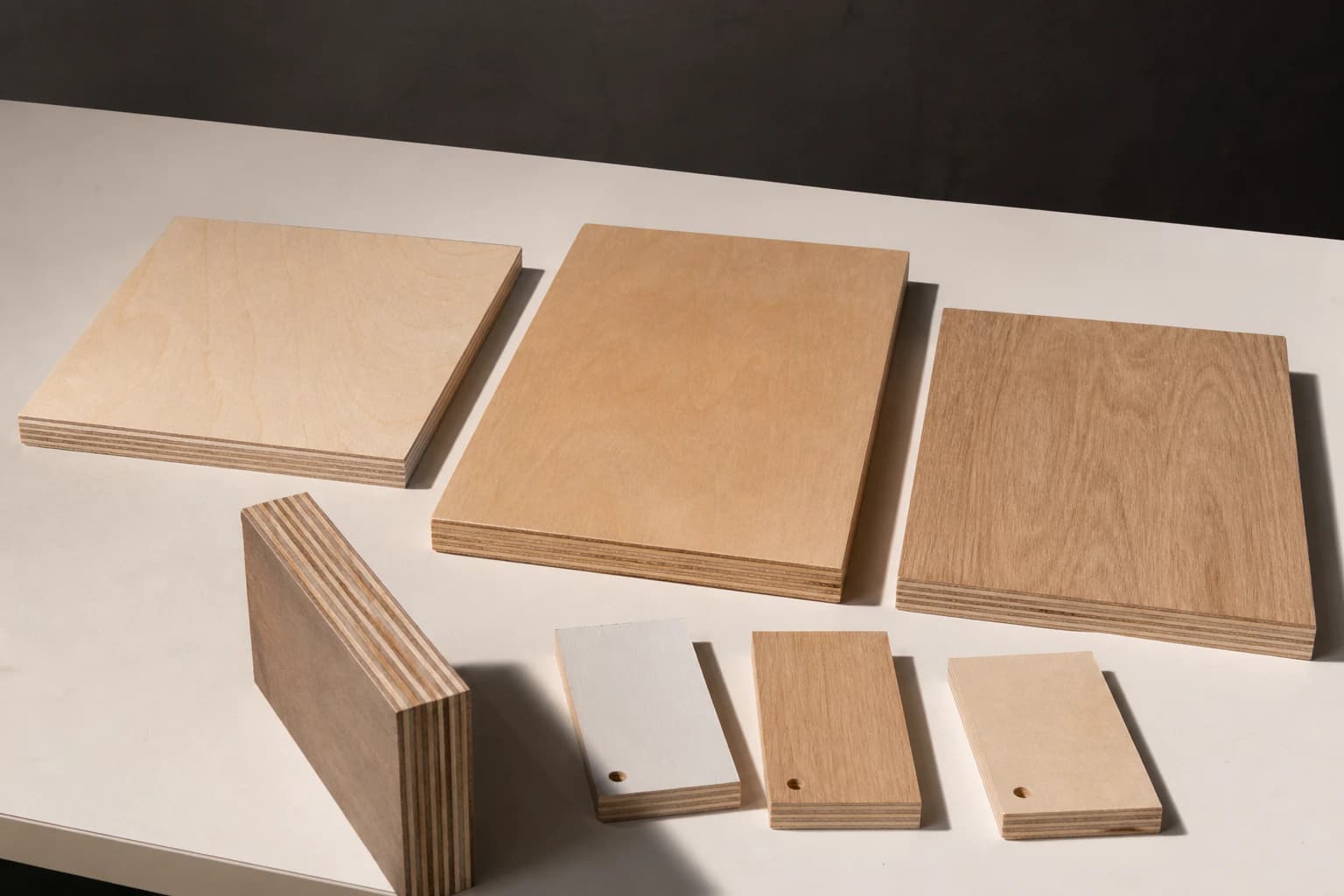
MDF offers a smooth, grain-free substrate for painted profiles. A plywood face supplies natural veneer grain, while a selected layered edge can remain visible. Both choices need a finish suited to the board and component.
Painting MDF or plywood
On MDF, cut-edge preparation and sealing help achieve an even finish. On plywood, check the face grain, repairs, sanding and exposed layers with the intended primer and coating. Compare the coated edge and face, not only the raw sheet.
The European Panel Federation’s MDF edge-finishing guidance explains the preparation behind a smooth result.
Veneer, laminate and exposed edges
Both substrates can be considered for decorative facing when the board, adhesive, preparation and balanced finish suit the process. For visible plywood edges, specify the ply arrangement and acceptable inner joints, gaps and repairs.
For a natural plywood face, compare species, grain, colour and repairs under the finish you intend to use. Our Surface & Overlay Options page helps plan the finished surface. For a melamine-faced MDF comparison, the European Panel Federation describes melamine surfacing on MDF.
Compare strength, weight and hardware on the actual component.
Thickness, grade, construction, supports and fixings all matter. There is no useful universal claim that one material is a fixed number of times stronger than the other.
Loads and support
Ask for relevant board properties when the part needs a performance check. A shelf also needs the span, support and deflection limit; a door needs its size, weight and hinges considered together. Structural building work needs the appropriate rated panel and design information.
Sheet and assembly weight
Use the offered density and finished dimensions. A poplar-based plywood, all-birch plywood and lightweight MDF are different comparisons. Include coverings, hardware and fittings when estimating the finished assembly or delivery payload.
Fasteners and joints
Specify the screw or fitting, pilot hole, fixing location and board thickness. Test the real joint where performance matters. Plywood needs suitable core quality at the fixing; MDF needs fittings and preparation suited to the board, especially at edges.
CNC and repeated parts
Compare machined dimensions, hole exits, chip-out, profiles and the finished edge with the tooling and support used in production. Agree calibration and part tolerances. Plan dust extraction and handling with the machining process for either material.
For same-size sheet comparisons, mass = length × width × thickness × density. A 1220×2440×18 mm sheet has a calculated volume of 0.0535824 m³; every 100 kg/m³ density difference changes calculated mass by about 5.36 kg. This is a calculation, not a weighed-board result.
See Birch vs Poplar Plywood for our plywood construction and calculated weight examples. For MDF joints, the European Panel Federation’s fixing guidance discusses screw selection, position and pilot holes.
Humidity changes the specification, not just the finish.
Select the board for dry interiors, humid conditions or exterior service as required. Kitchens, bathrooms and outdoor components are not one moisture category; describe how the part gets wet and dries.
MDF grade and moisture suitability
A humid-interior MDF product is not automatically an outdoor board. For example, the manufacturer distinguishes MEDITE MR for humid interiors from its separate exterior products. Check the chosen board’s intended use, edges, coating and installation requirements.
Do not infer performance only from board colour or an MR abbreviation. Use the manufacturer’s product specification for the actual grade.
Plywood construction and documents
For plywood, choose the face, core and bond for the exposure, then plan protection for cuts, joints and fixings. An exterior bond does not by itself make the panel marine grade or structural.
State the destination and product documents needed for the finished furniture. Ask about the applicable emission, bond and sourcing information for the selected board, rather than assuming a material name establishes compliance.
Our Bonding & Emission Options and Standards & Certifications pages explain the plywood information to discuss with your quotation.
A lower sheet price is only the beginning.
Board grade, thickness, quantity and market conditions affect the price. Compare the finished specification and delivery terms before deciding which option costs less for your production.
Usable parts per sheet
Use the cutting layout and trimming allowances for your component sizes. Include repairs, finish-critical areas and machining waste when comparing yield.
Processing and finish
Compare routing, sanding, filling, edge preparation, coating or facing, curing and labour. A board that fits the chosen process can reduce extra work, even if its sheet price is higher.
Hardware and assembly
Include screws, inserts, hinges, edging, joint preparation and the time needed to achieve the required fit. Evaluate the complete assembly rather than judging one raw board in isolation.
Order and delivered cost
Compare the same quantity, currency, packing and shipping basis. Check production and transit timing separately, and identify freight, insurance, taxes and destination charges in the quotation.
CUZI PLY plywood formats: regular 1220×2440, 1250×2500, 1525×3050 mm; on request 1250×3050, 1250×3660, 2100×2800, 1830×3660, 1250×3800 mm. Send the required size, thickness and quantity for a factory production and packing plan.
Compare the part you will make, then confirm the order.
Bring the plywood and MDF choices to the same component, finish and working conditions. Tell our factory which requirements your plywood alternative must meet; we help choose the construction, arrange material for evaluation and set out the quotation.
Compare the finished part
Use the same component dimensions, thickness tolerance and intended finish. Check both visible faces, cut edges and exposed layers, with the edging or coating you plan to use.
Run your machining and assembly
Compare routing, drilling, hole exits and edge preparation using the intended tooling. Fit the actual screws, hinges or fittings; assess the joint in the position and support arrangement used in your design.
Read the matching product documents
Compare the board grade, construction, thickness, test method, orientation and test conditions with your application. Use the required emission, bond or other product classification for the destination and project.
Compare the delivered order
List quantities by component and size, usable cutting yield, processing, finish and packing. Ask which delivery costs are included and separate production lead time from transit time.
Compare cost per usable finished part: divide the included material, processing, assembly and delivery cost by the number of parts that meet your specification. Use the same quantity, currency and finishing requirements for both options; include any additional edge preparation, hardware or cutting waste.
If you are changing materials, keep a component schedule showing the required thickness, joint fit, finish and quantity for each part. Check the complete assembled product before repeating the order. For plywood manufacturing and inspection, see Quality & Inspection; for product-document selection, see Plywood Testing Methods.
- Order quantity & mix
- Tell us the sheet size, thickness mix and quantity you need. We confirm the minimum order and available mix for your selected construction.
- Production lead time
- We confirm the production schedule with your specification, order quantity and sample requirements. Production lead times are planning estimates, not transit times.
- Price & quotation unit
- Currency and price unit stated in your quotation. Your quote is based on the agreed dimensions, construction and quantity. Processing and requested testing are stated separately where applicable.
- Samples
- Tell us the plywood, thickness, finish and delivery country. We confirm sample availability, any sample and courier costs, and dispatch arrangements before proceeding.
- Packing & delivery
- We agree export packing, labels and the loading plan for your order. Share the destination country, named port or delivery point and preferred delivery term. Freight, insurance, duties and taxes are included only when stated in the quotation.
- Payment & order confirmation
- We agree the payment method, currency and any deposit and balance schedule in the quotation or proforma invoice. Your order confirmation sets out the product, quantity, packing and delivery arrangements.
Plywood and MDF selection
Questions before you choose.
Is plywood or MDF better for kitchen cabinets?
Choose by component rather than using one material name for the whole kitchen. MDF can be a practical option for painted, profiled doors with a suitable grade and finish. Plywood offers veneer-faced and layered-edge options for carcasses, shelves, doors and other parts. Check humidity, supports, hardware, weight and the finished appearance for each component.
Which is stronger: plywood or MDF?
There is no reliable strength multiplier covering every plywood and MDF grade. Compare the relevant bending or joint performance for the actual board, thickness, span, load and orientation. Furniture shelf performance also depends on support and deflection; hardware performance depends on the fixing and joint. Structural work needs the appropriate rated product and design information.
Is MDF better for painting?
Its smooth face and ability to form routed profiles make it a useful starting point for painted interior doors and mouldings. Prepare and seal cut edges, then follow the compatible coating system. Plywood can also be painted when the selected face, repairs, core and preparation suit the finish. Compare a finished part before ordering repeat production.
Is plywood lighter than MDF?
It depends on the constructions being compared. Use the actual density, finished dimensions and any facing or coating. A poplar-based plywood, an all-birch plywood and a lightweight MDF do not have the same density. Ask for a sheet-mass or density reference for the offered boards and compare the complete furniture assembly.
Can MDF be used in humid or outdoor conditions?
Use a product specifically intended for the conditions. Moisture-resistant MDF for humid interiors is not automatically an exterior product; exterior-suitable MDF products are separate choices with their own requirements. Check the manufacturer's specification, finish, edges and installation. For plywood, also match the complete panel and bond to the exposure.
Is MDO plywood the same as MDF?
No. MDO is Medium Density Overlay: a surface overlay on a plywood panel. MDF is Medium Density Fibreboard, made from wood fibres. When ordering MDO, specify the plywood core, overlay and intended finish; the similar abbreviation does not make the substrates interchangeable.
Should I use one material for every furniture part?
Not necessarily. A painted profiled door, a natural-veneer panel, an exposed-edge shelf and a concealed back have different priorities. A component schedule can use different materials or plywood constructions. Check finished thickness, joint dimensions, hardware and the finish so the parts work together.
What should I send CUZI PLY for a plywood alternative or quotation?
Send the component, dimensions, thickness, finish, visible faces and edges, hardware, quantity and destination. Include any existing board specification and performance or emission requirements you need the plywood to meet. Our factory team will compare plywood faces and cores, sample arrangements, product documents and the quotation for your order.
How should I compare birch plywood vs MDF?
For natural grain and visible layered edges, compare a birch plywood construction and face grade that suit the design. For painted profiles, compare the intended MDF grade and coating process. Name the birch plywood core separately, then check the same component thickness, shelf support, machining, hardware, finish and weight.
Is marine plywood a substitute for MDF in humid cabinets?
Not by name alone. Marine plywood is a veneer panel with marine product requirements; MDF has different grades and a fibreboard core. For a humid interior cabinet, compare the selected board, finish, cut-edge protection and fixings. For boat or exterior work, use the product requirements and documents for that service environment.
Is melamine plywood the same as melamine MDF?
No. The melamine is the facing, while the substrates are different: bonded veneers in plywood and wood fibres in MDF. Compare core, thickness, reverse face, edge banding, machining, hardware and moisture grade as well as the surface design. Compare price with the same finishing work included.
Which test information makes plywood and MDF comparable?
Use data for the actual board grade and construction, including the thickness, test method, orientation and conditioning where relevant. Fixing comparisons need the same fitting and joint arrangement; shelf comparisons need the design load, span, supports and deflection limit. A finished part can show machining and finish quality, while product documents describe the required performance and classification.
Let us turn the plywood choice into a workable order.
CUZI PLY is the factory manufacturing your plywood. Tell us the component, finish and assembly requirements; we will help select the face, core and processing and prepare your factory quotation.
- Dimensions, thickness, visible surfaces and edges.
- Machining, hardware and any weight or performance target.
- Quantity, destination and required product documents.
If you already use MDF, share the requirements you want a plywood alternative to meet. We confirm the plywood construction, piece sizes, availability, any sample costs and courier arrangements with you.