Marine vs exterior plywood: choose for the job.
Marine plywood is about the selected veneers, core and durable bond—not just outdoor glue. Exterior plywood is the broader choice for an exterior service condition, with the construction and classification suited to the component.
Choose marine construction when your design or purchase specification calls for it. For other outdoor parts, compare a suitable exterior-service panel and protection system. If the panel carries load, confirm its structural properties as well.
CUZI PLY is your plywood manufacturer and direct supplier, with 10 production lines in Linyi, China. Share the part you are making; we will help select the plywood construction, finishing and order requirements.
Pay for the construction your project needs.
A marine panel can be the right purchase for selected joinery or a standard-specified job. It is not automatically the most economical answer for every outdoor component.
| Compare | Marine plywood | Exterior plywood |
|---|---|---|
| What the description means | A marine plywood construction, with the product standard stated when the project requires one. | Plywood selected for exterior service, with the relevant product and bond classification stated. |
| Face, back and core | Selected veneers and controlled joints, gaps and repairs to suit the chosen marine construction or standard. | Choose veneer quality and core around the component. Exterior service alone does not specify a marine veneer grade. |
| Bond durability | A durable bond is part of the complete marine panel specification. | Select the bond for the actual moisture exposure. Also confirm the full panel's suitability for that service. |
| Structural use | Confirm design properties and the project requirements when the part carries load. | Select a structural product and the appropriate exposure classification when the part carries load. |
| Finish and maintenance | Coordinate coatings, cut edges, holes, joints, drainage and care with the component. | Coordinate the same protection details. An exterior designation is not a maintenance-free finish. |
| Purchase decision | Choose when the marine specification, selected core or fabrication needs justify it. | Consider when a suitable exterior-service construction meets the job without an unnecessary marine specification. |
Start with the job, not the label. Tell our factory team which part you are making, what will get wet and which faces or edges will be visible. We can help compare the panel options before you commit to the order.
Marine, commercial, ordinary and Gurjan plywood.
A veneer name, a general-purpose description and a marine specification answer different questions. Compare the complete construction for the part you will make.
Marine plywood vs ordinary plywood
Marine plywood is a type of plywood, not a different raw material. Ordinary plywood is an informal description: identify its face, back, inner veneers, grade and bond. A general interior panel should not be chosen for repeated wetting simply because it has similar thickness or colour.
Marine plywood vs commercial plywood
Commercial plywood describes a broad range of general-purpose veneer panels, not one marine or exterior classification. Compare the offered face, core and bond with the component's exposure, machining and finish. For protected interiors, an appropriate commercial construction may meet the brief without a marine specification.
Gurjan plywood vs marine plywood
Gurjan is a timber or veneer trade description; marine describes a panel construction or product requirement. Ask whether the timber name applies to the faces, the core or all veneers, and identify the actual species. Then compare core joints, bond, grade and required product documents. A timber name alone does not establish marine conformity.
An alternative for marine plywood
If the design names a marine standard, keep that requirement or agree the alternative with the designer. Otherwise compare a suitable exterior-service, structural or overlaid plywood for the job. A phenolic adhesive describes the bond; a phenolic film describes an applied surface. Neither by itself establishes a marine veneer construction.
Gurjan or Gurjun is used as a timber trade name; the University of Hamburg timber reference lists Gurjun among the Keruing trade names. Identify the actual veneer species in the quoted panel rather than inferring its bond or grade.
Compare our Commercial Plywood, Hardwood Plywood and Film Faced Plywood by their intended component and complete specification. Use Film Faced vs Marine Plywood when an overlay is part of your comparison.
A boat interior and a roof panel ask different questions.
“Outdoor” does not describe the load, water source or drying conditions. Use these starting points to prepare a useful enquiry; the project design determines the final requirements.
| Your application | Start with | Confirm |
|---|---|---|
| Boat hull or a drawing that specifies marine plywood | The marine standard and construction named by the designer. | Required product documents, veneer/core, thickness and the vessel or component design. Agree substitutions with the designer. |
| Boat interiors, lockers and joinery | Marine construction for demanding wet-service parts; assess protected interiors by their actual exposure. | Splash or washdown, drying, visible finish, component weight, joints and machining. |
| Coated signs and outdoor joinery | A suitable exterior-service panel and finish; consider HDO/MDO where an overlay is required. | Rain, sun, exposed edges, coating system, support, fixings and access for maintenance. |
| Building sheathing or other load-carrying panels | Structural plywood with the required grade, properties and exposure classification. | Designer-specified supports, loads, fasteners, panel thickness, product marking and documents. |
| Planters, near-ground parts or decay-prone locations | A durability and treatment plan suited to the exposure. | Water and soil separation, drainage, biological exposure, compatible finish and fasteners. Discuss Pressure-Treated Plywood where required. |
For details on drainage, edges, finishes and installation, see our Marine & Exterior Applications page. For load-carrying building panels, start with Structural Plywood rather than treating a marine name as a strength rating.
Compare the veneers, core and bond together.
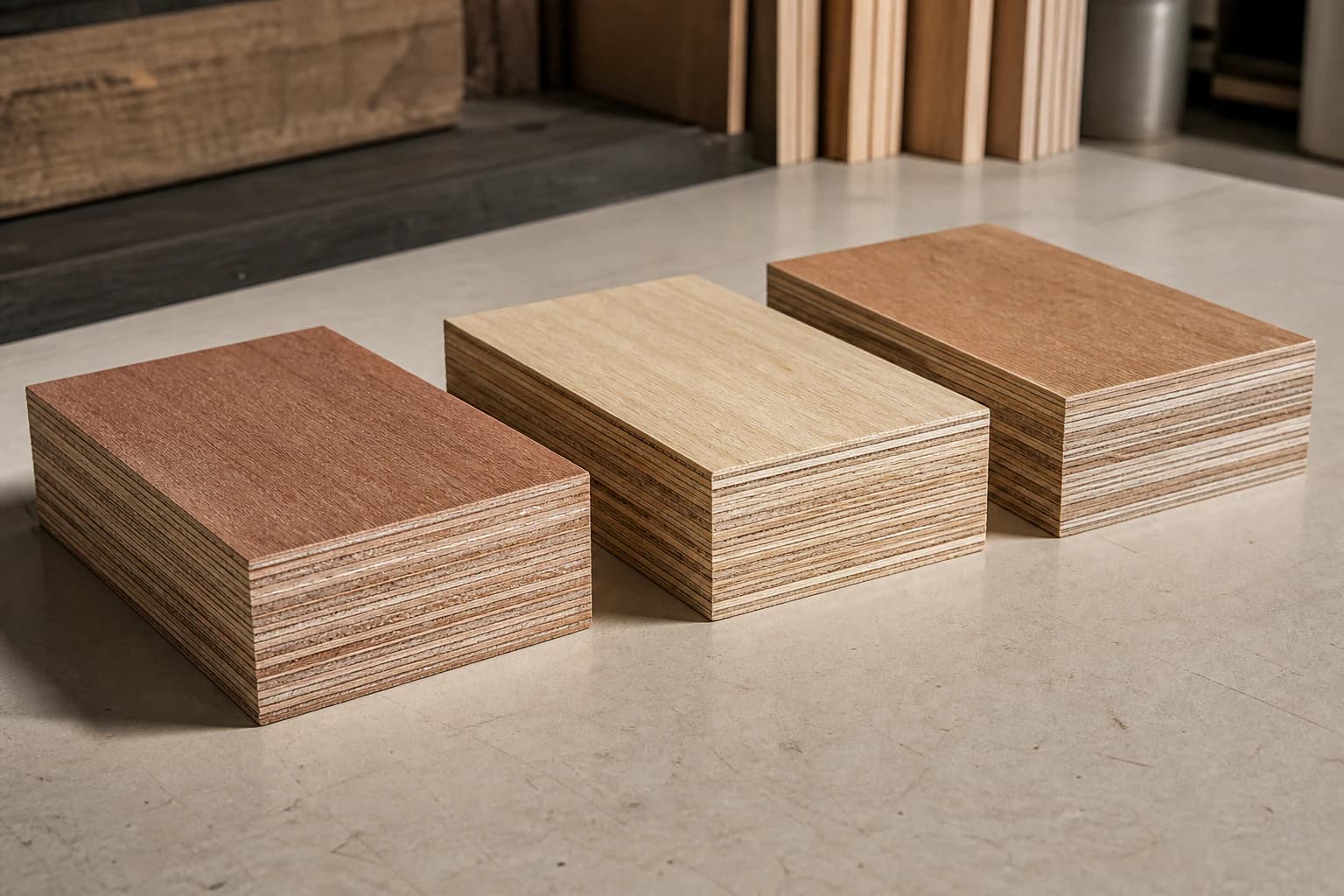
A smooth face is useful for finishing, but it does not reveal every inner joint or repair. The construction you order should state the face and back species and grade, core, ply arrangement, acceptable gaps and repairs, and the relevant bond requirement.
Veneer quality and component finish
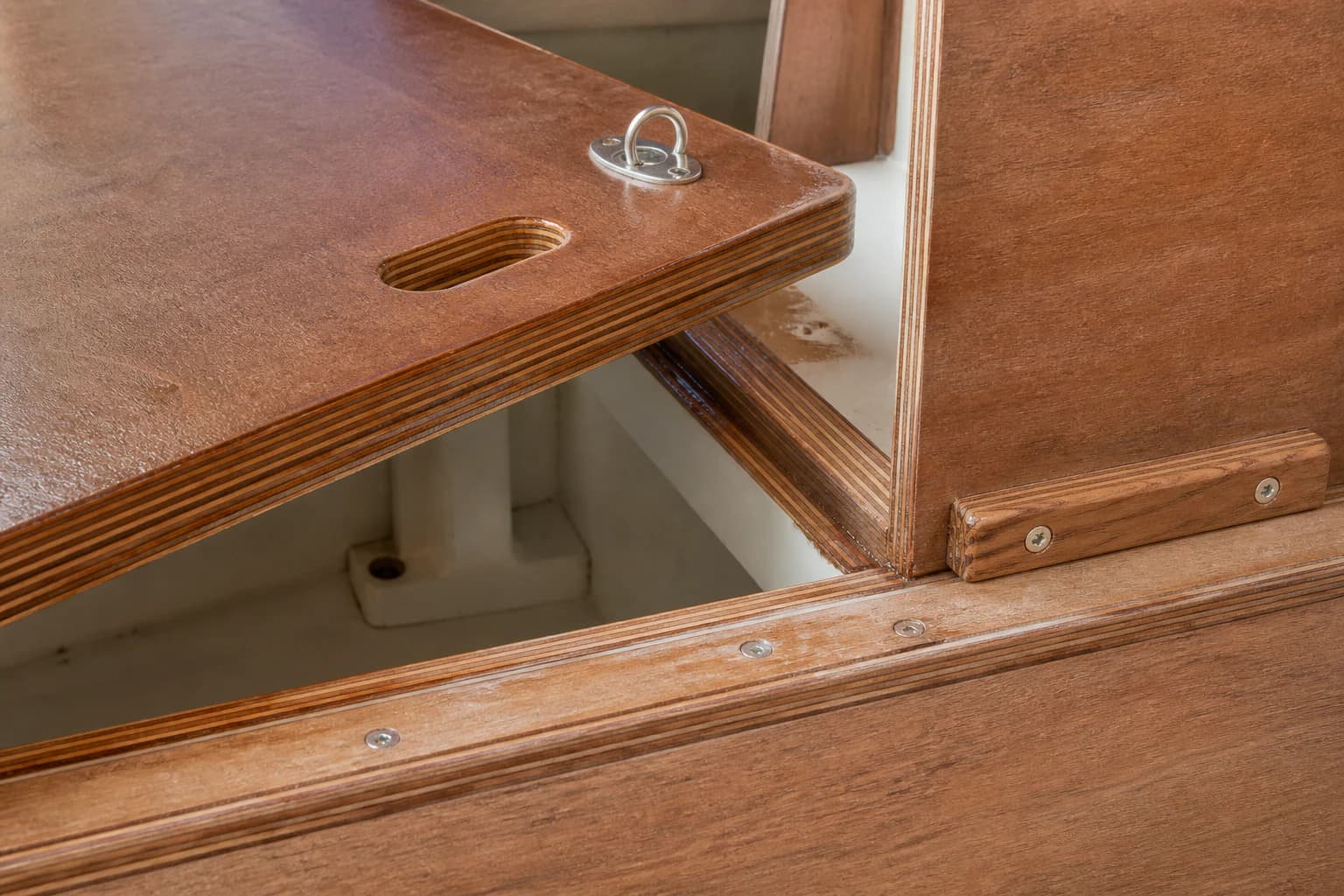
Compare the face and exposed edge with the finish and machining you will use. A clear-finished cabinet, a coated locker and a hidden building panel can need different appearance and core controls.
In our Marine range, compare exterior-service, selected marine-core and marine-standard constructions. Our factory agrees the veneers, core, bond and required product documents with your order.
WBP is a starting term, not the complete order
If the brief says WBP, add the intended exposure, adhesive or bond class and relevant testing. A durable glue line does not by itself specify veneer quality, a marine product standard or a structural grade.
Our Bonding & Emission Options page helps separate bond performance from destination emission requirements. Specify both when they matter to the finished product.
Which document answers your project’s requirement?
Start with the standard, grade or declared property named by the designer or customer. These references answer different questions; they are not interchangeable certifications.
Marine product standard
BS 1088 specifies standard and lightweight marine plywood requirements, including resistance to biological deterioration and loss of bond strength over time. Ask for the offered construction and relevant product documents. Additional properties and boat or building design requirements must be specified for the finished project.
European service and bond requirements
EN 636 addresses plywood for dry, humid or exterior conditions, including structural and non-structural use. EN 314-2 addresses bond quality, with tests in EN 314-1. Check the required classification and relevant product information together.
North American Exposure 1 and Exterior
For APA-classified wood structural panels, Exposure 1 is for construction moisture before protection; Exterior is for long-term weather or moisture exposure. Check the product’s actual grade marking and documents rather than translating WBP into an APA designation. APA explains these classifications.
Structural and finished-component requirements
If the panel carries load, confirm the required strength or stiffness information, supports, fasteners and design. Ask our factory for the available product documents with your quotation. The appropriate marine or exterior construction and the structural requirements must both suit the job.
Share the requirements you already have; you do not need to choose a standard unaided. We will confirm the suitable construction and available certificates, test reports and product information with your quote. You can also review our Standards & Certifications page.
Keep water out of the places that cannot dry.
Rain on a drained, coated surface is different from water trapped around a fixing or inside a joint. Describe the exposure before choosing the panel, finish and any treatment.
Faces, edges and new cuts
Agree the coating system and any original-edge coating you need from our factory. After cutting or drilling, clean and protect newly exposed wood using the compatible sealing and coating procedure for the component.
Joints, fixings and drainage
Coordinate joints, support, fixings and outlets with the design. Avoid details that retain water against unprotected wood; allow drying and access to inspect and maintain the finish.
Storage before use
Keep panels flat, supported and off the ground. Protect packs from rain and impact without trapping wet sheets beneath sealed wrapping. Check delivered faces, edges and packing before fabrication.
Biological exposure and treatment
A marine or exterior bond description does not establish preservative treatment. For near-ground or decay-prone conditions, discuss the required treatment, wood construction, finish and compatible fasteners alongside drainage and isolation from water or soil.
Permanent immersion, marine-borer exposure and safety-critical parts need a project-specific specification. For moisture-related structural design considerations, consult APA’s moisture exposure guidance and your designer.
Marine plywood vs pressure-treated plywood.
Marine construction and preservative treatment are separate choices. Start with the required panel, then consider whether the actual insect, fungal-decay or ground-contact exposure calls for a treatment system.
Marine construction and wood durability
Selected veneers, core quality and durable bonding define the marine panel you order. Where BS 1088 is specified, its requirements also address biological deterioration. Natural wood durability and glue-line durability are distinct; a marine description is not a preservative-treatment record.
Pressure treatment for the exposure
Specify the preservative, intended use category and applicable treatment requirements, including retention and penetration where required. Match the treatment to fungal decay, insects, soil contact or other actual exposure. Do not use a treatment name as a substitute for the required veneer grade, bond or structural properties.
Plan the treated component
Include the plywood construction, treatment compatibility, drying, coating or adhesive, fasteners and machining sequence. Cutting after treatment can expose new wood; follow the treatment system's instructions for cut ends and drilled holes. Treatment, coating and drainage each have a different role in the finished assembly.
APA's preservative-treated plywood guidance separates treatment, intended use, retention and penetration, fasteners, structural considerations and finishing. Those requirements are additional to selecting the panel construction.
For your plywood order, compare Pressure-Treated Plywood with Marine Plywood, then send our factory the exposure and component requirements so the construction, treatment and finishing can be discussed together.
What are you paying for—and will the part use it?
There is no single marine-to-exterior price premium. Veneer species, face selection, core construction, testing, thickness and order quantity change the quote. Compare the same finished specification and shipping basis.
Compare panel and fabrication cost
Use the same size, thickness, face/back requirement, core, bond, quantity and currency. Add machining, edge treatment, coatings and usable parts per sheet. A cheaper sheet can cost more if it needs extra repairs or processing.
If the job does not require a marine standard, compare a suitable exterior-service option. If it does, include the specified construction and documents in both quotations.
Plan the order and delivery
Send the size and thickness mix, quantity, destination and target delivery date. We confirm the production lot, any mix of constructions, samples, testing, packing and current timing before scheduling.
Compare the same delivery terms. Freight, insurance, taxes and destination charges are included only when the quotation says so; production timing and transit timing are separate.
Regular factory formats: 1220×2440, 1250×2500, 1525×3050 mm. On request: 1250×3050, 1250×3660, 2100×2800, 1830×3660, 1250×3800 mm. Share the size, thickness and quantity schedule so we can plan production and export packing. See Plywood Sizes & Thicknesses for dimension and tolerance guidance.
Use our Plywood Price Guide to compare quotation units and usable-part costs, then agree the order details below.
Turn the exposure and component into a factory order.
You do not need to know every technical term before contacting us. Send the part, size, quantity and destination, with any project specification you have. Our factory team will help complete the plywood and commercial details.
Component and exposure
Describe the part, load, wetting source, drying opportunity, supports, joints and visible faces. Distinguish a protected cabin interior, weather-exposed joinery, near-ground wood and permanent immersion.
Panel and project documents
Agree veneer species, face/back grade, core, bond, finished thickness and tolerance, and any marine or structural specification. Check the relevant product declaration, certificate or report against the product family, construction, grade and intended use. Include treatment documents separately when required.
Cutting, coating and fit
Send sheet and finished-part dimensions separately with grain direction, machining, holes, joints and hardware. Agree factory finishing and protection of later cuts. Compare the supported finished component, not an unprotected piece of board.
Factory quotation and delivery
Send the quantity and thickness mix, destination and target delivery date. We confirm the plywood construction, sample arrangements, production schedule, packing and commercial terms. Compare the same quotation unit and delivery scope with fabrication, coating and usable cutting yield included.
For the fabrication and installation requirements, see How to Specify Plywood and Plywood Moisture & Water Resistance. These are the shared purchase conditions to agree with our factory:
- Order quantity & mix
- Tell us the sheet size, thickness mix and quantity you need. We confirm the minimum order and available mix for your selected construction.
- Production lead time
- We confirm the production schedule with your specification, order quantity and sample requirements. Production lead times are planning estimates, not transit times.
- Price & quotation unit
- Currency and price unit stated in your quotation. Your quote is based on the agreed dimensions, construction and quantity. Processing and requested testing are stated separately where applicable.
- Samples
- Tell us the plywood, thickness, finish and delivery country. We confirm sample availability, any sample and courier costs, and dispatch arrangements before proceeding.
- Packing & delivery
- We agree export packing, labels and the loading plan for your order. Share the destination country, named port or delivery point and preferred delivery term. Freight, insurance, duties and taxes are included only when stated in the quotation.
- Payment & order confirmation
- We agree the payment method, currency and any deposit and balance schedule in the quotation or proforma invoice. Your order confirmation sets out the product, quantity, packing and delivery arrangements.
Marine and exterior selection
Questions before you order.
What is the main difference between marine and exterior plywood?
Marine plywood describes a selected construction and, where specified, a marine product standard. Exterior plywood describes suitability for an exterior service condition under the applicable product classification. Both need an appropriate bond, but the face, back, inner veneers, joints and repairs can differ. Choose using the complete construction and your component requirements.
Is marine plywood waterproof or rot-proof?
It is not a maintenance-free waterproof component. Durable bonding and selected veneers help meet the intended product requirements, but water can reach wood through edges, holes, joints or damage. Plan compatible protection and drying. If decay, ground contact or permanent immersion is relevant, specify those conditions separately; do not infer preservative treatment from a marine label.
Can exterior plywood replace marine plywood?
Not simply because both have a durable bond. If the drawing or purchase specification calls for a marine standard, use a construction meeting that requirement or obtain the designer's agreement to an alternative. For other outdoor components, a suitable exterior-service panel may be the practical choice after checking the core, finish, exposure and any structural duty.
Does WBP mean marine grade?
No. WBP is commercial bond terminology, not a complete marine panel specification. Ask for the adhesive or bond class and relevant testing, then confirm veneer quality, core construction and any product standard required by the project.
Is Exposure 1 the same as Exterior plywood?
No. In the APA wood structural panel classification, Exposure 1 covers construction moisture before protection; Exterior is the classification for long-term weather or moisture exposure. Confirm the actual grade marking and product documents. Do not treat an imported WBP description as an APA Exterior or Exposure 1 marking.
Does marine plywood cost more, and is the upgrade worth it?
Compare actual constructions on the same size, thickness, quantity and delivery basis. Selected veneers, core controls, testing, machining and finish affect the quote. Choose the marine construction when the required standard or component quality makes it useful, not merely because the name sounds better. Include finishing, fabrication, packing and delivery when comparing cost.
Can CUZI PLY help me choose and provide a sample?
Yes. Send the component, wetting and drying conditions, dimensions, finish, quantity and destination, plus any standard named by your project. Our factory team will compare suitable constructions and the available product documents. For a sample, we confirm the piece size, selected construction, availability, any costs and courier arrangements before dispatch.
Is marine plywood different from ordinary plywood?
Marine plywood is still veneer plywood. The difference is the selected face, back, inner veneers, joints, bond and any marine standard in the specification. Ordinary is not a grade or moisture classification; identify the actual panel before comparing its suitability and price.
Can I use commercial plywood instead of marine plywood?
For an appropriately protected interior component, a suitable commercial construction may meet your requirements. For repeated wetting, an exposed edge or a marine-standard drawing, compare the bond, veneers, core and required documents first. Use the offered construction and conditions of use, not the commercial name alone.
Is Gurjan plywood automatically marine plywood?
No. A Gurjan veneer or timber description does not state the complete plywood construction, bond or marine standard. Confirm the actual species and whether it is used in the faces, core or all veneers, then compare the required grade, joints, bonding and product documents.
Is pressure-treated plywood better than marine plywood?
They address different requirements. Marine construction concerns the selected veneers, core and durable bond; preservative treatment addresses specified biological exposure. Choose the panel construction for fabrication and any structural duty, then specify the treatment for the actual use. The finished part may need both sets of requirements, with a compatible treatment, finish and fixing system.
Does marine plywood resist termites or fungal decay without treatment?
Bond durability alone does not establish termite or fungal-decay resistance. Where a marine standard specifies wood durability, use the selected construction and its relevant documents; do not infer chemical preservative treatment from the name. For a decay-prone, insect-exposed or ground-contact part, specify the required durability or treatment and the drainage, finish and installation details.
Can I compare marine and exterior plywood by a boiling test alone?
A specified bond test can answer a bonding requirement, but not every question about the panel or finished part. Compare the veneer and core grade, stated standard, required structural properties, machining and protection as well. Request a report using the applicable method and conditions rather than treating an informal boiling demonstration as complete product conformity.
Tell us the exposure. We will help choose the panel.
Start with the component and the requirements you know. CUZI PLY manufactures the plywood and will help compare constructions, available product documents and the quotation for your order.
- Component, water source and opportunity to dry.
- Size, thickness, finish and any named standard.
- Quantity, destination and target delivery date.
For a sample, tell us which construction and finish you want to assess. We confirm piece sizes, availability, any costs and courier arrangements with you.