Do I need a complete technical specification to ask for a quote?+
No. Tell us what you make, where the panel will be used, the dimensions and quantity, and where it will ship. Add any required finish, standard or report. We help you compare the undecided construction details and confirm the product, price basis and order conditions in the quotation.
Which technical decisions can reduce plywood cost without compromising the job?+
Start with the requirements that affect your finished result: visible faces, machining, supports, exposure and required documents. Avoid paying for appearance or processing your component does not need, but do not remove a necessary bond, core or tolerance. We can compare constructions, usable sheet yield and full sheets versus processed parts for your quantity.
How do I carry a technical choice into repeat supply?+
Keep the written construction, dimensions, tolerances, finish reference and inspection requirements with the order. Identify the corresponding product documents and pack labels. We confirm those requirements for repeat production and discuss any proposed material or processing change with you before manufacturing.
What technical details should every plywood RFQ include?+
State the end use, face and back, core species and lay-up, bond and emission requirement, surface, finished size, thickness, tolerance, moisture range, machining, quantity, packing, destination and requested documents.
What moisture content can be specified for plywood?+
An 8–12% range is commonly used for many dry export constructions. Confirm the agreed range, conditioning and measurement method for the selected species, thickness and destination climate.
Which plywood sizes can CUZI PLY produce?+
Regular sheet sizes: 1220×2440, 1250×2500, 1525×3050 mm. Available on request: 1250×3050, 1250×3660, 2100×2800, 1830×3660, 1250×3800 mm. Tell us your preferred size, thickness and quantity; we will confirm production and export packing for your order. Thickness production mainly covers 3–30 mm.
How should film faced plywood be specified for formwork?+
State the film type and weight, surface wear or release requirement, face condition, core species and gaps, exterior bond, thickness tolerance, sealed edges, panel size, concrete finish, site handling and expected reuse conditions.
How should HPL or melamine plywood be specified?+
Name the decor or laminate reference, texture, sheen, grade and thickness together with the plywood substrate, balancing back, adhesive, finished thickness, flatness, edge banding and fabrication details.
How should marine plywood be specified for wet service?+
State the face and back veneer, core species and void limits, lay-up, exterior bond test, moisture range, dimensions and edge quality. Add coating, sealed cuts and holes, drainage, ventilation, fasteners and maintenance for the finished component.
How should fire-retardant plywood be specified?+
Define the base plywood, treatment or treated-veneer process, finished thickness and moisture, intended application, test method, classification, mounting and end-use conditions, plus the report or project documents required.
What is the difference between a test report and a certificate?+
A test report records a tested specimen, method and result. A certificate identifies the organisation, product or sourcing scope covered by a certification programme and its period of validity.
When should a buyer approve a plywood sample?+
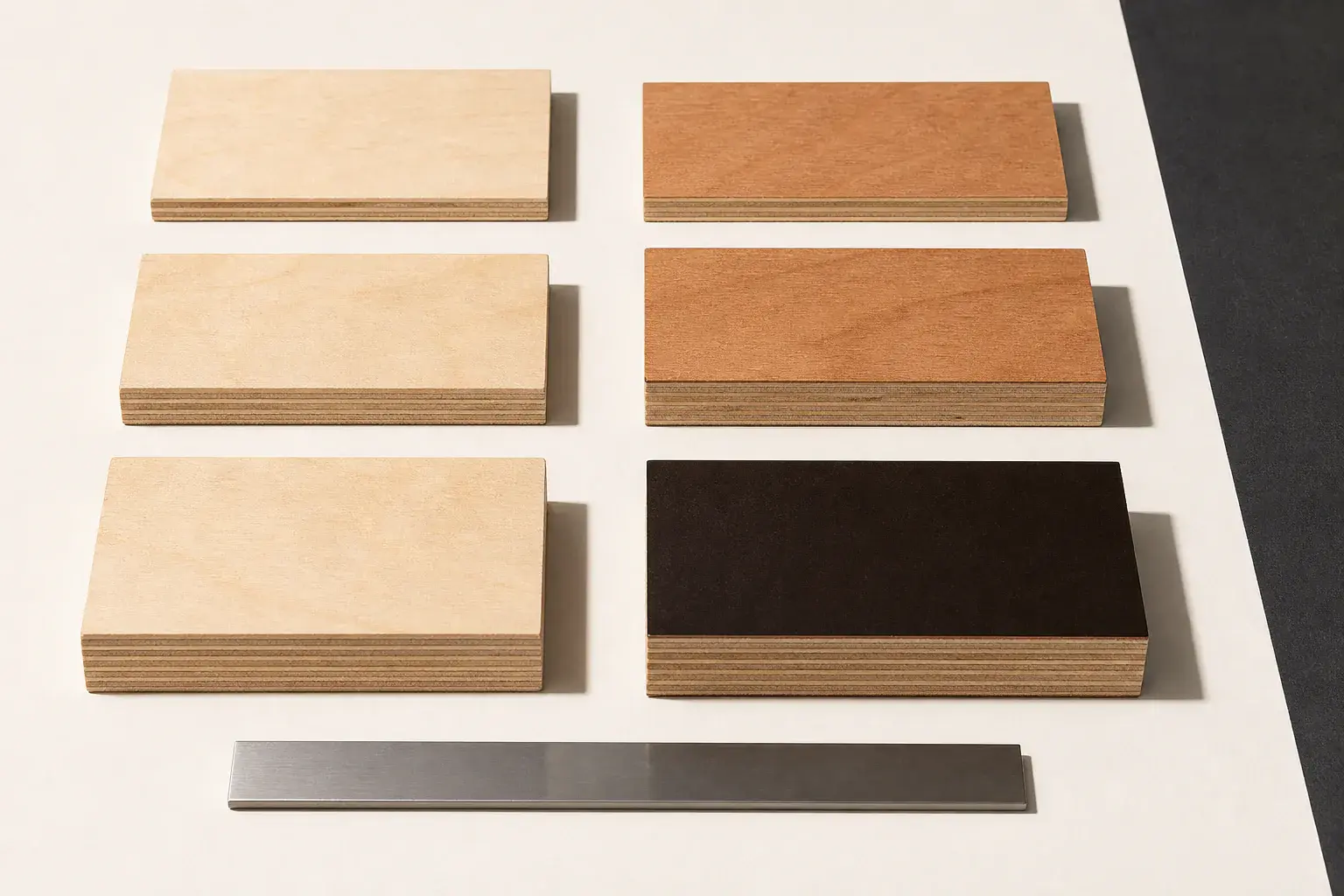
Approve a sample before production when face grade, colour, grain, film, laminate, machining, edge appearance or finishing quality is commercially important. Record the sample identification in the order and inspection instructions.
What should be confirmed for export packing?+
Confirm sheet and bundle dimensions, quantity per pack, gross weight, supports, wrap, top and side protection, corner protectors under the steel straps, pack marks, fork access, container type, loading pattern and destination moisture conditions.