What are the main stages of plywood production?+
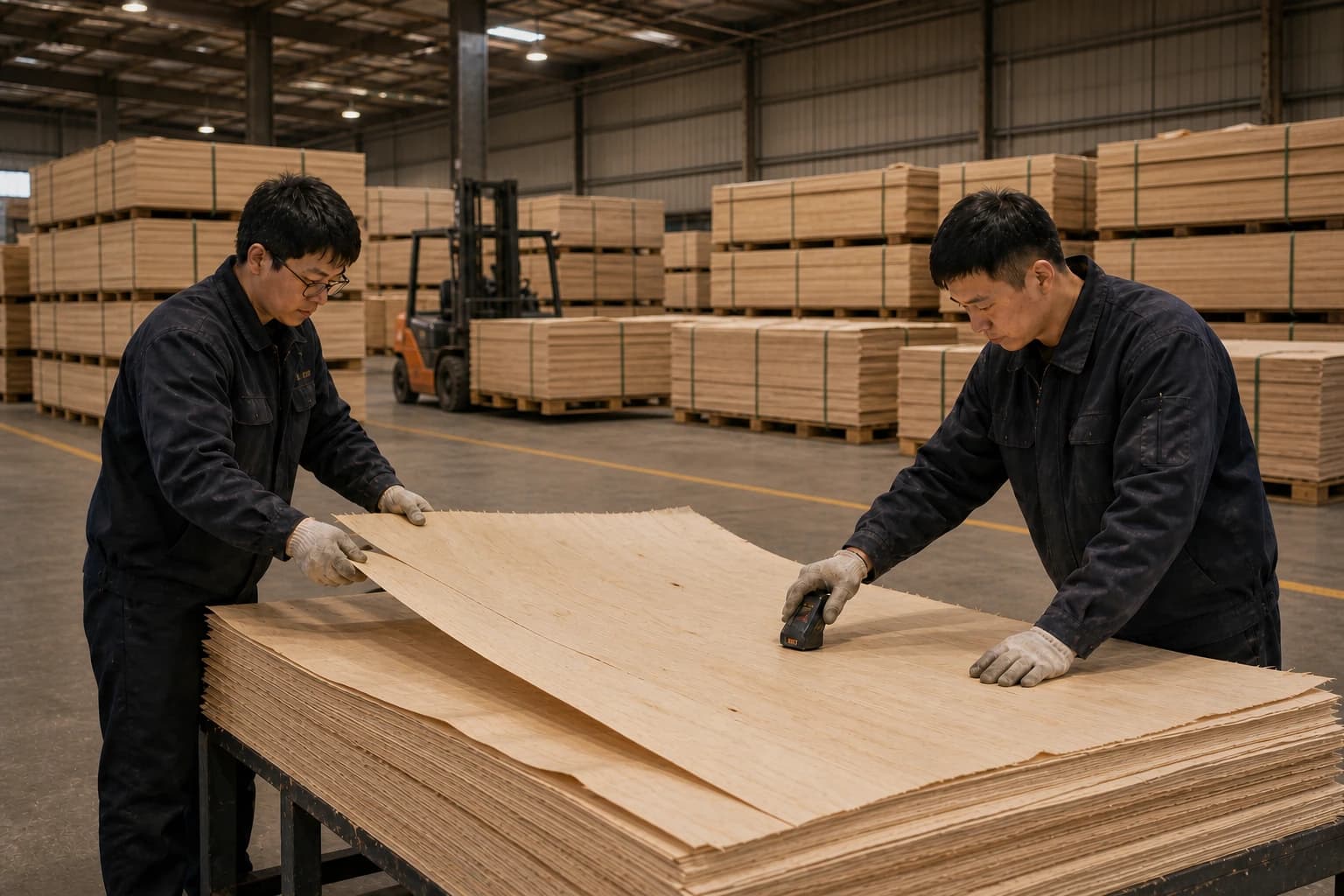
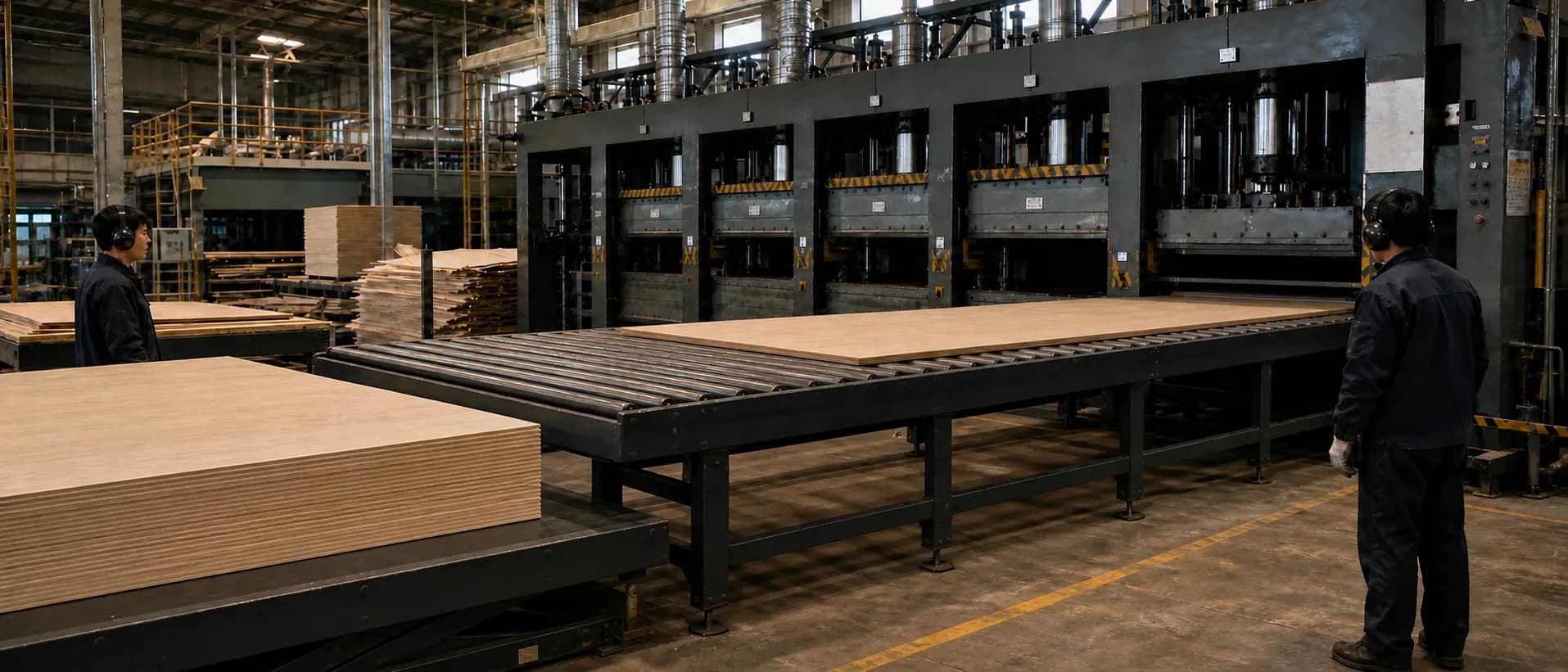
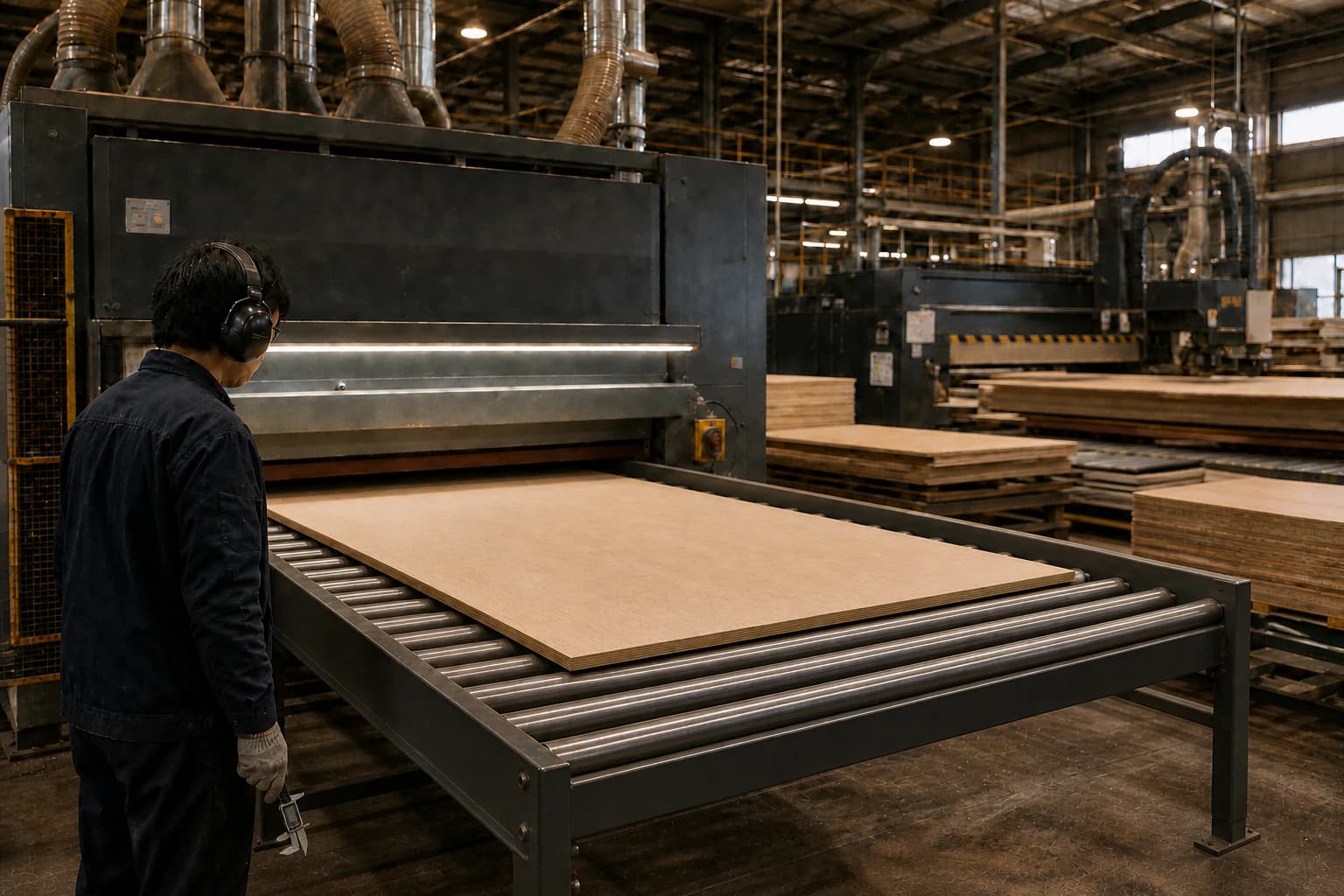
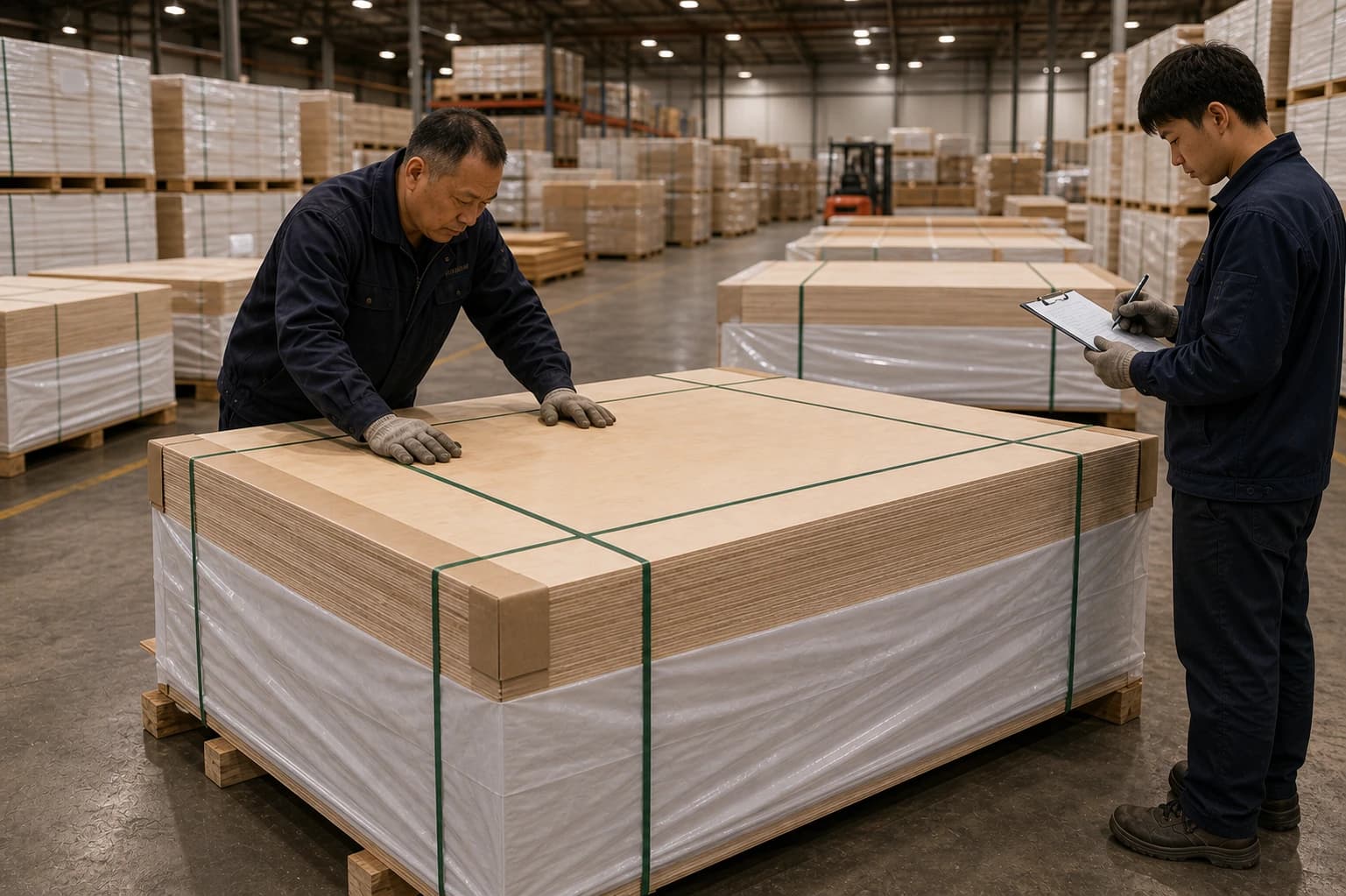
Production moves from product specification through veneer sourcing, preparation, drying, grading, adhesive application, cross-layup, optional pre-press, hot press, stabilization, trimming, optional calibration and product-specific finishing before final inspection.
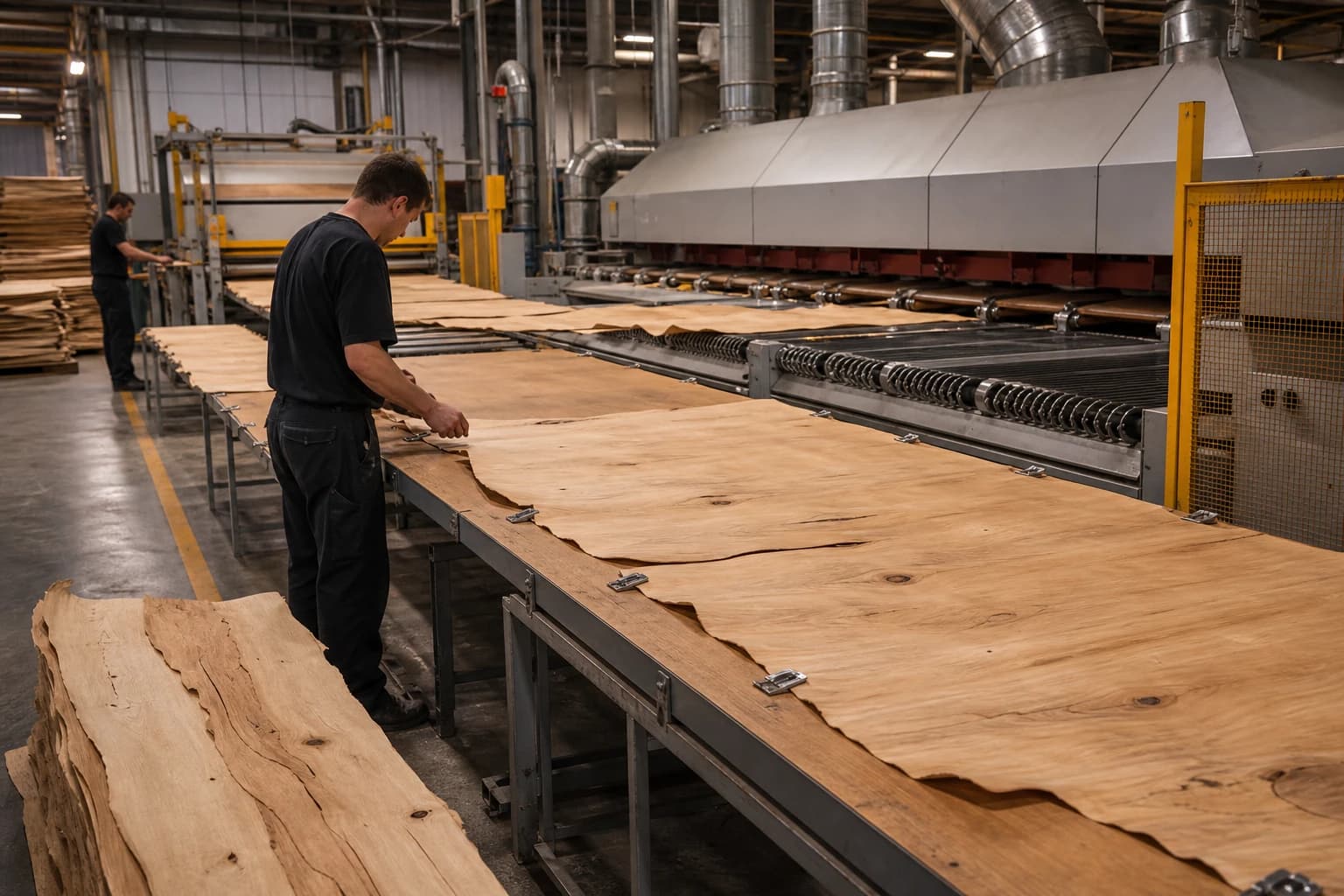
Why is veneer dried before plywood lay-up?+
Veneer moisture influences handling, adhesive transfer and pressing. The Forest Products Laboratory identifies 3–5% as satisfactory for many hot-pressed plywood constructions, while the quoted target is matched to species, veneer thickness, adhesive and product.
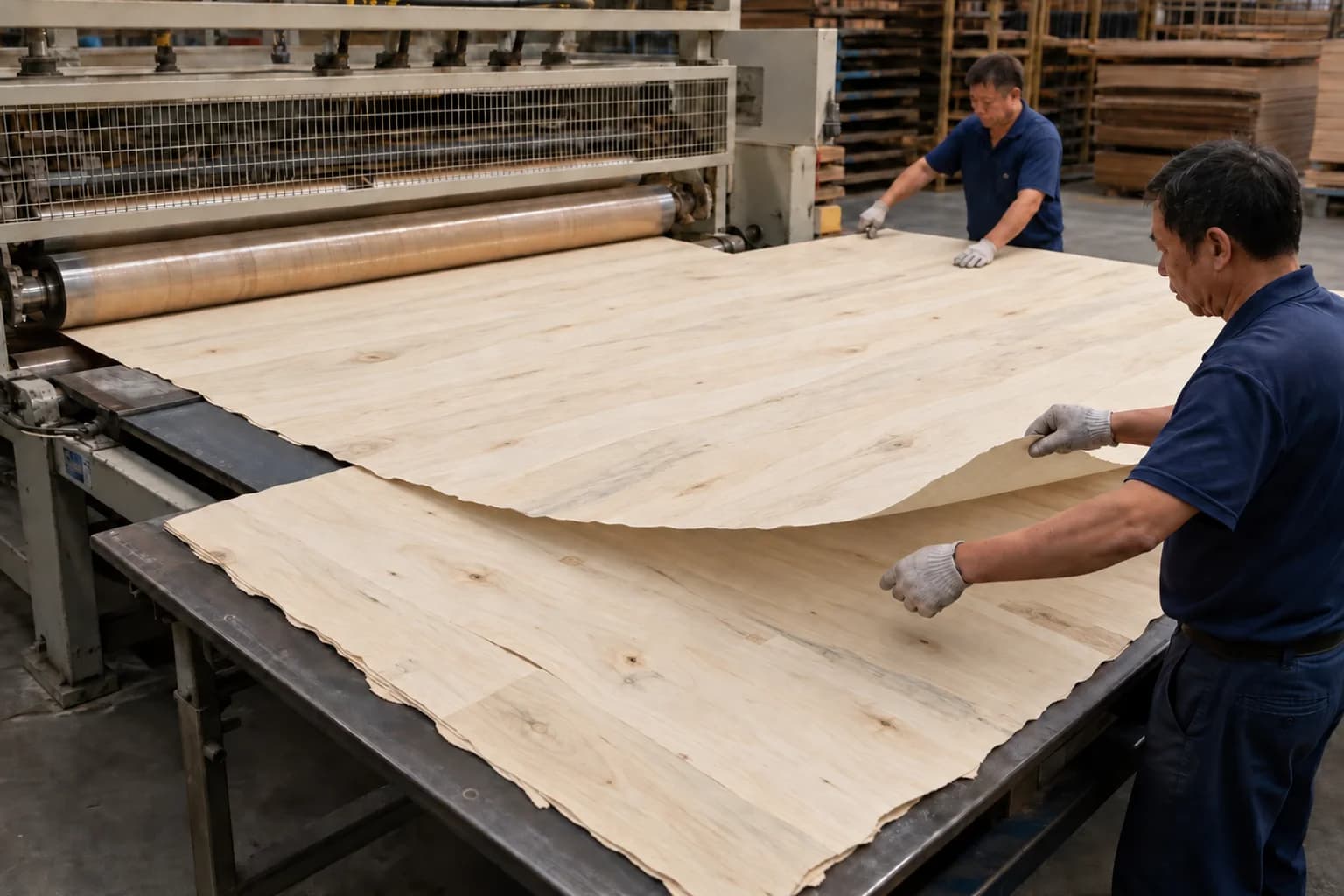
How are core gaps and overlaps controlled?+
Core veneers are graded to stated gap, overlap and repair limits, then their allocation and lay-up alignment are recorded. Buyers can place maximum gap width, overlap, repair size and frequency in the product specification.
What does glue spreading control?+
Glue spreading controls adhesive coverage on the specified plies. The production specification can state adhesive identity, preparation, g/m², one- or two-sided application and the time allowed before pressing.
Why is plywood cross-laminated?+
Crossing adjacent veneer grain directions is a defining construction principle that distributes properties across the panel. The exact sequence, symmetry and face direction still depend on the product file.
How do pre-pressing and hot pressing differ?+
Pre-pressing consolidates and stabilizes the assembled veneer mat before hot pressing. Hot pressing applies the selected pressure, temperature and time needed to consolidate and cure the panel.
What controls a plywood hot-press cycle?+
Adhesive, species, veneer moisture, thickness, ply schedule, overlay or treatment, loading geometry and equipment capability determine the cycle. EPA references describe broad plywood ranges of about 107–165°C and 2–7 minutes; the quotation should state the exact production values.
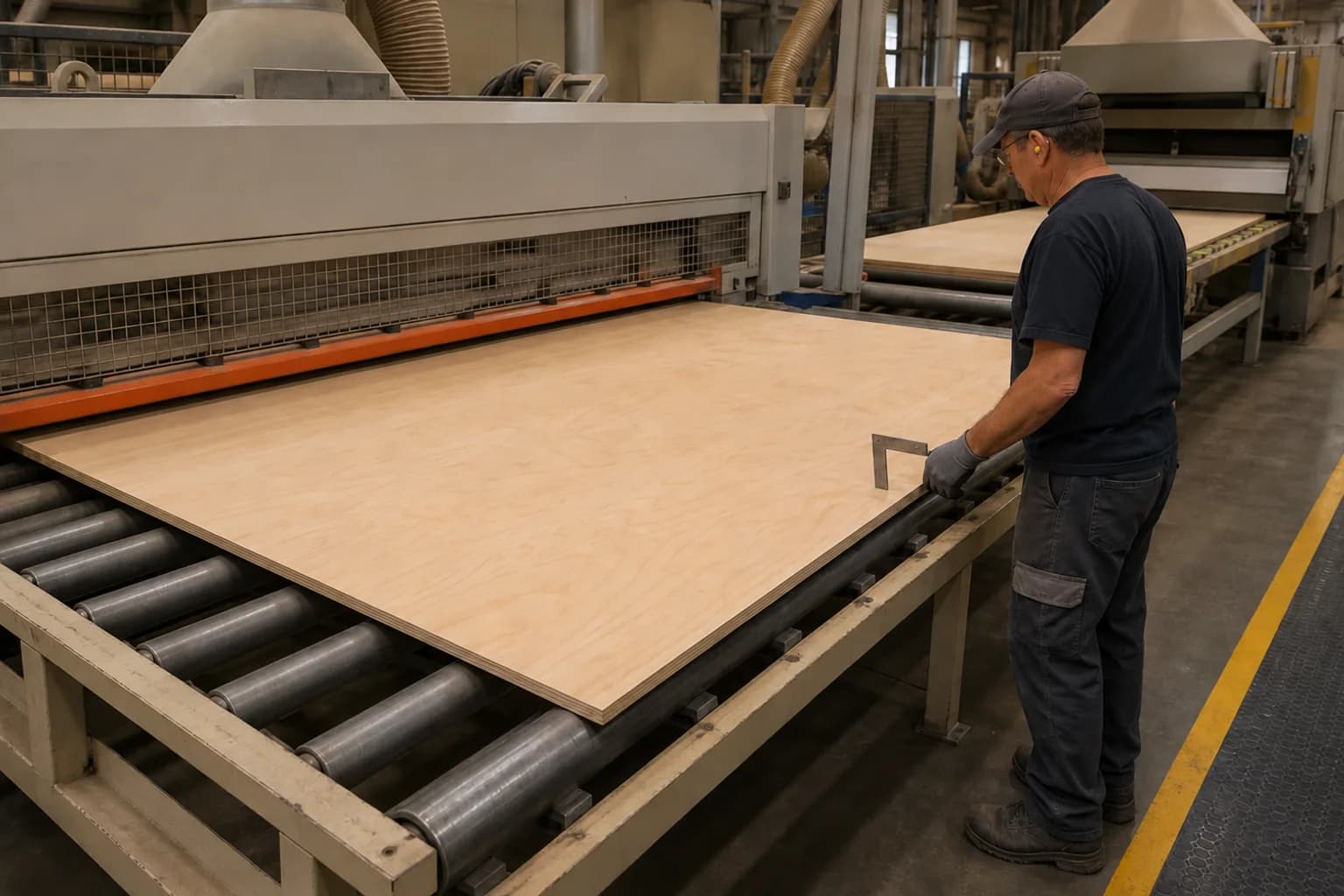
Why is plywood stabilized before trimming?+
Flat support during cooling or conditioning prepares the pressed panel for controlled squaring, dimensional checks and later surface work while protecting edges and faces from handling damage.
When is plywood sanded or calibrated?+
Sanding or calibration follows pressing when the order requires a bare finished surface, controlled thickness or preparation for coating or lamination. The quotation should state the faces treated, allowance, thickness tolerance and surface target.
Where do overlays and treatments enter the process?+
Film, HDO/MDO, melamine, HPL, anti-slip surfaces, preservative treatment, fire-retardant treatment, grooving and precision machining add product-specific operations to the common substrate sequence.
What production records should a buyer request?+
Typical records include material and veneer lots, moisture checks, adhesive batch, glue spread, lay-up, pre-press or hot-press cycle, trimming, calibration, optional finishing and finished-batch identity. Select the records that support the order's inspection and document requirements.
How are production records used with certification and test reports?+
Production records identify the materials and operations used for the batch. The buyer can then request the applicable certificate or test report with the correct standard, sample, construction, result and issuing authority.