Plywood sourcing and documents for your project.
Make sourcing part of the specification from the start. Whether your project asks for FSC or PEFC plywood, wood-origin records, recycled content or an Environmental Product Declaration, agree the material and documents together. This helps you compare quotations and prepare the information your customer needs.
CUZI PLY is your plywood manufacturer and direct supplier in Linyi, China, with 10 production lines. Work directly with our factory team on the face, core, bond, finish and sourcing requirements, with the applicable documents and export terms included in your quotation.
Turn “sustainable plywood” into a clear purchasing specification.
Start with the component, service life and destination. Then name the sourcing claim, material-content requirement or environmental declaration your buyer accepts. These are different requests, so one document may not answer them all.
| Your requirement | What to request | How to use it |
|---|---|---|
| Wood species and origin | Face and core species, country of harvest where required, manufacturing location and the records needed for your destination. | Describe what the wood is and where it comes from; keep raw-material origin separate from panel manufacture. |
| FSC or PEFC purchasing claim | The named programme, required trade claim, certificate holder and code, covered products and delivery documentation. | Connect a sourcing claim to the purchased product through the corresponding chain of custody. |
| Recycled content | The percentage, calculation basis, covered component and pre-consumer or post-consumer material definition. | Check a stated material-content requirement rather than inferring a percentage from a forestry label. |
| Environmental Product Declaration | The registered EPD for the covered product and site, with its unit, PCR, life-cycle modules and validity. | Provide environmental-impact data for the project assessment; it is a different document from a sourcing certificate. |
A durable, suitable panel avoids an unnecessary replacement. Combine sourcing requirements with the construction, performance and finish your component needs rather than choosing on a label alone.
Plywood wood origin is more than a face-species name.
Specify the face and core separately. Birch-faced plywood can have a different core species; the country where the wood was harvested is a different field from where the panel was manufactured. Our plywood manufacturing location is Linyi, China.
Put origin requirements into the enquiry
Include common and scientific species names where required, the relevant face and core material, country or region of harvest, and the information your destination needs. Ask which supporting records will accompany the selected material and shipment.
Keep product names and documents distinct
“Baltic,” “Russian” or “Finnish” in a product search does not establish the origin of the offered wood. Do not infer harvest country from a factory address or a shipment certificate of origin. Agree the source information for the actual order.
Compare Birch Plywood and Commercial Plywood by their specified construction. Our Core Materials & Species guide helps you define the material for the part you are making.
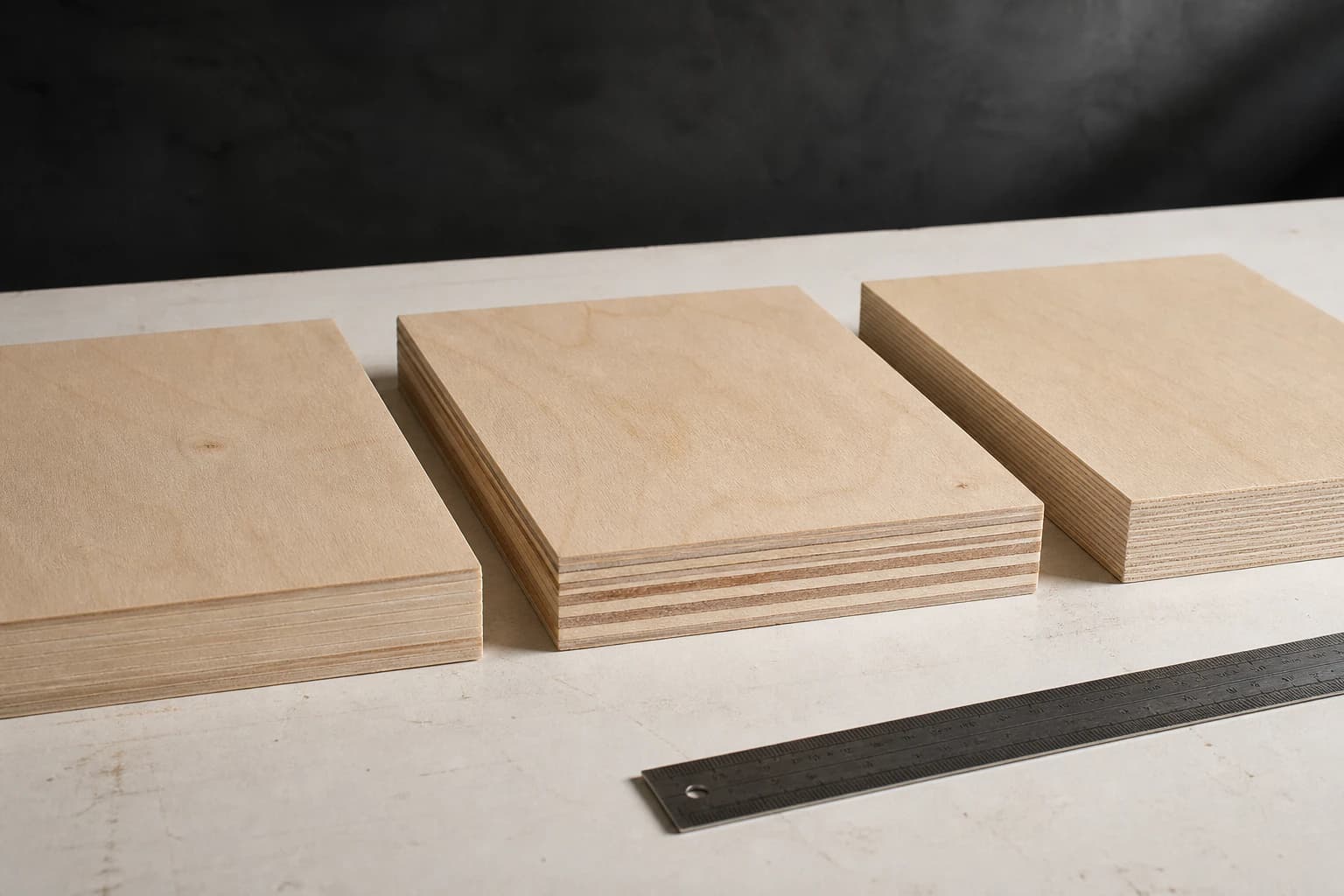
Birch plywood veneer faces and core options
Specify the face and core species separately for exposed edges and machined parts. Keep the agreed construction and wood-source requirements with your purchasing documents.
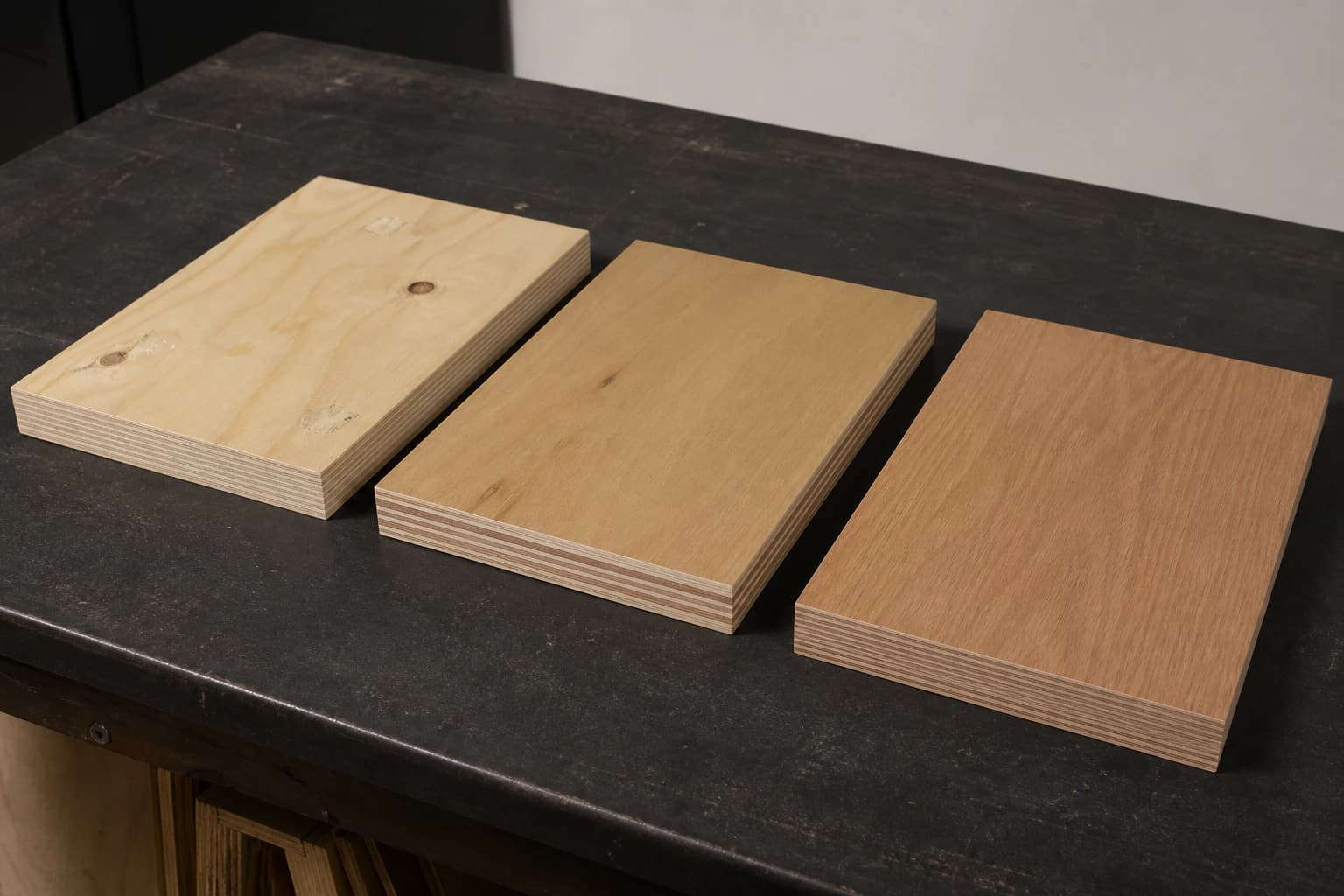
Commercial plywood veneer faces and cut edges
Choose the face quality, core, adhesive and finished thickness for your component. Include sourcing and recycled-content requirements before quotation so the material and documents are ordered together.
Buying FSC certified plywood through a chain of custody.
FSC chain of custody follows eligible material through certified sourcing, processing and sales. It supports the claim attached to a product; it is not a structural grade, bond class or emission result. Read FSC’s chain-of-custody overview.
Certificate holder
Match the legal name on the certificate to the business making the claim on your sales documents. Check the covered sites and any group or multi-site annex.
Status and dates
Use the programme’s public certificate search to check current status. Retain the certificate and relevant scope with the order; an expiry date printed on a saved copy is not a live status check.
Products and activities
Check that the product group and activities cover the proposed transaction. Read the scope rather than assuming that a company certificate covers every product or operation.
The purchasing claim
State which programme and trade claim your buyer or project accepts. Agree that requirement with the panel construction and quantity before the purchase order.
Delivered product identification
Connect the product description, quantity and purchasing claim with the invoice and delivery records. Keep that connection when bundles are split or panels are processed.
Repeat orders
Retain the agreed sourcing requirement in repeat purchase orders. Review material substitutions and claim availability before changing the construction or placing the next order.
Use FSC’s public certificate search to check the holder and scope. You can review CUZI PLY’s company document information on About CUZI PLY; ask our factory team for the applicable certificate, current scope and purchasing claim with your quotation.
FSC 100%, FSC Mix and FSC Recycled answer different sourcing requests.
FSC 100% uses inputs from FSC-certified forests. FSC Mix may combine certified, reclaimed and controlled inputs; FSC Recycled uses reclaimed inputs. Mix percentage and credit claims describe the applicable sourcing-accounting system, not an identical physical recipe in every board. See FSC’s control-system explanation.
For products sold with an FSC claim, the sales documentation identifies the seller, customer where applicable, date, product, quantity, certificate code and claim. Keep delivery records connected to that sale. FSC-STD-40-004, section 5 sets out these requirements.
Tell us whether your customer requires a particular claim and whether the material will enter a further certified supply chain. Confirm claim availability for the order before changing or substituting the panel.
PEFC plywood needs its own purchasing claim and documents.
PEFC chain of custody uses defined sourcing categories and control methods. For a claimed delivery, its documentation identifies the customer, supplier, product, quantity, delivery period, applicable claim and certificate number. PEFC ST 2002:2020 describes the requirements.
Specify PEFC if that is the accepted programme. If your project permits FSC or PEFC, request the relevant certificate and trade claim for the chosen route. Agree the programme, panel and documentation in the quotation instead of treating the two names as interchangeable.
Specify plywood recycled content separately from certified sourcing.
State whether the percentage applies to the wood portion, the whole finished panel or its packaging. Identify the material definition and whether pre-consumer and post-consumer content are reported separately. Ask for the calculation basis and the corresponding material information.
Under PEFC ST 2002:2020, recycled content is calculated on an ISO 14021 basis and provided on request for relevant products. Material continuously returned to the same process, and primary-production by-products, are excluded from its recycled-material definition. See sections 3.35 and 5.4 of the standard.
A certified-source percentage, recycled-content percentage and climate-impact result are different measures. Specify the one your project actually requires; do not infer a recycled percentage from the colour, species or appearance of a panel.
A plywood Environmental Product Declaration reports impacts, not a performance grade.
An EPD is a verified, registered Type III environmental declaration under ISO 14025, based on lifecycle assessment and Product Category Rules. It reports environmental-impact information; it is not an ecolabel proving that one product is universally better. Read EPD International’s explanation.
| EPD information | What to check for the order |
|---|---|
| Product and manufacturer | Read the covered product, construction, thickness range, manufacturer and production site. Check whether the declaration covers one product, a product family or an industry average. |
| Programme and registration | Keep the programme operator, registration number, verification information, issue date and validity date. Retrieve the declaration from the programme library. |
| Rules and unit | Identify the Product Category Rules (PCR) and version, applicable standard, and declared or functional unit. Keep any thickness, density and conversion information with the unit. |
| Life-cycle coverage | Read the declared stages and scenarios. A manufacturing-stage figure is not a whole-life figure; stages not declared are not automatically zero. |
| Environmental indicators | Use the named indicator and unit from the declaration. For climate data, identify the GWP indicator and modules rather than comparing an unqualified carbon number. |
| Use in your project | Ask the project team which declaration types and comparison rules it accepts. Confirm coverage before assigning an industry-average declaration to a purchased product. |
Find the registered declaration in the relevant programme library, such as the International EPD System library. Check the stated validity and product coverage; an expired record can remain visible for historical information but is not a current declaration for marketing a new order. EPD International’s validity guidance explains when updates are needed.
Compare plywood EPD data with the right unit and lifecycle coverage.
Check the PCR and version, product function, performance, unit and calculation rules. Product Category Rules support consistent assessment within a category, but sharing the word “plywood” is not enough to establish a meaningful project comparison.
- Equivalent use: match the construction, finished thickness, necessary performance and service-life assumptions for your component.
- The same quantity: do not rank a result per m³ directly against a result per m². Use the stated thickness and applicable conversion information.
- The same coverage: A1–A3 product-stage data is not a whole-life result. Compare the same stages and compatible transport, installation and end-of-life scenarios.
- The same indicator: keep the named GWP indicator, unit and calculation basis. A sourcing label does not supply a climate-impact value.
Ask your project assessor to confirm functional equivalence and comparison rules before drawing a conclusion. Building Transparency’s EC3 guidance explains why product category, performance criteria and declared units matter.
Compare local supply with a direct factory order.
If you are comparing FSC plywood suppliers for Europe, use one specification for construction, sourcing claim, quantities and delivery point. CUZI PLY manufactures in Linyi, China and prepares export orders directly with buyers. Confirm production lead time, shipping, delivery terms and landed cost rather than comparing a factory quote with a local-stock price alone.
FSC exterior-grade birch plywood
Specify birch face and core, finished thickness, bond requirement, wetting and drying, edge protection and finish. Add the accepted FSC claim and relevant reports to the same order. Sourcing and exterior performance are separate requirements; a forestry certificate does not make an unprotected component permanently waterproof.
Destination and project documents
Include the country, intended use and required import or project information. Keep timber-origin and shipment documents, product performance, sourcing claims and environmental declarations distinct. Agree responsibilities with your importer and project team; a company’s ISO management certificate does not replace these product documents.
Continue with European Market Requirements, Export Process and Plywood Emissions: US & EU for the related purchasing steps.
Get a quote with your sourcing requirements included.
Regular sizes: 1220×2440, 1250×2500, 1525×3050 mm. On-request sizes: 1250×3050, 1250×3660, 2100×2800, 1830×3660, 1250×3800 mm. Include the construction, finished thickness, quantity and destination with your document request.
- Application, destination country and the buyer or project specification.
- Face and core species, bond, thickness, dimensions, finish and processing requirements.
- Accepted sourcing programme, exact purchasing claim and origin information required.
- Any recycled-content percentage, material definition and calculation basis.
- EPD coverage, required unit and project criteria, or the other named product documents.
- Order quantity, packing, delivery point and target date, with any additional document preparation or testing to quote.
Custom length and width are manufacturing choices within the agreed construction. Keep the covered product group, sourcing claim and order identification with the supplied panels. For environmental calculations, use the EPD’s product range and declared unit, with the applicable thickness and quantity conversion.
We confirm the relevant available sourcing and product documents with the quotation. If your project needs additional document preparation or testing, we agree the responsible issuer, costs and timing before commissioning. Tell us your document deadline as well as your delivery date so both can be considered before the order is placed.
- Order quantity & mix
- Tell us the sheet size, thickness mix and quantity you need. We confirm the minimum order and available mix for your selected construction.
- Production lead time
- We confirm the production schedule with your specification, order quantity and sample requirements. Production lead times are planning estimates, not transit times.
- Price & quotation unit
- Currency and price unit stated in your quotation. Your quote is based on the agreed dimensions, construction and quantity. Processing and requested testing are stated separately where applicable.
- Samples
- Tell us the plywood, thickness, finish and delivery country. We confirm sample availability, any sample and courier costs, and dispatch arrangements before proceeding.
- Packing & delivery
- We agree export packing, labels and the loading plan for your order. Share the destination country, named port or delivery point and preferred delivery term. Freight, insurance, duties and taxes are included only when stated in the quotation.
- Payment & order confirmation
- We agree the payment method, currency and any deposit and balance schedule in the quotation or proforma invoice. Your order confirmation sets out the product, quantity, packing and delivery arrangements.
Wood sourcing and project documents
Questions about FSC, PEFC and plywood EPDs.
What should I request when buying FSC certified plywood?
Specify the programme and claim accepted by your customer, then ask for the relevant chain-of-custody certificate and product scope. Agree the claim with the quotation and retain the corresponding sales and delivery records. A logo on a website is not the purchasing document for your particular order.
What does plywood FSC chain of custody cover?
It connects the sourcing claim through the certified supply chain to the product sold with that claim. Read the holder, product groups, activities and current status alongside the sales documents. It answers a sourcing question, not the panel’s structural grade, exterior bond or indoor emission performance.
How do I specify FSC exterior-grade birch plywood?
Combine two requirements: the birch construction and exterior-use specification, and the required FSC purchasing claim. State face and core species, thickness, wetting and drying, bond standard, edge protection and finish. Request the corresponding product reports and sourcing documents together; neither requirement replaces the other.
Can CUZI PLY supply European buyers looking for FSC plywood suppliers?
You can buy directly from our factory in Linyi, China. Send your European destination, construction, quantity and required sourcing claim. We confirm the offered material, relevant documents, claim availability and export terms with the quotation. Compare that direct-import route with local stock supply using the same specification, delivery point and total delivered cost.
Is PEFC plywood interchangeable with an FSC order?
Name the programme accepted by your buyer or project. If the specification permits either, compare each proposed claim and its corresponding documents; do not substitute one programme silently. Keep the named requirement in your purchase order.
How is plywood wood origin different from country of manufacture?
The face and core wood can have different species and harvest origins. The plywood is manufactured at our factory in Linyi, China. Request the source details needed for your order separately from manufacturing location and shipment-origin documents. Birch, Baltic, Russian or Finnish in a sales description should not be treated as a substitute for origin records.
How should I specify plywood recycled content?
State the required percentage, whether it concerns the wood portion or the complete panel, and the accepted pre-consumer or post-consumer definition. Request the calculation and supporting material information for that construction. Keep this separate from packaging content, certified-source percentages and lifecycle climate data.
What makes sustainable plywood a useful purchasing requirement?
Turn the term into choices your project can check: the accepted sourcing claim, material origin, any required recycled content, service durability and environmental-impact data. Select a panel that works for the component and compare the specific documents. Avoid relying on a broad green description alone.
What does a plywood environmental product declaration provide?
An EPD reports verified environmental-impact information using defined product-category rules. Read its product and site coverage, unit, life-cycle stages and validity before using it in a project. It is not an exterior-use, structural or fire-performance certificate.
Can I compare every plywood EPD by its carbon number?
Only compare data on a consistent basis, with equivalent product function, suitable rules, the same indicator and unit, and compatible lifecycle coverage and scenarios. A figure per cubic metre cannot be ranked directly against one per square metre without the correct thickness conversion. Ask the project assessor to confirm the comparison.
Does a custom sheet size need a separate sourcing certificate?
Custom length and width are manufacturing choices within the agreed panel construction. Keep the covered product group, sourcing claim and order identification with the custom-sized panels. For an EPD, use its covered product range and declared unit, including any thickness or quantity conversion. Review changes to material, finish or production site with the relevant documents.
Which documents should I include in my enquiry?
Send the application, destination, panel construction, thickness, sizes and quantity, plus the programme, claim, origin information or environmental declaration your project needs. Our factory team confirms the relevant available documents with the quotation. Where extra document preparation or testing is needed, we agree the responsible issuer, costs and timing before commissioning, together with the order’s packing, payment and delivery terms.
Which sourcing information should I receive before the panels are shipped?
Agree the certificate and scope, accepted purchasing claim, product description and quantities before ordering. Before shipment, check that the sales and delivery documents identify the ordered panels and any claim for the corresponding items. If only part of the order carries that claim, keep the quantities and items separate. Ask us to resolve any mismatch before dispatch rather than relying on a website logo or a certificate copy alone.
Can an industry-average EPD be used for my plywood order?
Only if your project accepts that declaration type and the supplied material falls within its stated coverage and rules of use. Check the covered manufacturers or membership conditions, product range, geography, unit and life-cycle stages with your project assessor. An industry average is not automatically a CUZI PLY product declaration. Send the required declaration type before quotation so we can discuss the available information and any further work.
Choose the panel and its sourcing documents together.
Send the construction, application, destination and the sourcing or environmental information your project needs. Our factory team confirms the offered panel, applicable documents and purchasing terms with your quotation.
For a physical panel assessment, specify the construction, thickness and finish. We confirm availability, sample and courier costs, and dispatch arrangements. Request sourcing documents or environmental declarations separately.