Birch vs poplar plywood for furniture and CNC parts.
Choose birch-faced plywood when the natural face matters; choose the core around the weight, layered edge and machining your part needs. Consider all-poplar when reducing component weight is a priority, then check the joints, support and finish.
A birch face can sit over a poplar core. Comparing “birch” with “poplar” is therefore only useful when you know the full construction—not just the wood visible on top.
CUZI PLY is your plywood manufacturer and direct supplier, with 10 production lines in Linyi, China. We help match the face, core, processing and finish to your furniture, then quote your order directly from our factory.
Spend on the properties your part will use.
Match the panel to its visible surfaces, joints and processing. You do not need the same construction for every part in a cabinet or furniture assembly.
| Your priority | Consider | Check before ordering |
|---|---|---|
| Visible natural-wood faces | Birch-faced plywood | Face and back grade, natural colour, repairs and appearance under your clear finish. Choose the core separately. |
| Lower-weight cabinet interiors | All-poplar or birch-faced poplar-core plywood | Actual panel mass, supported spans, joints and the hardware used in the finished assembly. |
| Exposed layered edges or routed profiles | Selected all-birch construction, or another core with an agreed edge finish | Ply layout, core gaps, repairs and appearance after routing, sanding and finishing. |
| Painted or laminated components | Either material with the right face preparation and core | Flatness, finished thickness, surface repairs, sanding and the complete finish system. |
| Repeat CNC parts and hardware fit | A calibrated construction chosen for the actual part | Machined dimensions, chip-out, hole exits, fixing positions and a component trial. |
For a hidden, supported part that will be painted or covered, start with a suitable poplar-based option. Upgrade the construction when the exposed edge, joint, machining or component duty gives you a reason—not simply because “birch” sounds more premium.
The face sets the look. The whole panel does the work.
In our birch range, the face and back can be combined with poplar, combi, hardwood, eucalyptus or all-birch cores. Our poplar range includes all-poplar face, back and inner veneers. Choose the appearance and inner construction as separate parts of your order.
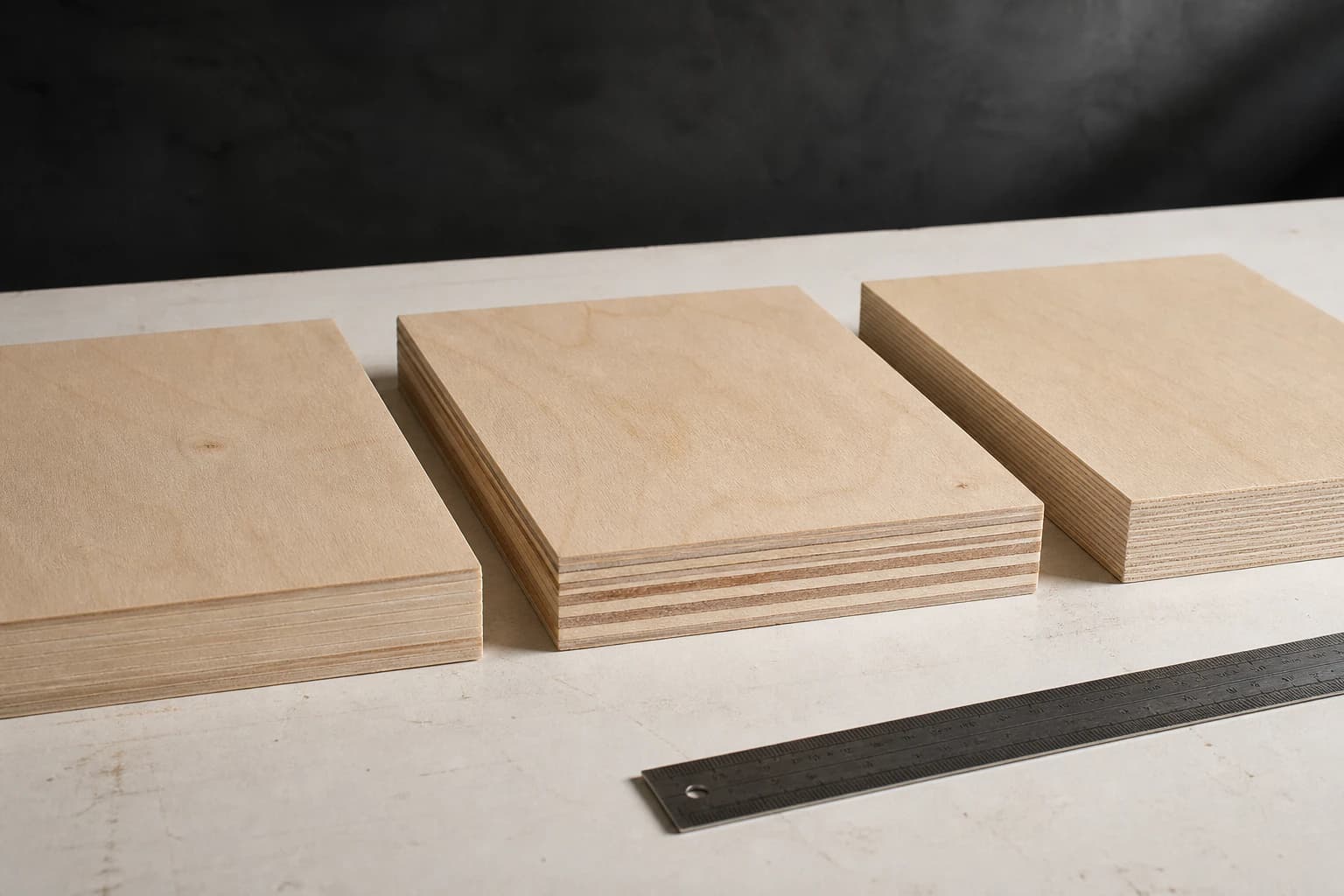
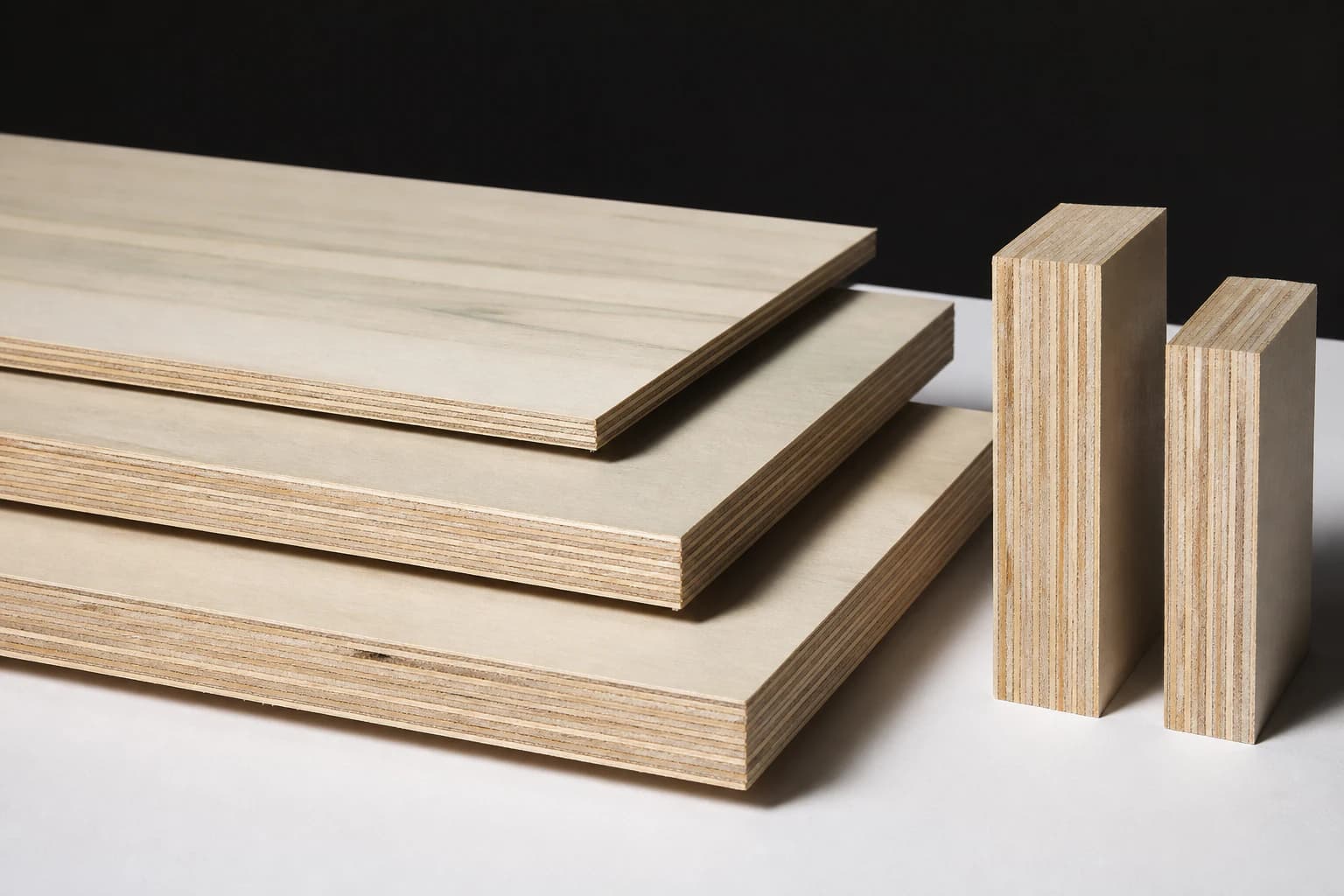
Birch-faced is not automatically all-birch.
If you want a natural birch face but a different core, specify both. A painted cabinet carcass, a clear-finished front and a routed part with a visible layered edge may justify different configurations.
All-poplar still needs a complete specification.
State the face and back appearance, ply layout, permitted repairs and edge finish. A utility panel for a hidden part and a selected furniture panel are not interchangeable just because both use poplar.
Birch, maple and Baltic Birch: what changes?
Keep the visible veneer, inner core and commercial name separate. Compare natural-wood faces for the look you want, then choose the construction for weight, machining, support and finish.
Birch vs maple for visible wood
Choose the appearance your furniture design calls for. Compare the actual veneer species, cut, matching, colour and permitted repairs under the intended clear or stained finish. A maple face can sit over a different core, just as a birch face can; neither face name defines the entire panel.
Birch vs maple for paint and flatness
When paint or laminate covers the face, compare the sanded surface, repairs, primer or adhesive system and the complete finish. Agree finished thickness and flatness for the component. Balanced finishing, moisture, storage and support matter; maple is not an automatic shortcut to a flatter or better-painted panel.
Birch-faced vs all-birch and Baltic Birch
All-birch describes birch veneers through the face, back and core. Baltic Birch is a commercial name commonly associated with an all-birch multi-ply construction, not proof of origin or a substitute for the grade and bond specification. Our factory is in Linyi, China; we state the construction and origin in your quotation.
Rugged plywood vs birch ply
If rugged describes the duty, turn it into requirements: impact, loading, fixings, moisture exposure and surface wear. If it names a particular product, compare its product data. The word alone does not establish a grade, a core or equivalent performance; choose the complete CUZI PLY panel for the component.
Explore Hardwood Plywood for decorative face requirements and Combi-Core Plywood for mixed inner veneers. For all-birch terminology and origin, see Birch vs Baltic Birch.
How much weight are you actually saving?
Use the panel density and finished dimensions, rather than assigning one weight to every birch or poplar sheet. For a regular 1220×2440×18 mm reference, the calculation is:
1.22 m × 2.44 m × 0.018 m = 0.0535824 m³. Multiply by the offered panel density in kg/m³.
| CUZI PLY construction | Indicative density target | Calculated sheet mass |
|---|---|---|
| All-poplar | 400–580 kg/m³ | 21.4–31.1 kg |
| Birch-faced, selected poplar/combi or other core | 520–720 kg/m³ | 27.9–38.6 kg |
| All-birch | 680–760 kg/m³ | 36.4–40.7 kg |
These density ranges span the options on our Birch and Poplar product pages; they are not one density target for every construction. The calculated weights are not weighed batch results. Confirm actual sheet mass and moisture condition for handling and container payload; include overlays, hardware and fittings when comparing a finished assembly.
At these dimensions, every 100 kg/m³ difference in panel density changes calculated sheet mass by about 5.36 kg. The ranges overlap for some birch-faced and poplar constructions, so compare the actual options in your quotation.
Compare the machined part, not only a clean face.
A panel that looks right before cutting can still need a different core, thickness or machining setup for the finished component.
Routed edges and profiles
Cut a representative profile with the tooling, feed and support planned for production. Check chip-out, inner gaps and repairs, then sand and finish the edge as it will appear in the furniture.
For a visible layered edge, assess the actual ply arrangement and appearance. More plies alone do not tell you whether the finished edge matches the design.
Drilling, inserts and screws
Check the selected fastener, pilot hole, fixing location and joint on the intended panel thickness. Inspect the hole exit and the core around the fixing; assess the assembly for its intended use.
Neither a species name nor an appearance grade is a screw-holding result. If the joint is critical, include the hardware and required performance when we discuss the construction.
For repeat parts, specify finished thickness, flatness and component tolerances with your drawings. Our factory team can align the selected face, core, calibration and machining requirements with your order.
Choose the lowest-cost construction that does the job.
Both materials can be considered for painted or covered parts. Compare the complete surface preparation and the cost of producing an accepted component, rather than the panel price alone.
Clear or stained finish
Compare the actual face colour, grain, permitted repairs and back appearance under your intended finish. Birch-faced plywood is a natural starting point when the design calls for a birch look.
Paint, veneer or laminate
Check sanding, face preparation, repairs and flatness with the chosen coating or adhesive. Assess the completed surface and balanced finish, not only the unfinished board.
Machining and yield
Compare usable parts per sheet, trimming allowances, cutting layout, calibration and edge treatment. A lower sheet price may not lower cost per finished part if extra work or waste is involved.
Order and delivery cost
Use the same thickness, size, quantity, face grade, bond, processing and delivery terms for both quotes. Include packing and shipment costs; lighter panels do not automatically mean a lower freight charge.
Indoor appearance, outdoor exposure and destination documents are separate choices. Tell us where the component will be used so we can specify the bond and applicable product information with your quotation.
Get comparable plywood quotes without overbuying.
Start with what you are making, the surfaces your customer sees and the quantity you need. Our factory team will help complete the construction and processing details, so you pay for the properties your parts actually use.
Specify the visible face and hidden core
Name the face and back species, appearance grade, core and ply arrangement. Mark visible routed edges and any permitted repairs. For a maple finish, send the veneer and colour requirements with the furniture specification.
Agree the finished component
Give sheet or part dimensions, thickness tolerance, grain direction, machining, joints, hardware and supports. Include the coating or laminate and any target finished-part weight.
Choose exposure and documents
Tell us the service conditions and destination. We help select the bond and product documents needed for the plywood and project; appearance, density and the species name are not certifications.
Compare the same commercial basis
Use the same size, thickness mix, quantity, grade, core, processing and delivery term. Compare usable parts per sheet, packing and shipment costs as well as the panel price. We confirm the order mix and production schedule with you.
Regular factory formats: 1220×2440, 1250×2500, 1525×3050 mm. On request: 1250×3050, 1250×3660, 2100×2800, 1830×3660, 1250×3800 mm. Compare cutting yield, grain direction, trimming and handling for your component layout; we confirm thickness, tolerances, quantity and export packing for the selected construction.
Use How to Specify Plywood to describe your part, Plywood Sizes & Thicknesses for dimension guidance and our Plywood Price Guide for comparable units and finished-part costs.
- Order quantity & mix
- Tell us the sheet size, thickness mix and quantity you need. We confirm the minimum order and available mix for your selected construction.
- Production lead time
- We confirm the production schedule with your specification, order quantity and sample requirements. Production lead times are planning estimates, not transit times.
- Price & quotation unit
- Currency and price unit stated in your quotation. Your quote is based on the agreed dimensions, construction and quantity. Processing and requested testing are stated separately where applicable.
- Samples
- Tell us the plywood, thickness, finish and delivery country. We confirm sample availability, any sample and courier costs, and dispatch arrangements before proceeding.
- Packing & delivery
- We agree export packing, labels and the loading plan for your order. Share the destination country, named port or delivery point and preferred delivery term. Freight, insurance, duties and taxes are included only when stated in the quotation.
- Payment & order confirmation
- We agree the payment method, currency and any deposit and balance schedule in the quotation or proforma invoice. Your order confirmation sets out the product, quantity, packing and delivery arrangements.
Birch and poplar selection
Questions before you choose.
Is birch plywood better than poplar plywood?
Not for every component. Start with the visible face, core, weight, joints and finish. An all-birch construction is worth considering for selected exposed-edge and precision work; all-poplar can be a practical choice when reducing component weight matters. Compare the actual constructions on the part you will make.
Can birch plywood have a poplar core?
Yes. CUZI PLY supplies birch-faced options with poplar, combi, hardwood, eucalyptus or all-birch cores. Specify the face, back and core in the order. A birch face does not by itself describe the inner veneers or sheet weight.
How much does a 1220×2440×18 mm sheet weigh?
Its volume is 0.0535824 m³. Multiply this by the density of the offered panel in kg/m³. Using our published density targets gives calculated references of 21.4–31.1 kg for all-poplar and 36.4–40.7 kg for all-birch. Confirm actual sheet mass for your construction, moisture condition, handling and packing.
Can both birch and poplar plywood be used for CNC furniture parts?
Yes, with a construction and thickness suited to the component. Compare the routed edge, hole exits, dimensional fit and fasteners using your tooling and joint design. Specify calibration and flatness with the part requirements; the species name is not a machining tolerance.
Which should I choose for paint or laminate?
Either may suit the job. Check the sanded face, repairs, flatness and thickness with your primer, veneer or laminate system. If all faces and edges are covered, spend on the core and processing requirements that improve the finished part rather than a face appearance you will not see.
Does a birch or poplar name tell me the bond or emission class?
No. State the intended use and destination, then select the bond and applicable emission or sourcing documents for the offered plywood. Species, appearance grade and adhesive requirements are separate parts of the specification.
What is the difference between birch and maple plywood?
Birch and maple can describe the visible face veneer, while either panel can use a separately specified core. For clear-finished furniture, compare the actual species, veneer cut, colour and grain under your finish. For painted parts, compare face preparation, repairs, calibration and the completed paint surface. Match the core, thickness and bond before comparing weight or performance.
Is maple plywood easier to paint or flatter than birch plywood?
Not simply because it has a maple face. Paintability depends on surface preparation, repairs and the coating system; flatness depends on the complete construction, moisture, finishing balance, storage and handling. Assess the finished part and agree thickness and flatness tolerances for your order. If paint hides the wood, choose the face and core that give the required finish and machining at the best finished-part cost.
Is birch plywood the same as Baltic Birch?
Not necessarily. Birch-faced plywood can have poplar, combi or another core. Baltic Birch is commonly used commercially for an all-birch multi-ply construction, but the name alone does not establish the panel origin, grade, bond or product documents. CUZI PLY manufactures in Linyi, China. Compare the specified all-birch construction and origin in the quotation; do not infer Russian or Finnish manufacture from the name.
How should I compare a panel sold as rugged plywood with birch ply?
Start with the named product and its specification. Rugged is not a complete plywood grade or core description. Compare face and core species, ply arrangement, thickness, bond, usable surfaces, fixing requirements and the intended duty at the same dimensions. If you are replacing a named brand or product, send its product data and the part requirements so we can discuss a corresponding CUZI PLY construction.
Which plywood should I choose for shelves or cabinet hardware?
Give the shelf span, loading, supports, panel thickness and fixing details. Compare the joint with the intended fasteners and pilot holes, including edge distances and repeated use. Neither the lighter sheet nor the birch face establishes a shelf load or screw-holding capacity by itself. We will help select a construction for your furniture; load-bearing building panels need their own structural specification.
Can I order sizes and thickness mixes for furniture production?
Yes. Send your sheet or component schedule, thicknesses, quantities, visible faces and machining requirements. We confirm the production lot, available mix, packing and timing for each construction. A larger sheet can improve nesting, but allow for trimming, grain direction, handling and transport before comparing usable parts per sheet.
Let us match the panel to your component.
Tell us what you are making, which faces and edges will be visible, and the quantity and destination. We will help choose the face, core and processing, then prepare your factory quotation.
- Component or sheet dimensions and thickness.
- Visible finish, routed edges, joints and hardware.
- Target weight and the checks you want to make.
For a trial, ask for the two constructions at the same thickness and test them using your finish and assembly. We confirm piece sizes, availability, any costs and courier arrangements with you.
Further reading on plywood construction
These manufacturers describe their own poplar, mixed-core and birch products. Their specifications do not describe CUZI PLY panels; use our product pages and your factory quotation for the construction you order.