CUZIPLY
Get a quote
FROM THE PANEL TO YOUR NEXT CABINET ORDER

Plywood for cabinets, kitchens and fitted furniture.

A well-made cabinet starts with the right panel, finish and fit. Buy plywood for cabinet carcasses, kitchen furniture, wardrobes and worktop substrates with the faces, core, finished edges and processing planned together. Choose sheets for your own workshop or agreed cut and machined components prepared for the next assembly operation.

CUZI PLY is your plywood manufacturer and direct supplier in Linyi, China, with 10 production lines. Work directly with our factory team to coordinate material choices, part requirements, protective packing and a quotation for your quantity and destination.

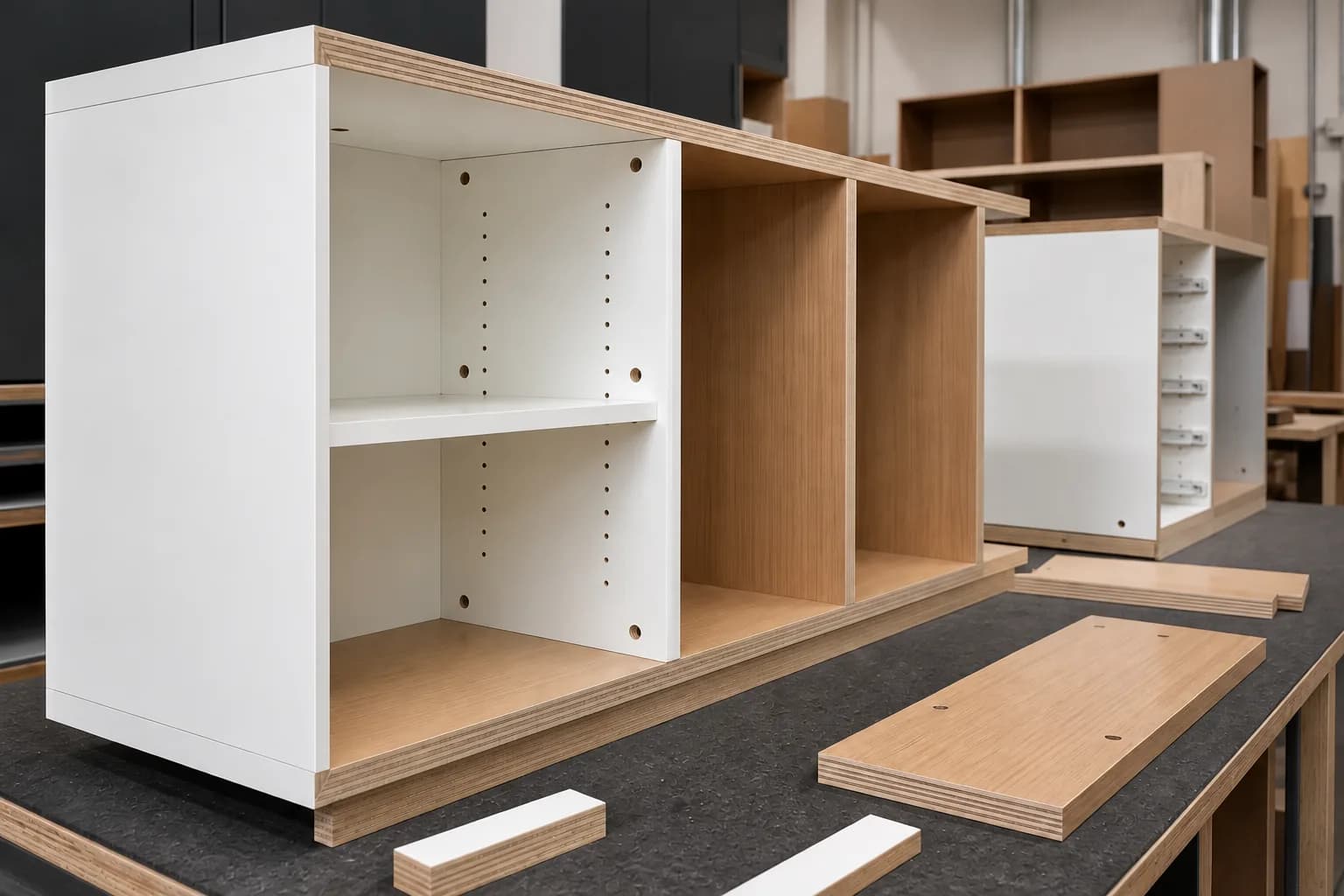
White and wood-faced plywood cabinet sections with shelf holes and exposed layered edges
Choose the surface for each cabinet component. Coordinate the interior face, visible end panels and front edges. Identify the shelf-hole pattern, reverse face and edges to be covered, so the plywood and finish follow the way each part will be assembled.
CHOOSE FOR THE COMPONENT

Plywood for cabinet carcasses: sides, shelves, backs and drawers.

The cabinet box sets the dimensions and fixing arrangement for everything fitted to it. Choose the core and finished thickness with joints, shelf supports, drawer runners, hinge mounting and the back-panel arrangement. Specify the interior face and exposed edges alongside the presentation surfaces.

Sides, tops and bases

Identify overall sizes, joinery, reference faces and hardware locations. Keep the panel thickness and important fit dimensions with the adjoining parts, including left- and right-hand pieces.

Shelves and dividers

Give shelf dimensions, clear support span and expected loads. Choose the panel and support arrangement together; thickness alone does not establish a shelf load rating.

Backs and drawer bottoms

Specify how the panel is supported and attached, including grooves, rebates and clearances. Coordinate its thickness with the joint and finish rather than copying the side-panel specification.

Drawer sides and moving parts

Include the runner or hinge reference, fixing positions and required clearances. Mark surfaces and edges that remain visible when the drawer or door is open.

Compare Furniture Grade Plywood, Birch Plywood and Prefinished Plywood for the supplied construction and finish.

COORDINATE THE CABINET INSIDE AND OUT

Plywood for kitchen cabinets that follows your furniture design.

Separate plywood kitchen carcasses from doors, drawer fronts, visible ends and the worktop. A practical interior finish, a colour-matched front and a natural-wood end panel may need different faces and edges. Keep them connected by part references, finished dimensions and the intended assembly.

Interiors and visible ends

Specify interior decor or coating, exposed ends, shelf fronts and any matching sequence. Melamine, HPL, prefinished and veneered plywood offer different finishing routes; give the finish you want to receive and the work your workshop will complete.

Sink units and appliance areas

Identify splashes, pipe openings, cleaning and nearby heat sources. Include cut-edge protection, joints, the reverse face and ventilation in the design. Coordinate installation around the appliance and fitting instructions.

Order the plywood and component preparation your cabinet workshop needs. We identify the sheets, cutting, machining and finish included in your quote. Your cabinet maker coordinates the complete units, hardware package and installation with those supplied parts.

PLAN FOR THE WAY THE UNIT GETS WET

Plywood for bathroom cabinets needs complete moisture protection.

Tell us whether the vanity or cabinet faces humidity, splashes, repeated cleaning or possible leaks. Select the plywood bond, face finish and cut-edge treatment together. Protect drilled holes, pipe cutouts, joints and exposed reverse faces as part of the finished furniture design.

Surface and edge protection

Specify the finish, covered edges and sealing of openings, including cuts made after delivery. Choose compatible protection for the laminate, exposed veneer edges, pipe openings and joints. Include ventilation and drying clearance so moisture can escape after cleaning or a splash.

Fixings, support and ventilation

Include wall attachments, basin support, cabinet feet and ventilation where relevant. The furniture designer and installer determine the assembly and fixing requirements, while we supply the selected panel construction and agreed processing.

Review Plywood Moisture & Water Resistance and Bonding & Emission Options for your service conditions.

SPECIFY THE COMPLETE WORKING SURFACE

Plywood for kitchen worktops: start with the substrate and finish.

Order the plywood substrate or agreed processed panel with the working face, reverse treatment, final thickness and supports defined. State whether it sits beneath a separate work surface or receives a specified laminate or coating. Coordinate that working surface with the sink, appliance and installation instructions.

Cutouts and joints

Dimension sink, tap and appliance openings, corner junctions and edge profiles. Include protection of every newly cut surface and sealing at joints. Keep these details with the finished worktop and fitting instructions.

Supports, heat and cleaning

Provide support positions, overhangs, loads, appliance clearances and the required cleaning or heat resistance of the working face. The worktop design sets the complete assembly requirements; the plywood order identifies the substrate and supplied finish.

Explore HPL Plywood and Surface & Overlay Options with the laminate, balancing reverse and intended use.

KEEP HEIGHT, LOADING AND HARDWARE TOGETHER

Plywood for wardrobes and fitted storage.

Choose plywood for wardrobe panels by the work each part does: tall sides, shelves, dividers, backs, doors and drawer parts. Give full-height dimensions, support spacing, expected shelf loads and hinge or sliding-door details. Keep material weight, fixing and finish requirements in the same specification.

Tall sides and doors

Specify the visible and reverse faces, grain or decor direction, attachment points and finished flatness requirements. Identify matching panels and handed pieces so the material and machining follow the installation layout.

Shelves, dividers and backs

Include shelf span, loading, support hardware and the way the back and dividers connect. A lighter construction may help handling, but the complete panel and support arrangement still need to suit the component.

Compare Poplar Plywood, Lightweight Plywood and Plywood Density, Weight & Strength for your part requirements.

SELECT THE MATERIAL FOR EACH PART

Choose the plywood face, core and supplied finish.

Buy by the complete construction and processing stage, not only a cabinet-grade label. Choose the interior and presentation faces, core, bond, overall thickness and required finishing work before comparing quotations.

Furniture & Hardwood Plywood

Cabinet sides, shelves and veneered fronts that will be sanded or coated.

Face species and appearance grade, reverse face, core, finished thickness and the paint or clear-coat preparation.

Also compare Hardwood Plywood.

Birch & Baltic Birch Plywood

Machined carcass parts, drawer components and furniture with visible layered edges.

Face and core construction, hardware positions, groove fit and the appearance or finishing of exposed edges.

Also compare Baltic Birch Plywood.

Melamine Plywood

Coordinated cabinet interiors and decorative panels with a specified colour or wood decor.

Decor, texture, matching reverse, core, overall thickness and the edges to be banded. Keep plywood separate from melamine-faced particleboard in the order.

HPL Plywood

Laminated furniture faces and fitted panels with a defined working surface.

Laminate grade and finish, plywood substrate, adhesive, balancing reverse, final thickness and edge treatment.

Prefinished Plywood

Coated cabinet interiors and components where the supplied finish can reduce later finishing work.

Coated sides, appearance, machining sequence and treatment of edges and holes opened after coating.

Poplar & Lightweight Plywood

Furniture components where handling weight is an important purchasing requirement.

Complete construction, mass target, shelf loading, supports and fixing details. Select for the part rather than weight alone.

Also compare Lightweight Plywood.

Regular sheet formats: 1220×2440, 1250×2500, 1525×3050 mm. On-request formats: 1250×3050, 1250×3660, 2100×2800, 1830×3660, 1250×3800 mm. Give the finished component dimensions, thickness and quantities; these sheet formats are starting sizes for the cutting layout.

Still choosing a material? Compare Plywood vs MDF and Plywood vs Particleboard for appearance, processing and purchasing requirements.

MAKE THE VISIBLE DETAILS PART OF THE ORDER

Match fronts, faces and edges before production.

Mark the presentation face, reverse face, grain direction and every visible edge. Choose matching or contrasting edging, natural-wood lipping or deliberately exposed plywood layers. Give dimensions after the specified edging and finish, so the delivered part fits the planned assembly.

Doors and decorative fronts

Keep the face and reverse construction together, including veneer matching, laminate or coating and the finishing sequence. Include hinge positions, door size, clearances and the flatness requirement for the finished part.

Edge map and final size

Identify front, rear, left and right edges by part reference. Specify the edge material, thickness, colour, texture and corners, plus edges or holes finished after delivery.

Coordinate Edge-Banded Plywood with Surface & Overlay Options and the supplied panel finish.

PUT HARDWARE FIT ON THE DRAWING

Plywood cabinet components with planned cutting and machining.

Bring hole positions, depths, grooves, openings and profiles onto one part drawing. Name a reference face and edge, state the actual finished thickness and identify the hardware or adjoining part each feature must fit. Mark remaining operations completed by your workshop.

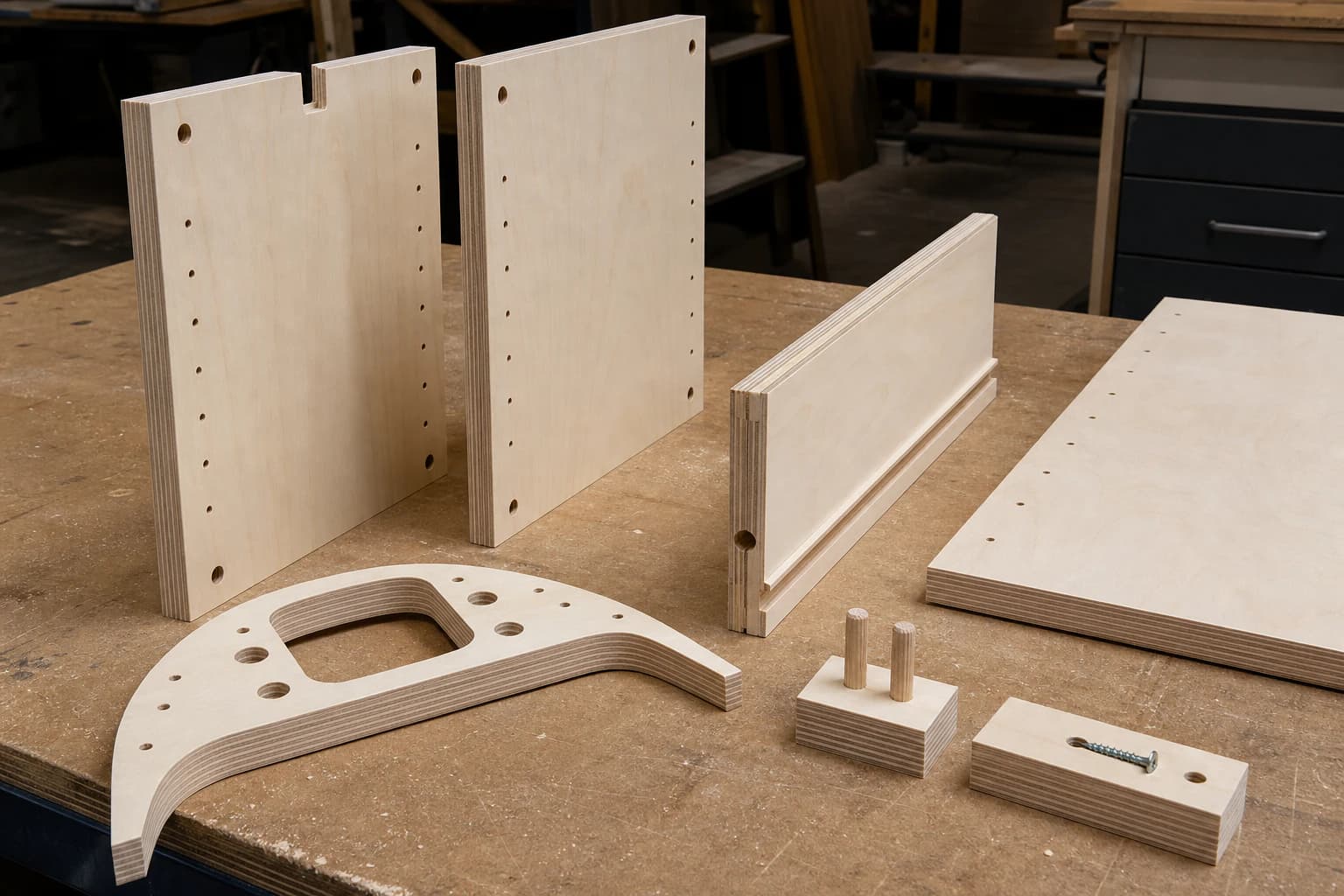
Birch plywood furniture components with drilled holes, grooves, routed profiles and layered edges
Bring hardware and joinery into the part drawing. Locate holes, grooves and cutouts from a named reference face and edge. Keep the finished thickness, hardware and joint fit with each part reference, including features and edge protection completed after delivery.

Sheet supply or prepared components

Choose full sheets, rectangular cut parts, or specified machined and edged components. Keep the supplied form, final dimensions and finish clear rather than treating them as the same order.

Hardware and joint requirements

Include hinge cups, runners, shelf holes, dowels, screws and groove details where required. Follow the chosen hardware instructions and assess important fit or fixing requirements with the actual panel construction.

Plan Cut-to-Size Plywood, CNC Plywood Components and Edge-Banded Plywood together.

CONNECT PRODUCT INFORMATION TO THE INTENDED USE

Panel, processing and project documents for your cabinet order.

Identify the destination, project specification, plywood construction and supplied finish. Request the product sheet and applicable emission, sourcing or performance information for that panel. Keep report identification and scope with the material and processing specified in the order.

Interior emission requirements

For US purchases, regulated hardwood plywood and finished goods containing it fall within TSCA Title VI requirements. Identify the covered product and relevant certification, labelling and records. For European projects, give the destination and applicable emission requirement with the construction and finish.

See EPA composite-wood guidance and our Plywood Emissions: US & EU guide.

Product and project fit

Match any required sourcing claim, bond, surface or mechanical information to the selected plywood. Furniture loading, fixings, complete worktop performance and installed-cabinet requirements depend on the component and assembly design as well as the panel.

Use Standards & Certifications and Sourcing: FSC, PEFC & EPD to plan the documents required for your order.

Give the destination and required emission or sourcing documents with your part list. We connect the panel specification, producer and product identification, report or certificate references and order details for the selected construction. Custom sheet and component dimensions remain part of that order specification.

START WITH THE PARTS YOU NEED

Component dimensions, quantities and enquiry details.

Send the component use, part sizes, thickness, quantities and destination first. Add the face finish, core, machining and edges you already know. If the core, face grade or bond is undecided, write “Need advice” in Requirements. Our factory team helps complete the panel choice and processing specification.

RequirementWhat to includeWhy it matters
Use and componentKitchen or bathroom carcass, wardrobe side, shelf, back, drawer, front or worktop substrate.Choose the construction for the actual part, including its loading and exposure.
Panel and face finishFace species or decor, appearance grade, reverse face, core, bond and overall finished thickness.Keep surface appearance, machining and fixing requirements in the same material order.
Finished dimensions and quantityDrawing revision, part ID, units, final sizes after edging, quantities, handed pieces and matching sets.Connect the cutting plan, supplied components and receiving list.
Faces, edges and grainPresentation face, installed orientation, grain direction, covered edges and visible plywood edges.Finish the correct side and allow for edging in the delivered dimensions.
Hardware and machiningHole positions and depths, grooves, cutouts, corner radii, hardware references and mating parts.Locate features from the agreed reference face and edge and keep joint fit with actual thickness.
Supports and service conditionsShelf spans, loads, cabinet attachments, cleaning, humidity, wetting and nearby heat sources.Assess the panel with its supports, fixings and complete finishing arrangement.
Project and product documentsDestination, selected construction, required emission, sourcing or performance documents and any project specification.Match product information to the material supplied and the requirements of the finished project.
Supplied stage and deliverySheet, cut part or machined and edged component; later work, pack grouping, delivery point and target date.Quote the same processing stage and protect parts for the next operation.

Begin in Contact with the details you have. Send drawings by email or WhatsApp after contacting us. Include the drawing revision and parts to be checked against the hardware, and state whether you want sheets, cut blanks or finished components.

Compare face and core constructions, choose bond and emission requirements and use our plywood specification guide to complete the material details.

QUOTE THE SAME MATERIAL AND SUPPLIED STAGE

An organised component order, from quotation to receiving.

Compare the same panel construction, part list, processing, finish, checks and delivery basis. Keep minimum quantities, preparation costs, production timing and shipment arrangements clear for your first order and repeat supply.

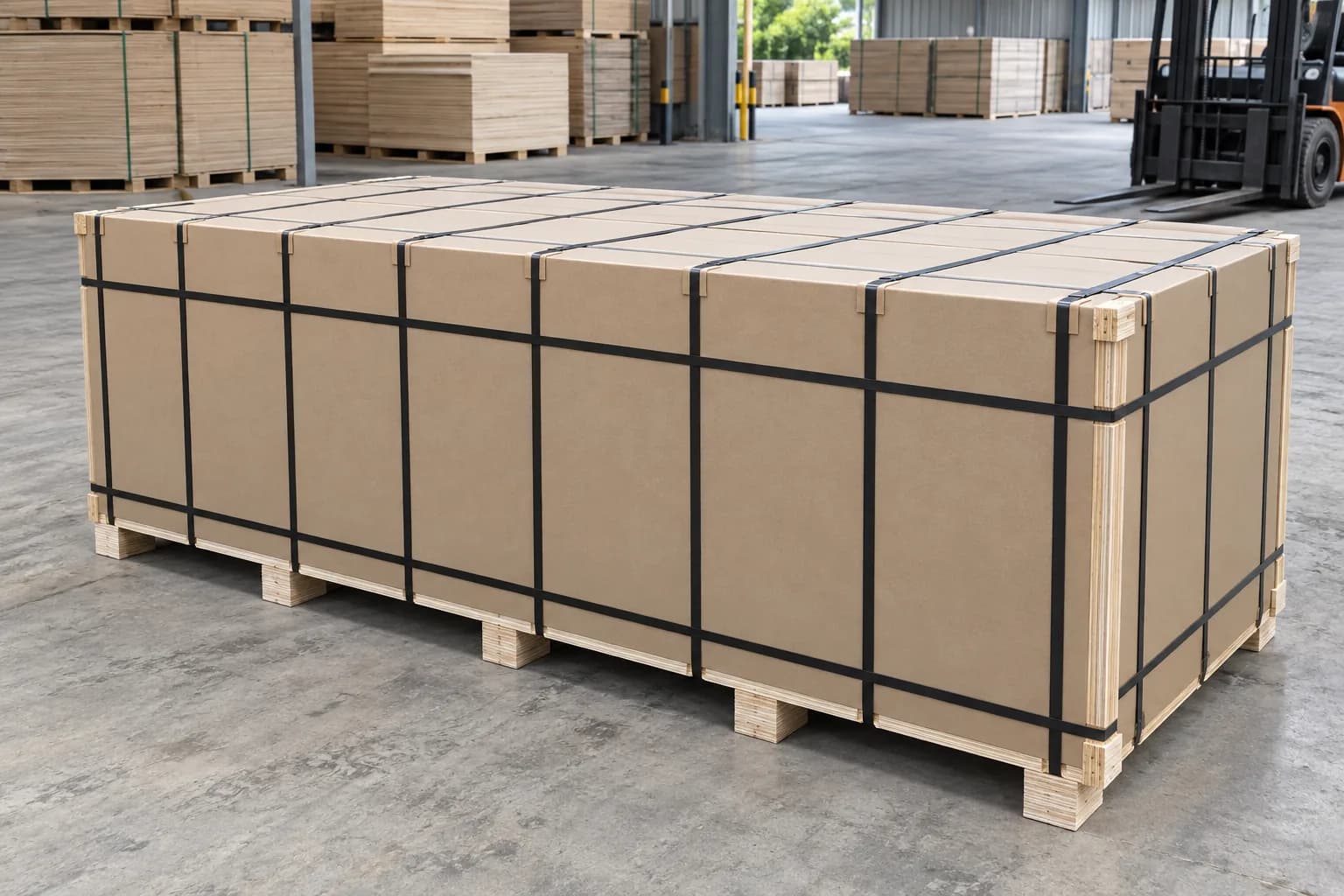
Plywood package with protective outer boards, corner blocks, straps and timber supports
Pack components for an organised receiving process. Group parts by reference and quantity, separate decorative faces and protect corners. Connect the labels and supported packages to your cutting list, receiving equipment and next assembly operation.

Parts ready for your next operation

Group part references, quantities and matching sets on the pack list. Separate decorative surfaces, protect corners and support packages for handling and transport. Tell us about receiving equipment and the way your workshop or site will organise assembly.

Repeat supply with the same part references

Keep the drawing revision, face and edge references, material, hardware and packing details together. Identify changes before the next quotation so repeat orders follow the intended appearance and fit.

Plan Packing & Container Loading and Quality & Inspection with your supplied components.

Tell us whether to group parts by cabinet set, room or workshop operation. Include left- and right-hand pieces, matching fronts and any spare parts on the receiving list. Agree pack dimensions, supported handling and unloading equipment before shipment so each set reaches the right assembly station.

Material and part mix

Quote the same face, core, bond, overall thickness and quantities per part. Identify decorative fronts separately from concealed carcass parts.

Cutting and machining

Include finished sizes, holes, grooves, cutouts and any setup work. Keep first-order preparation and repeat-part costs clear.

Faces and finished edges

Specify coatings, laminate or decor, reverse face, covered edges and visible layered edges. Compare parts at the same supplied stage.

Checks and documents

Include important dimensions, hardware-fit or appearance checks and documents required for the selected plywood and destination.

Protection and labels

Group parts and matching sets by reference. Include face separation, corner protection, supported packs and a receiving list.

Order and delivery terms

Agree quantities, production timing, delivery term, named destination and included charges. Keep transport time separate from production time.

Order quantity & mix
Tell us the sheet size, thickness mix and quantity you need. We confirm the minimum order and available mix for your selected construction.
Production lead time
We confirm the production schedule with your specification, order quantity and sample requirements. Production lead times are planning estimates, not transit times.
Price & quotation unit
Currency and price unit stated in your quotation. Your quote is based on the agreed dimensions, construction and quantity. Processing and requested testing are stated separately where applicable.
Samples
Tell us the plywood, thickness, finish and delivery country. We confirm sample availability, any sample and courier costs, and dispatch arrangements before proceeding.
Packing & delivery
We agree export packing, labels and the loading plan for your order. Share the destination country, named port or delivery point and preferred delivery term. Freight, insurance, duties and taxes are included only when stated in the quotation.
Payment & order confirmation
We agree the payment method, currency and any deposit and balance schedule in the quotation or proforma invoice. Your order confirmation sets out the product, quantity, packing and delivery arrangements.
Further guidance for cabinet purchasing

Destination requirements and worktop detailing should be read with the selected panel and finished assembly.

BUYER QUESTIONS

Panels, parts and project requirements

Questions about plywood for cabinets and kitchens.

Can I buy plywood cabinet components directly from CUZI PLY?

Yes. CUZI PLY is the plywood manufacturer and direct supplier in Linyi, China. We supply the selected plywood as sheets or agreed cut, machined and edged parts. Tell us the cabinet component, face and core, thickness, part sizes, quantities and destination so we can quote the material and processing together.

Which plywood should I choose for kitchen cabinets?

Start with the component. Carcass sides and shelves need a suitable core, thickness, support and fixing arrangement; visible ends and fronts also need the right appearance and finish. Compare furniture, hardwood, birch, melamine, HPL and prefinished plywood with the intended moisture exposure and cleaning conditions.

What is the difference between cabinet carcasses and cabinet fronts?

The carcass is the cabinet box, including its sides, base, top, shelves and back arrangement. Fronts and visible end panels place more emphasis on decor, veneer matching and finished appearance. Specify each component separately, with the visible face, reverse, edges and hardware.

Is one thickness suitable for every cabinet part?

No. Choose thickness with the part dimensions, shelf span and loading, joints, hardware and supports. Backs, sides, shelves, drawers and doors do different work. Give the finished thickness and important fit dimensions; use product data or project calculations for loaded parts rather than assuming a single thickness works everywhere.

Can plywood be used for bathroom cabinets?

Yes, with a construction and finish selected for the unit's humidity, splashes, cleaning and wetting. Specify the bond, surface, cut-edge protection, holes, joints and reverse face together. Include ventilation, drying clearance and protection for cuts made during fitting. We quote the selected panels and processing; your furniture designer coordinates the complete unit and installation.

Can you supply plywood for kitchen worktops?

We supply plywood substrates and agreed processed panels for your worktop construction. Specify whether the plywood supports a separate countertop or receives a laminate or coating, then give the reverse treatment, finished thickness, joints, supports and sink or appliance cutouts. Your worktop fabricator coordinates the working face, moisture and heat protection and installation with the chosen surface and appliance instructions.

What should I specify for plywood wardrobe panels?

Include full-height side dimensions, shelves, dividers, backs and doors, with support spacing, expected shelf loads, hardware and the required decor. Identify tall panels, handed parts, visible ends and grain direction. Choose core and thickness with handling weight, fixing and span requirements.

Can cabinet parts arrive drilled and edge banded?

Specify the finished dimensions after edging, the covered edges, hole locations and depths, grooves, cutouts and hardware references. We quote the agreed cutting, machining and finishing with the plywood. Mark operations your workshop completes after delivery so the supplied stage and later work are clear.

Should cabinet doors and fronts have a finish on both sides?

Specify the face and reverse together, including veneer, laminate or coating, grain direction and the planned finishing sequence. The two sides form part of the construction and its moisture behaviour. Keep flatness, size and hardware requirements with the complete finished part; a decorative face alone does not define the door.

Which documents should I request for US or European cabinet projects?

Identify the destination and project specification with the plywood construction and supplied finish. Request the relevant product sheet, emission information and any required sourcing or performance documents for that panel. Keep product identity and the document scope connected to the order; finished cabinet requirements also depend on fabrication and installation.

Do you supply finished kitchens and installation?

This page covers plywood and plywood components for furniture manufacturers, cabinet workshops and fit-out projects. Your quotation identifies the supplied panels and processing. Cabinet design, complete units, hardware packages, worktop installation and site fitting are separate scopes and are not included simply by ordering plywood components.

How can I check the panel and finish before ordering?

Use Request a Sample and give the panel construction, thickness, face finish and edge or machining detail you want to assess, plus your destination. We confirm preparation, availability, sample and courier costs and dispatch arrangements. Include the intended hardware or coating where it affects your assessment. If the core, face grade or bond is undecided, write Need advice in Requirements and describe the component you will make.
MAKE YOUR NEXT CABINET ORDER CLEARER

Tell us which cabinet components you need.

Give the component use, face and core, thickness, finished part sizes, quantities and destination. Add the edges, machining, hardware and important project documents. We will help complete the material choices and quote the plywood, agreed processing and protective delivery.

For a physical assessment, identify the face, construction, edge finish and hardware detail you want to review. We confirm preparation, availability, sample and courier costs and dispatch arrangements.