Economy
Cost-led utility construction for covered, painted or secondary interior components; more face repair and broader tolerances are accepted.
CUZI PLY manufactures commercial plywood for furniture, interior fit-out, overlay substrates and distributor programs. Buyers can choose Economy, Standard Export or Professional / Premium construction, with the face and back, core species, cross-banded lay-up, bond, sanding, dimensions, moisture, inspection and packing stated in the specification. Standard Export is the normal repeat-order choice; Economy suits covered utility parts, while Professional / Premium adds tighter surface, edge and machining control.
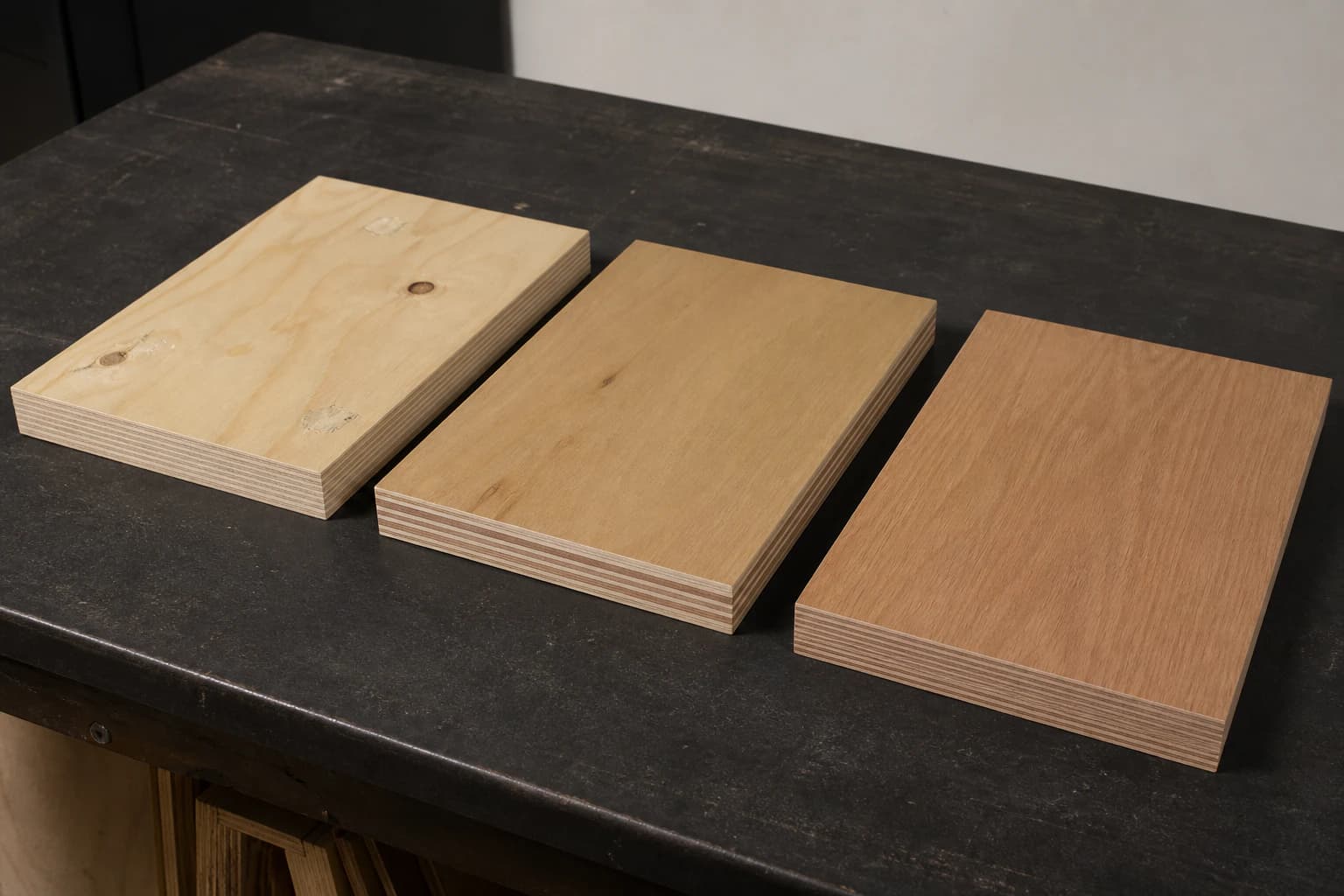
The utility, combi-core and selected hardwood positions show why a shared product name cannot replace an approved face and edge reference.
Economy, Standard Export and Professional / Premium are different constructions for different uses. Compare them by the complete specification, not the tier name alone.
Cost-led utility construction for covered, painted or secondary interior components; more face repair and broader tolerances are accepted.
Normal repeat-order configuration: selected faces, calibrated poplar/combi core, controlled repairs, specified bond and emission requirements, and export packing.
Normal repeat-order choiceProject-specific surface, machining and edge control with a selected core, tighter calibration and supporting documents for the exact order.
Commercial plywood is a flexible product family, not one fixed grade. The intended use determines the face, core, bond, moisture and dimensional controls.
Commercial plywood is a general-purpose veneer panel family, not a regulated grade name. It does not automatically define the species, adhesive, face quality or service condition. For furniture, interior work, overlay preparation and recurring distributor supply, those details must be written into the order.
Choose commercial plywood when the visible surface, machining, indoor service condition and final finish can be clearly defined. Choose a product-specific plywood instead when the work requires structural design values, a marine construction standard, concrete-formwork reuse, precision laser cutting or a fixed species construction.
Use the Product Catalogue when the product type is still undecided. If machining repeatability and visible appearance lead the decision, compare Furniture Grade Plywood. If weight or species is the main filter, compare Poplar Plywood or Hardwood Plywood rather than treating “commercial” as a species.
Before approving a mixed or named-species construction, use Compare core materials and species to separate the visible face from the internal veneer sequence and its repeat-order controls.
When the construction is fixed, Compare bond and emission options to identify the adhesive, intended exposure, destination requirement and supporting documents instead of relying on MR, WBP or E0 shorthand.
Evaluate a finish or laminate over Commercial Plywood when the base panel may become a veneer-faced, coated or laminated composite; the surface interface remains a separate purchasing decision.
See how Commercial Plywood is produced for a clear explanation of veneer selection, cross-banded lay-up, pressing, sanding, inspection and packing.
These controls explain why two sheets sold under the same commercial plywood name can machine, finish and age differently.
Veneer grade, colour range, knots, patches and filled repairs are agreed against the final visible or covered use. Thin overlays require a smoother, more uniform substrate than painted or concealed parts.
Alternating veneer direction balances the panel. Species sequence, inner-veneer joints, gaps and overlaps are controlled because they affect flatness, edge quality, fastening and surface telegraphing.
Interior UF/MR and exterior phenolic options are selected for a named service condition and test requirement. A glue trade name alone does not make commercial plywood waterproof or marine grade.
Standard Export targets 8–12% before packing. Representative readings are taken after conditioning because excess or uneven moisture can affect flatness, machining, coating and destination acclimatization.
Lay-up, pressing and two-side sanding establish panel consolidation and thickness consistency. Tolerance is checked on a supported sheet with an agreed measurement method and sampling frequency.
Surface smoothness, repair pattern, moisture and thickness are approved for the intended veneer, melamine or laminate process. A trial remains advisable when the overlay is thin or the finish is highly visible.
The table gives concrete face, core, bond, moisture, dimension, inspection and packing parameters for each configuration. Final values are confirmed in the order specification.
Compare each row across all three configurations. On smaller screens, each field lists Economy, Standard Export and Professional / Premium in that order.
| Field | Economy | Standard Export | Professional / Premium |
|---|---|---|---|
| Face / back | C/D or utility BB/CC; filled repairs and colour variation declared | B/BB or selected BB/CC with approved repair and colour reference | Selected B/BB or matched custom face; appearance limit agreed by sample |
| Core species | Poplar or mixed hardwood according to target density | Poplar or combi, species sequence declared | Selected hardwood or all-poplar by machining and weight brief |
| Core construction / lay-up | Utility cross-banded lay-up; overlap and gap limit stated | Calibrated low-gap lay-up with repaired inner veneers | Higher-ply controlled lay-up; joint and void limit written into approval |
| Glue / bond | Interior UF/MR option for dry-service work | Interior MR baseline; exterior phenolic option only when specified | Low-emission or exterior-bond system qualified to the project method |
| emission requirements | E2 or E1 target selected before production | E1 target for the selected glue and panel construction | E0/low-emission or destination-specific option with the required test report |
| Sanding / calibration | Utility two-side sanding; nominal calibration | Two-side calibrated sanding for repeatable thickness | Fine calibrated sanding and machining datum agreed with buyer |
| Overlay readiness | Paint, lining or non-critical covering after buyer preparation | Veneer, laminate or melamine-ready option after surface approval | Controlled surface and repair pattern for demanding overlay programs |
| Standard sizes | 1220×2440 and 1250×2500 mm | 1220×2440 and 1250×2500 mm | 1220×2440 and 1250×2500 mm; cut-to-size by drawing |
| Oversize option | Available after the construction and quantity are confirmed | 1525×3050 mm available for selected constructions | 1525×3050, 1220×3800 and 2100×2800 mm subject to press, lay-up, tolerance, handling and loading requirements |
| Thickness | 3–25 mm | 3–30 mm | 4–30 mm; selected thinner or machined formats by specification |
| Thickness tolerance | Target ±0.5 mm; exact basis written in order | Target ±0.3–0.5 mm by thickness | Project tolerance and measurement method approved before production |
| Moisture | 8–14% target | 8–12% target | 6–10% target, conditioned to application |
| Density / panel weight | About 480–600 kg/m³; calculate sheet mass from the selected construction | About 500–650 kg/m³; confirmed by selected species | About 580–700 kg/m³ or the agreed project range |
| Edge / repair rule | Open defects and filled repairs within approved utility reference | Core gaps, overlaps and face repairs limited by signed sample | Tight void and repair control; exposed-edge requirement stated separately |
| Inspection plan | Visual grade, count, nominal size and moisture sampling | Approved sample plus thickness, moisture, squareness and bond checks | Project sampling, machining checks and third-party inspection when requested |
| Packaging | Dry pallet, protective top/bottom sheets and straps | Fully wrapped export pallet, edge/corner protection and pack ID | Moisture barrier, face protection and oversize supports matched to the package |
| Lead-time scope | Normally 20–30 days after specification and deposit confirmation | Normally 25–35 days after sample and document requirements are confirmed | Normally 30–45 days; oversize, testing or machining may extend timing |
| Indicative price | USD 240–310/m³ | USD 330–440/m³ | USD 460–610/m³ |
Format note. 1220×2440 and 1250×2500 mm are the conventional comparison formats. Selected 1525×3050, 1220×3800 and 2100×2800 mm panels are available when the construction, tolerance, handling and loading plan are confirmed. See Plywood Sizes & Thicknesses before combining an oversize format, thin construction and tight tolerance.
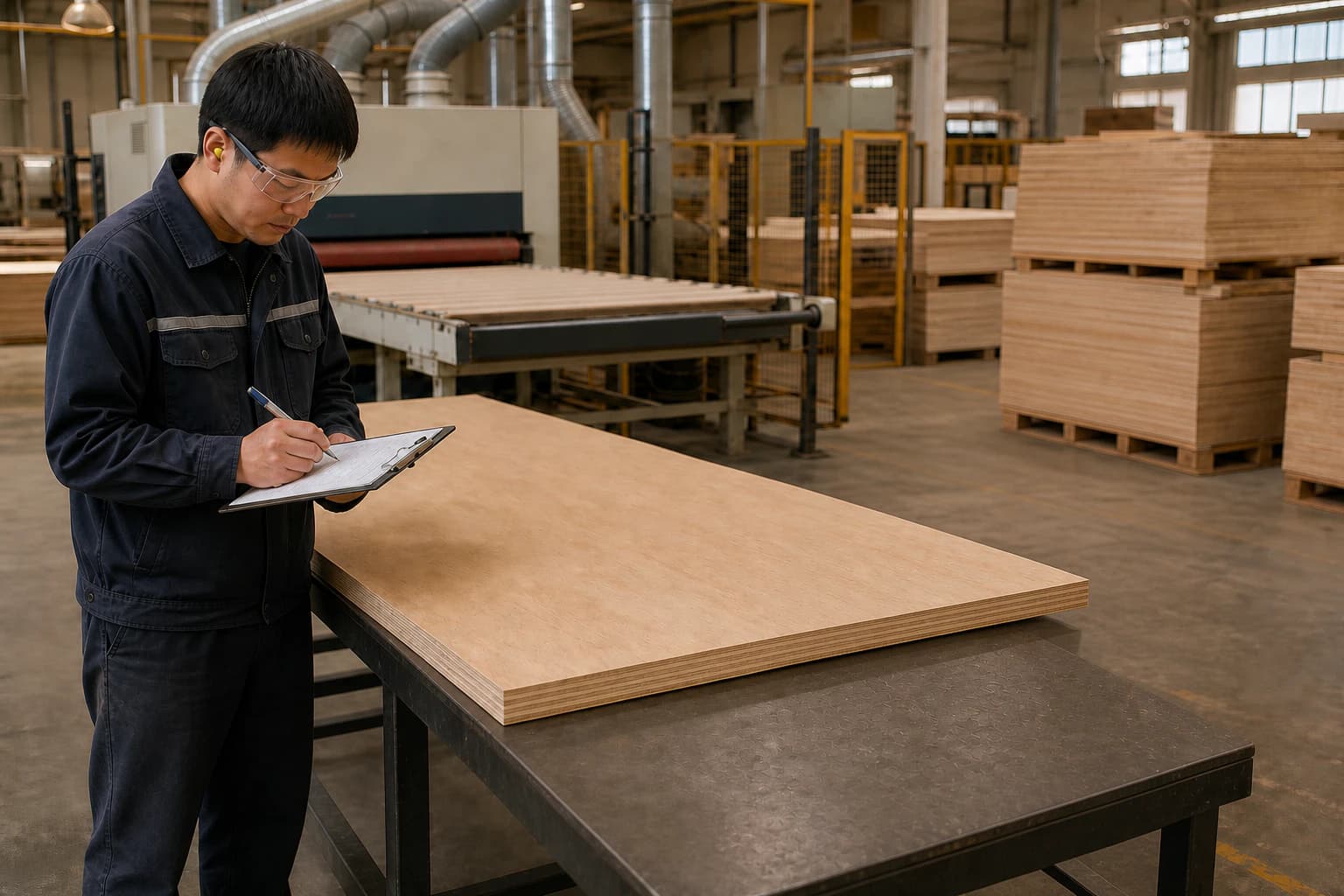
The panel is shown flat on a proper inspection surface while one operator records its face and edge condition; thickness calibration remains a separate controlled process point.
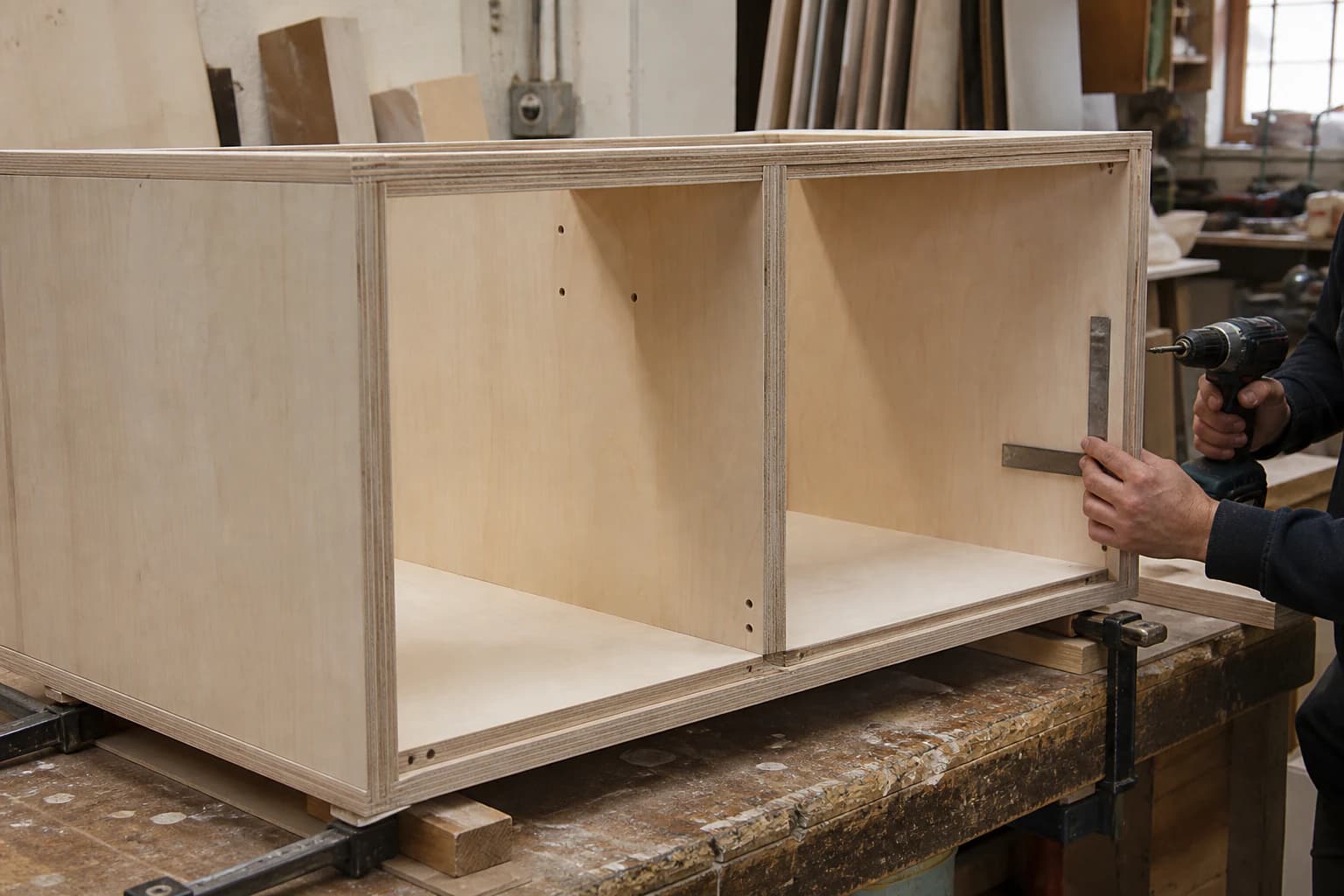
Cabinet assembly exposes calibration and edge consistency. Thin decorative overlay exposes repairs and surface telegraphing. Distributor stock tests whether repeat orders use the same written construction.
Recommended configuration: Standard Export poplar/combi where calibration, screw location and covered faces matter
Choose a different product when: Use Furniture Grade for tighter appearance and machining programs
Recommended configuration: Economy or Standard by visible-face, fire brief and finishing system
Choose a different product when: Use Structural or Fire-Retardant when the project specification controls performance
Recommended configuration: Standard Export with calibrated sanding and approved repair pattern
Choose a different product when: Use Veneered Plywood when the decorative face is supplied as the finished product
Recommended configuration: Standard Export or Premium with surface flatness and moisture controlled
Choose a different product when: Use a dedicated surfaced-panel constructions when overlay bonding and finish are supplied together
Recommended configuration: Fix two or three repeatable constructions instead of one vague grade
Choose a different product when: Separate species-led, marine, structural and formwork demand into their own files
For the complete factory sequence, continue to Furniture Manufacturing. This page defines the panel; the application page explains machining, assembly and finishing requirements.
An unfinished cabinet carcass makes layer continuity, panel flatness, fixing preparation and exposed-edge expectations easier to discuss than a polished room scene.
The approved sample, inspection results, pack identification and shipment documents should describe the same product. Review Quality & Inspection and the Export Process before confirming unusual sizes or packs.
ISPM 15 scope. Processed plywood itself is not treated as solid-wood packaging. Any solid-wood bearers, blocks or other regulated packaging components are assessed against destination rules and documented separately. The buyer or importer confirms destination-specific requirements.
Emission, bond, sourcing, labelling and import requirements depend on the selected construction, end use and destination. These items are written into the quotation and order specification.
Import conditions and required product documents are confirmed by commodity, construction and end use.
Confirm with the importer before orderFace grade, bond, private label, packing and destination documents are fixed for the distributor program.
Specified for each orderThickness, cold-season moisture control, species, packing and buyer test requirements are written into the contract.
Set by destinationSpanish or Portuguese labels, species declarations, emission documents and pallet information are confirmed before production.
Specified for each projectUse, bond, budget, inland handling and pack reinforcement determine the construction.
Set by product and destinationDocument availability follows the selected glue system, panel construction, material source and destination. List the required reports or chain-of-custody documents in the RFQ so their scope can be confirmed with the quotation.
Available for the selected glue system and panel construction.
Available when exterior-bond performance is included in the order specification.
Used only for an order covered by a valid chain of custody.
The ranges below apply to the stated reference panel. The final quotation reflects the confirmed construction, thickness mix, quantity, packing, trade term and destination.
Utility face, poplar or mixed core and interior bond.
Selected face, calibrated poplar/combi core and repeat-order controls.
Selected construction, tighter surface and edge controls, and specified test documents.
Reference specification: 1220×2440×18 mm, one full-container basis, USD/m³. One sheet equals 1.220 × 2.440 × 0.018 = 0.05358 m³; multiply the cubic-metre range by 0.05358 for a same-basis sheet reference price. The quotation then confirms the face, core, glue, test documents, thickness mix, quantity, packing, timing, trade term and logistics.
Send the completed specification through Build an RFQ. The quotation will state the selected trade term, shipment port and destination.
Choosing your commercial plywood
Commercial plywood is a configurable general-purpose veneer panel for furniture, interiors, overlay substrates and distribution. A complete export specification states the face and back grade, core species and lay-up, glue and bond requirement, emission target, dimensions, thickness tolerance, moisture target, surface preparation, packing and intended use so the quotation matches the required panel.
Commercial plywood supports broader interior and distributor programs with buyer-agreed face and core rules. Furniture grade is the better option when repeatable appearance, machining, exposed edges and finishing tolerances are the primary decision.
Yes, when the selected face, core, calibration and bond match the operation. Cabinet carcasses and hidden furniture parts can use commercial constructions; demanding visible work or thin overlays need tighter surface and repair control.
No waterproof property follows from the category name. Interior MR and exterior phenolic options are specified separately, and neither automatically makes the panel marine plywood.
Poplar offers lower weight; combi balances handling and screw-holding; selected hardwood raises density and edge performance. The buyer should state panel weight, machining, exposed-edge and fastening priorities rather than choosing by species name alone.
State the visible-side and reverse-side limits, permitted repairs, sanding or calibration method and final coating or overlay. Thin veneer, melamine and HPL systems can reveal uneven repairs, moisture and thickness variation.
Compare one face grade, core construction, bond, emission requirements, size, thickness mix, tolerance, quantity and packing basis. A retail sheet price or an unscoped cubic-metre figure is not directly comparable.
1220×2440 and 1250×2500 mm are conventional comparison sizes. Selected 1525×3050, 1220×3800 and 2100×2800 mm constructions can be reviewed after press, lay-up, tolerance, handling, packing and loading feasibility are confirmed.
Plywood enquiry
Tell us the final use, visible-face standard, face/back grade, core species and lay-up, bond and emission requirement, sanding or overlay process, complete size and thickness mix, tolerance, order quantity, packing method, destination port and required test documents. If a field is undecided, describe the machining and finish so we can recommend a suitable construction.
CHAT WITH CUZI PLY↗