Panel construction
State face and back grade, core species, ply build, permitted gaps and repair limits for the cut component.
CUZI PLY supplies packing plywood for machinery crates, export cases, framed enclosures, skid-and-panel systems and reusable industrial packaging. A clear quotation connects the cargo mass, centre of gravity and handling plans to the plywood construction, 3–30 mm thickness range, typical 8–12% shipment moisture, cut components, skid and frame support, fasteners, barriers, export packing and destination documents. Complete-package testing can then follow the selected transport and stacking conditions.
These fields make quotations comparable while keeping the panel coordinated with the skid, frame, handling method and destination.
State face and back grade, core species, ply build, permitted gaps and repair limits for the cut component.
Match the bond specifications to storage and transport exposure, with a typical 8–12% shipment moisture target for the selected construction.
Select within the 3–30 mm production range and state sheet size, cut blank, finished dimensions and tolerances.
Provide cut drawings, holes, openings, edge distance, fastener type and the frame support pattern.
Specify natural, painted, coated or treated surfaces together with edge sealing, barrier materials and ventilation.
Coordinate panel bundles or pre-cut kits, labels, moisture protection, solid-wood components and container loading.
Verified gross and component masses
Base and handling load casesLocation in all axes and possible fluid shift
Restraint and lifting planFoot dimensions, spacing and reactions
Local base supportShock, vibration, corrosion, dust and orientation limits
Protection and test methodsApproved machine or cargo tie-down locations
Bracket and load-path drawingForklift, crane, pallet truck or combined option
Base interfaces and clearancesTransport mode, option and fragility input
Distribution-test profilePermitted load, duration and support alignment
Top frame and compression optionIndoor, covered, outdoor and duration
Moisture and ventilation controlsTemperature, humidity, condensation and salt exposure
Barrier and conditioning planModes, transfers, terminals and importer rules
Documentation and biosecurity optionOne-way shipment or engineered repeat cycle
Inspection and repair plan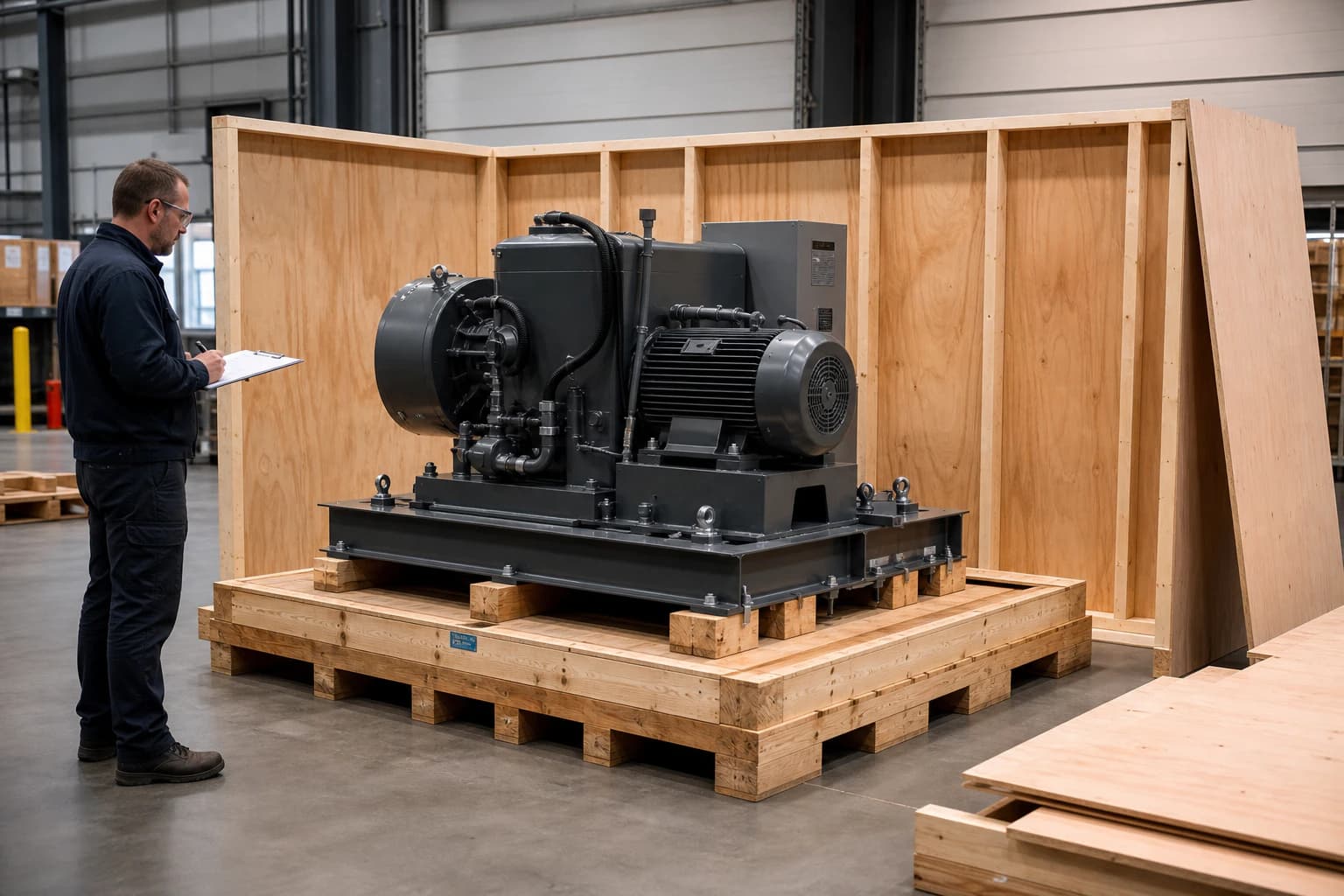
| Party | Supplies | Coordinate with |
|---|---|---|
| Plywood panel supplier | Panel construction, dimensions, machining, moisture, packing and requested product documents | Coordinate the panel with the crate drawing, frame support and fastening schedule |
| Crate / system designer | Load path, frame, joints, fasteners, restraint, lifting, fork entry and stacking design | Use verified cargo reactions, handling methods and transport conditions |
| Frame / bearer supplier | Timber or steel members, dimensions, condition and treatment documents | Provide the solid-wood biosecurity option separately from the processed plywood |
| Fastener supplier | Fastener identity, capacity data, corrosion option and installation limits | Match the fastener data to the plywood, frame material and joint geometry |
| Test laboratory | Test execution, specimen identity, conditioning, instrumentation and report | Record the complete package, distribution profile and acceptance criteria |
| Exporter / importer | option, declarations, marks, documents and destination confirmation | Confirm customs and biosecurity requirements before production and shipment |
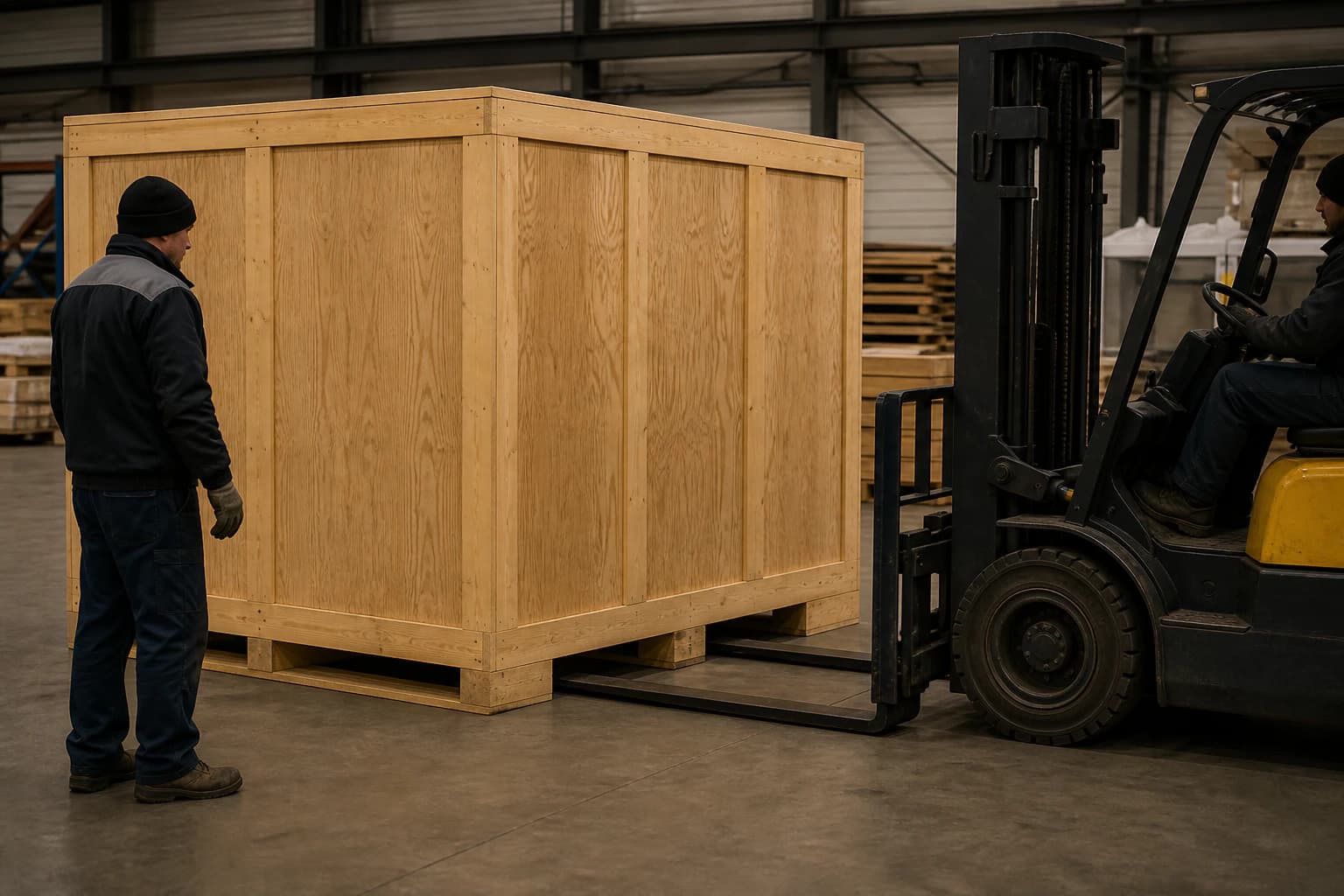
A shipment-specific base, frame and plywood sheath for a defined cargo and option.
A system intended for more than one controlled movement with inspection and repair records.
A framed enclosure where plywood closes and braces the system as designed.
The skid carries the mass while removable panels protect against impact, dust or access.
A bespoke system for concentrated loads, mixed transport and project-specific engineering.
| Interface | Role | Confirm |
|---|---|---|
| Base | Receives cargo reactions and distributes them into bearers | Foot positions, brackets, bolts and local reinforcement |
| Bearer | Carries base loads across handling and floor contacts | Section, spacing, grain, joints and biosecurity |
| Frame | Maintains geometry and transfers panel, stacking and restraint actions | Member layout, connections and openings |
| Panel | Sheaths, closes and may brace only as the design states | Construction, thickness, seams, edge distance and moisture option |
| Fastener | Transfers defined panel-to-frame actions | Type, diameter, length, spacing, pilot and corrosion |
| Restraint | Prevents cargo movement relative to the base | Approved attachment, direction and pre-load |
| Opening / door | Provides controlled access without breaking the frame path | Header, jamb, closure, reinspection and sealing |
| Lift / fork interface | Connects equipment handling to the base structure | Fork tunnels, sling or lift points, clearances and markings |
| Stacking support | Transfers vertical stack action through aligned structural members | Top and bottom bearing lines, load and duration |
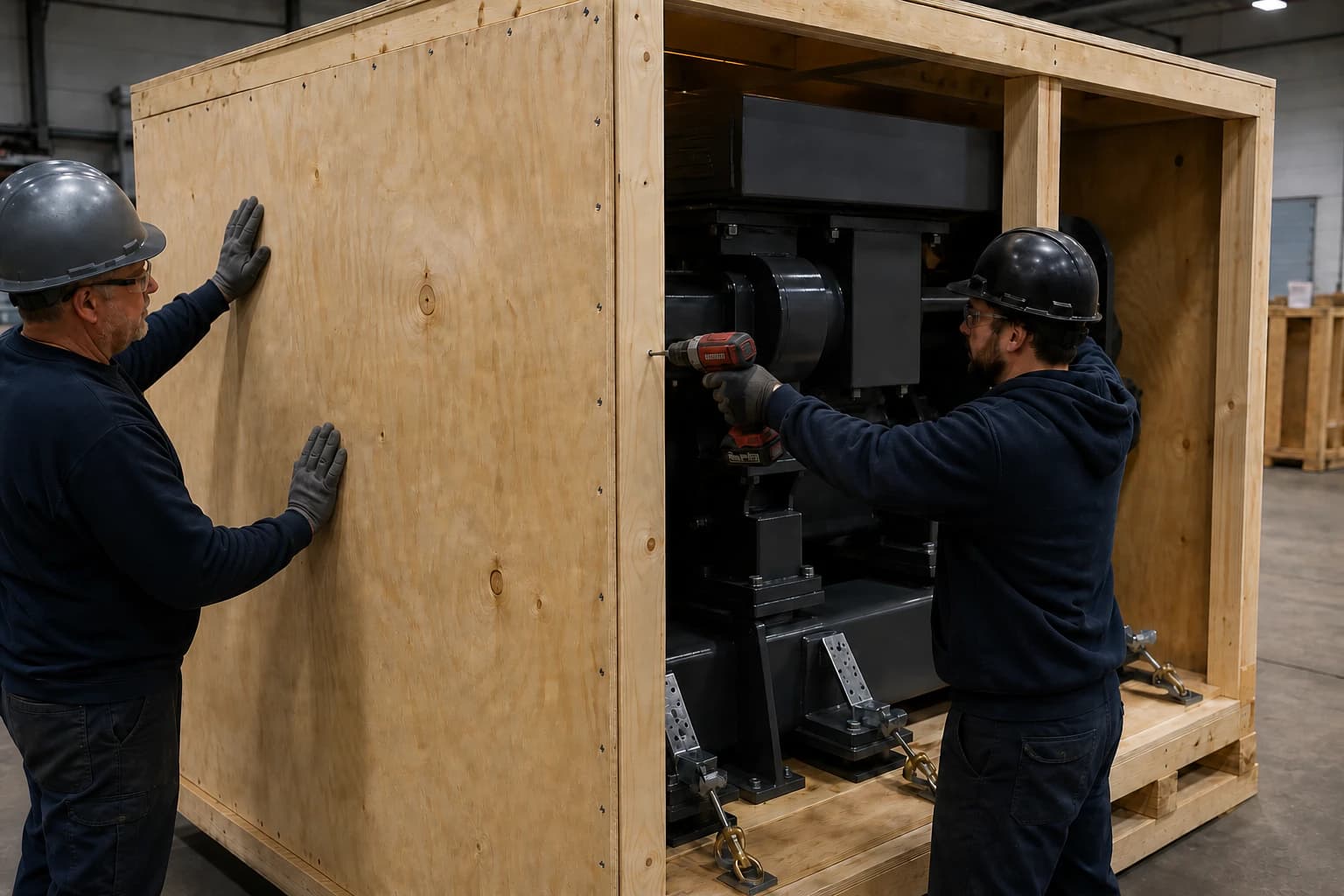
Confirm mass, centre of gravity, feet, sensitivity, restraints and handling limits.
Record the base, frame, interfaces, fastening pattern, openings and responsible suppliers.
State Packing Plywood construction, cut blanks, holes, edges, moisture and packing.
Check representative panel parts and a frame-to-panel joint before repeat production.
Build on a level base and record restraints, fasteners, openings and protective materials.
Check cargo attachment, clearances, centre-of-gravity handling and closure.
Condition and test the identified package under the selected distribution profile when required.
Close barriers, protect openings and retain access to the specified inspection points.
Apply agreed handling, orientation, traceability and destination information.
Confirm documents, option, biosecurity and the photographed final package condition.
Laboratory evaluation of shipping containers and systems against a selected distribution cycle.
Selection of a test series for the packaged-product combination and distribution objective.
Compression and stacking tests using a compression tester on complete filled transport packages.
Treatment and marking controls for regulated wood packaging material such as solid-wood pallets, dunnage and bearers.
Sourcing claims for eligible panel and timber components through an approved chain.
Supply-chain due-diligence planning for in-scope wood and derived products placed on or exported from the EU market.
| Material | Application | Confirmation |
|---|---|---|
| Processed plywood | Generally distinguished from regulated solid wood in ISPM 15 scope | Confirm the destination classification, panel condition and supporting documents |
| Solid-wood battens | Can trigger treatment and mark controls | Record species or material, treatment provider and visible marks |
| Bearers | Structural solid-wood base members use their own treatment and marking option | Record bearer material and documents separately from the plywood |
| Pallets | The pallet is a separate packaging component | Confirm its compliance status, exemption or buyer-supplied source |
| Dunnage | Loose solid wood can trigger destination controls | Control material, treatment, marking and disposal instructions |
| FSC / PEFC | Optional chain-of-custody option by contract | Verify eligible suppliers, claim wording and document flow |
| EUDR | EU wood-product due diligence can be transaction- and role-specific | Confirm operator role, product code, origin records and applicable dates |
Connection or member path cannot transfer handling actions
Review joints and complete-frame load pathFastener, edge distance or unsupported seam damages the sheath
Match panel construction and joint geometryFastener head and panel interface are inadequate
Specify head, washer, spacing and substratePanel is treated as a beam without designed framing
Add frame support or obtain a design optionCargo feet or bearers concentrate load
Provide reactions and local reinforcementCargo attachment does not match direction or mass
Use approved cargo points and inspect pre-loadFork tunnel, direction or clearance is wrong
Draw and inspect fork interfaces before movementLifting acts through an unapproved part
Use engineered base/frame points and an approved lift planBearing lines, load or centre of gravity are not aligned
Declare stack conditions and support pathsOpenings, seams or climate option are uncontrolled
Define barrier, ventilation, drainage and inspectionHandling information conflicts with the actual package
Apply buyer-approved marks after final inspectionA component or empty crate is mistaken for the filled package
Identify the exact specimen, conditioning, profile and acceptance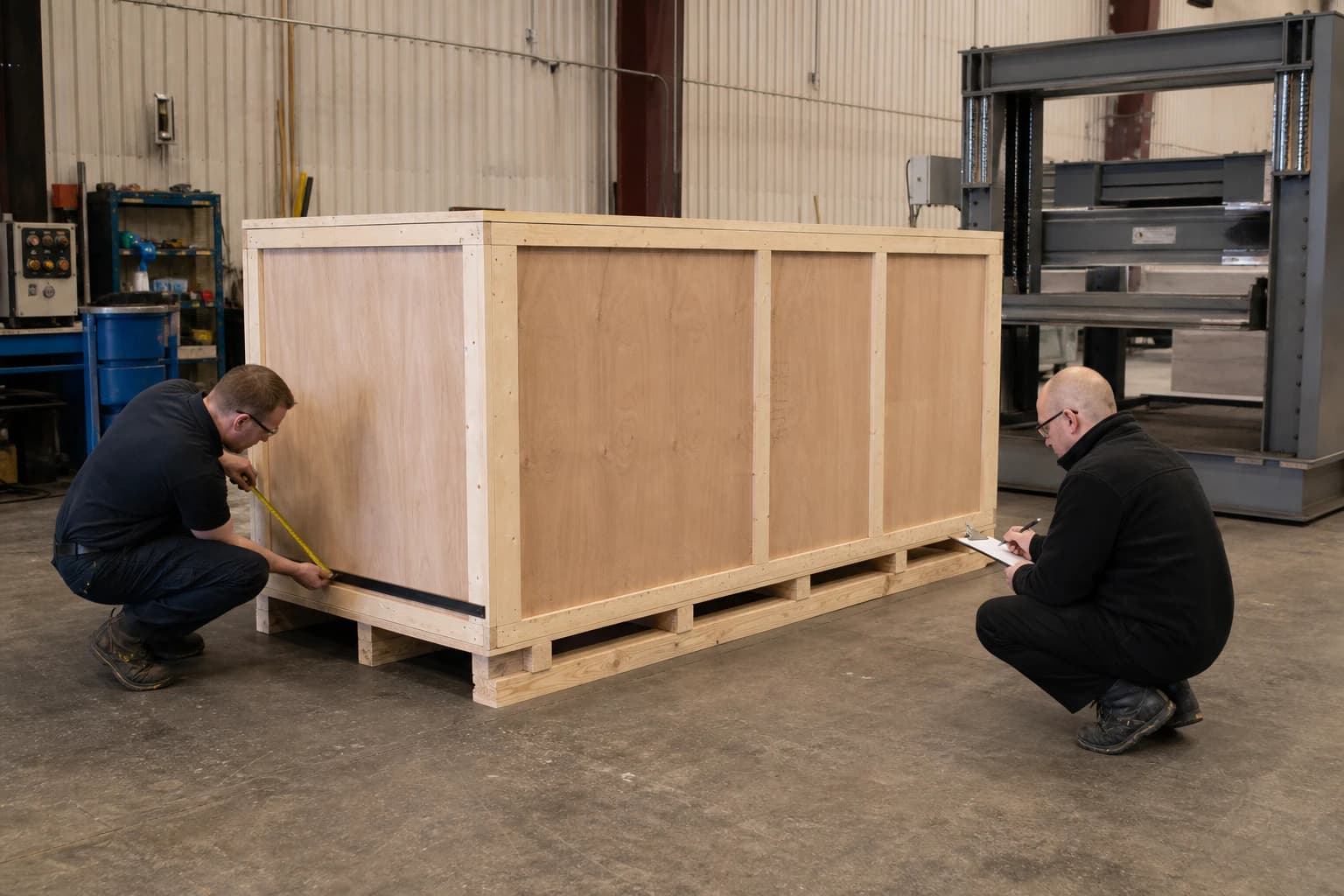
Product/application: Packing Plywood · Destination: confirm with inquiry · Shipping basis: Recommended from cargo option and destination.
Before the purchase order
The crate designer combines cargo mass and reactions with the skid, bearers, frame, joints, fasteners, restraints, lifting points, fork entries and stacking conditions. The plywood quotation supplies the stated panel construction, thickness, dimensions, machining and moisture for that complete design.
Provide verified gross and component masses, centre of gravity in all axes, foot dimensions and reactions, sensitivity to shock and vibration, approved restraint points, handling methods, transport lanes, stacking, climate, storage duration and expected reuse.
A named crate or packaging-system designer coordinates the complete load path and interfaces. The plywood, frame, fastener, testing and logistics suppliers then provide their specified components, technical data and destination documents.
The skid and bearers distribute cargo reactions into handling and floor contacts. Plywood closes and may brace the framed enclosure according to the drawing, with stated support spacing, seams, thickness, edge distance and fastening pattern.
ISPM 15 commonly covers regulated solid-wood components such as bearers, pallets, battens and dunnage. List those components separately from processed plywood so the importer can confirm treatment, marking and destination requirements.
Identify the complete packaged-product specimen, gross mass, conditioning, distribution cycle or procedure, orientation, instrumentation and acceptance criteria. Repeat orders can reference that tested configuration together with agreed change controls.
ISO 12048 provides compression and stacking test methods using a compression tester for complete filled transport packages. The programme states the package condition, applied load, duration, deformation limits and acceptance criteria.
Record fork direction, tine spacing and size, tunnel width and height, insertion depth, supporting bearer path, ground clearance, package orientation and the handling procedure on the system drawing.
The page covers one-way export crates, reusable machinery crates, framed plywood cases, skid-and-panel systems and project-engineered large-equipment cases. Small reusable protective cases with specialist hardware and cushioning have a dedicated application page.
Attach cargo and system drawings, verified mass and centre of gravity, foot reactions, restraints, handling and stacking conditions, environment, transport lanes, test requirement, panel dimensions and cut files, quantity, destination, biosecurity documents and target date.
Plywood enquiry
Send cargo mass, centre of gravity, feet and restraints, sensitivity, system drawing, base and frame, fasteners, handling and fork option, stacking, climate and storage, package-test scope, panel dimensions or cut files, quantity, destination, biosecurity and sourcing documents, and target date. We will recommend the suitable Packing Plywood construction, quotation basis and shipping term for the order.
CHAT WITH CUZI PLY↗