Birch vs Baltic birch plywood: choose the face and core.
Birch plywood can have birch faces over a different core, or birch veneers throughout. Our Baltic Birch range uses an all-birch construction. The useful comparison is the board beneath the name: face grade, inner veneers, layer pattern, finished thickness and the part you will make.
Choose birch-faced plywood when the visible finish and a selected core meet your assembly needs. Consider selected all-birch for exposed layered edges and detailed machining. Our broader Birch range also offers all-birch, so compare the actual specifications rather than treating the names as two fixed quality levels.
The birch face is only part of the panel.
Two sheets can look similar from above but have different inner veneers, weights and cut edges. These are the differences to discuss before ordering.
On a phone, swipe across the table to compare both constructions.
| Compare | Birch plywood range | Our Baltic Birch range |
|---|---|---|
| What the name describes | Birch may identify the face species, or a complete all-birch construction. Ask which is offered. | For our Baltic Birch range, the ordered panel has birch face, back and inner veneers. The name alone is not a complete specification. |
| Core choice | Our Birch range offers poplar, combi, hardwood, eucalyptus and all-birch options beneath the birch faces. | All-birch construction, with the ply arrangement and veneer thickness chosen for the finished panel and component. |
| Visible surfaces | Choose the face and back grades separately, including natural colour and permitted repairs. | All-birch does not mean a patch-free face. State the face/back grades and the finish you need. |
| Exposed edges | The core determines the layer pattern and what machining reveals. Covered edges may make appearance less important. | Consider a selected multi-ply edge for visible-edge designs. Agree gaps, repairs, sanding and finishing rather than assuming every edge is identical. |
| CNC and assembly | Specify calibrated thickness, flatness, routed profiles, hole positions and hardware for the selected core. | Specify the same component requirements. An all-birch name does not establish machining tolerances or joint performance. |
| Weight and price | Depend on the chosen core, face selection, dimensions, processing and order. Compare usable finished parts, not only a sheet price. | Depend on the actual all-birch build, grades and processing. A premium is worthwhile when the component uses what you are paying for. |
| Bond and documents | State the exposure, bond and destination emission or product-document requirements separately from the face species. | Do the same. All-birch construction is not itself a moisture rating, emission class or project certification. |
A clear description is easier to quote: “birch face and back, selected poplar core” or “birch face, back and all inner veneers.” Add the grades, thickness, bond and component requirements to complete the order.
Choose appearance and inner construction separately.
A birch face provides the visible grain. The core affects what you see after cutting or routing and is part of the panel’s weight and performance. “Combi” also needs a stated species mix and veneer arrangement; it is not one universal construction.
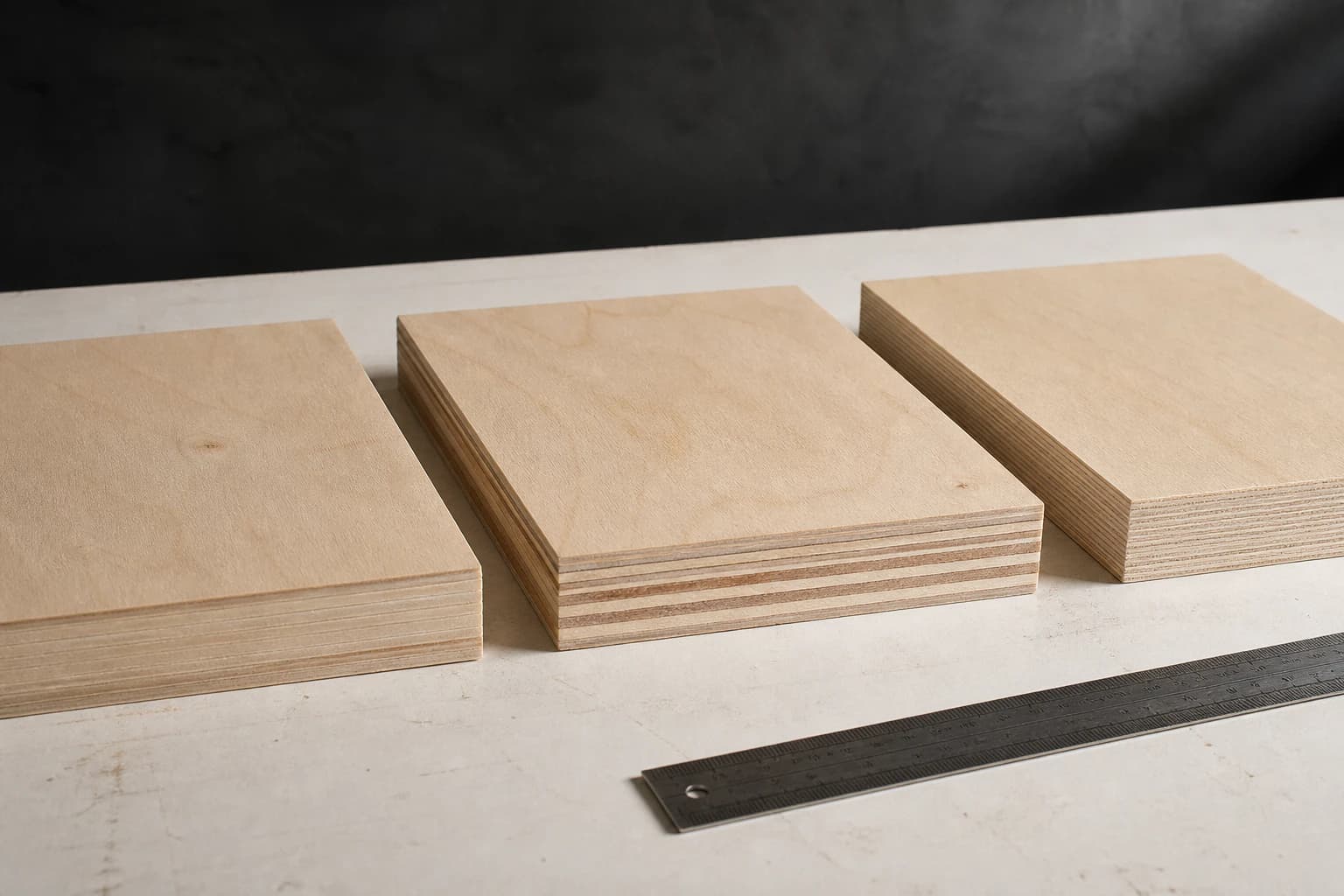
Birch-faced with a selected core
Our Birch Plywood range includes poplar, combi, hardwood, eucalyptus and all-birch options. Choose the face for the visible finish, then compare the inner construction against the component’s weight, joints and machining.
When the edges will be covered, spend on the surface, core and processing your assembly needs rather than an edge appearance the buyer will never see.
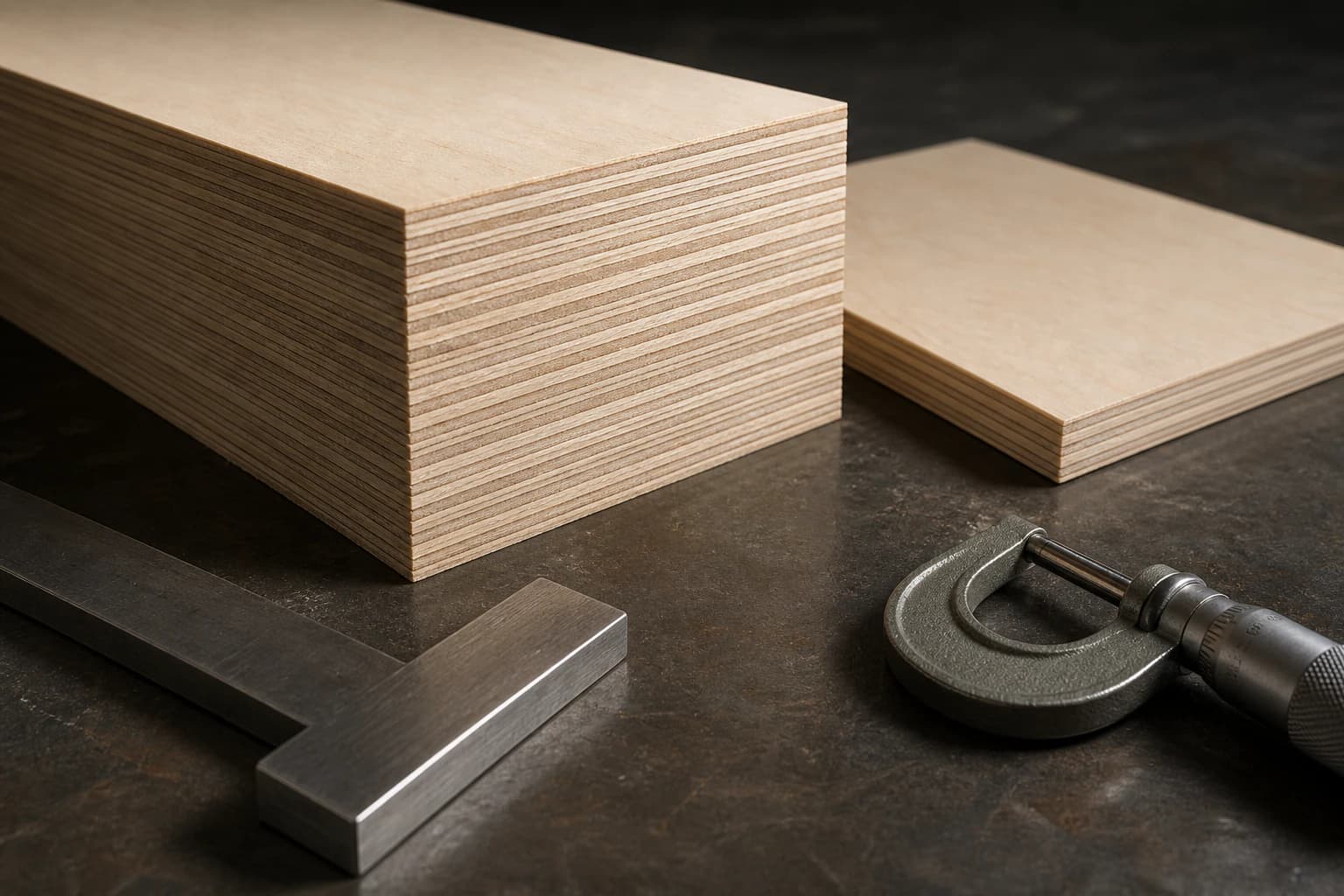
All-birch with the edge you need
Our Baltic Birch Plywood uses birch throughout. For a visible layered edge, agree the veneer arrangement, gaps, repairs and appearance after the actual cutting and finishing process.
An all-birch panel can still have different face grades and veneer schedules. Review the thickness and edge requirements together. Our Core Materials & Species page explains the other core choices.
Where will the extra construction value be visible?
A concealed cabinet back, a routed chair part and an exposed-edge shelf do not need the same specification. Use your finished component to decide where to spend.
Swipe across on a phone to see the checks for each component.
| Your priority | Start with | Compare on the part |
|---|---|---|
| Natural-veneer cabinet faces with covered edges | Birch-faced plywood with a core suited to the assembly | Visible face/back grade, finish, panel weight, joints and hardware. An all-birch core is an option, not an automatic requirement. |
| Visible layered-edge shelves or furniture | Selected all-birch, including our Baltic Birch range | The cut and routed edge, layer pattern, gaps, repairs and final clear finish on the component. |
| Lower-weight interiors or transportable furniture | Compare birch-faced poplar/combi with all-birch | Actual sheet mass, supported spans and connections. Choose the lighter option only if it meets the part requirements. |
| Repeat CNC parts and close assembly fit | A calibrated construction selected for the drawing | Finished thickness, flatness, hole exits, profiles, fixing locations and repeat dimensions. Either range may suit the component. |
| Painted or fully laminated parts | A suitable face preparation and core from either range | Surface repairs, sanding, coating or laminate system, edge coverage and total processing cost. |
For lower-weight construction choices, see Birch vs Poplar Plywood. For different doors, carcasses and shelves in one assembly, see our Furniture & Cabinetry application page.
Agree the visible repairs and the layer arrangement.
A face/back designation such as BB/BB describes the outer surfaces under the stated grading convention. It does not describe the whole panel. Keep appearance, core construction and product performance as separate items in the specification.
Face and back
State which side is visible, the natural colour range, grain, permitted patches and repairs, and whether the face will be clear-finished, painted or covered. Use a finished reference to agree the appearance instead of relying only on a grade abbreviation.
Cut and routed edges
Agree acceptable gaps and inner repairs where the drawing exposes the core. Check corners, profiles and hole exits after machining, then apply the intended edge finish. Do not order a universal “zero-void” result on the strength of a product name.
Ply count and veneer thickness
Specify the offered veneer schedule at the finished thickness. An 18 mm panel does not always have 13 plies, and a ply count does not tell you the face veneer thickness. If a visible layer pattern matters, include it in the component requirements.
Finished thickness and sanding
Agree the final thickness, tolerance, sanding and flatness needed for assembly. Keep face preparation compatible with your finish; do not assume every birch face allows the same sanding depth.
Our Plywood Grades, Cores & Bonds guide helps turn grade shorthand into an order description. As an industry reference, Metsä Wood lists separate birch product, surface-quality and performance information; compare the applicable information for the actual manufacturer and product.
Check the fit, fixing and weight—not only the number of layers.
Selected all-birch is worth considering for exposed-edge and detailed CNC parts. Other calibrated birch-faced constructions can also suit repeat components. Match the board and processing to the drawing rather than assigning one range a universal strength or machining advantage.
CNC, joints and hardware
Provide the routed profile, hole positions, reference edges and intended hardware. Compare chip-out, hole exits, final dimensions and fixing locations with the chosen tooling. Discuss cutting, CNC, calibration and finishing with our factory team for the same construction.
Laser cutting needs a trial with the actual bond, thickness and machine settings. For this separate processing requirement, see Laser-Cutting Plywood.
Same-size weight and supported parts
Compare actual density or sheet mass at the same size, finished thickness and moisture condition. A birch face cannot establish the weight of the core beneath it. Include any coating, hardware and other parts when assessing the complete assembly.
For shelves and load-carrying parts, check the span, supports, load, orientation and relevant properties of the selected product. Neither all-birch nor a higher ply count replaces the component design.
Know who makes the panel and what your project requires.
CUZI PLY manufactures our plywood in Linyi, China. Our Baltic Birch range describes our all-birch product; it is not a claim that our factory is in the Baltic region. We state the actual construction and provide the applicable production and shipment information with your order.
Manufacture and material source
If the purchase specification names a required place of manufacture or material source, share it before ordering. Manufacturing location, wood source and shipment origin documents are separate questions. We confirm the information for the actual order rather than inferring it from “Baltic.”
You work directly with our CUZI PLY factory team on the selected board, machining and packing. For delivery and shipment arrangements, see Export Process.
Bond, emissions and project documents
Describe humidity or outdoor exposure and the destination requirements. All-birch is a species construction, not a bond or emission class. Confirm available certificates, test reports and product information for the construction and use you require.
Custom dimensions are a production choice; they do not by themselves create a different material category or a certification claim. Review the relevant product scope with our Standards & Certifications and Bonding & Emission Options pages.
Make the quotes comparable before choosing the sheet.
There is no fixed Birch-to-Baltic price difference: our Birch range includes several cores, including all-birch. Compare the offered constructions on the same quantity, processing and delivery basis.
The panel specification
Match face/back grade, core species, ply arrangement, dimensions, finished thickness, bond and product documents. Keep a clear face or exposed-edge requirement in both quotes when the finished design needs it.
Usable parts and finish
Compare the cutting layout, permitted repairs, machining and coating work per usable component. Covered edges may allow a different construction; visible profiles may justify more selection and finishing.
The order mix
Send the size and thickness mix, quantity and repeat-order needs. We confirm production arrangements, any mixed specification, samples and timing with the quotation; no single minimum order or lead time applies to every construction.
Packing and delivery
Compare the same delivery terms, packing and destination. Ask which freight, insurance and destination charges are included. Keep production timing separate from transport time when planning the order.
Regular factory formats: 1220×2440, 1250×2500, 1525×3050 mm. On request: 1250×3050, 1250×3660, 2100×2800, 1830×3660, 1250×3800 mm. Ask us to confirm your chosen face/core construction and thickness for the size schedule. See Plywood Sizes & Thicknesses for dimension and tolerance guidance.
Birch and all-birch construction
Questions before you order.
What is the difference between birch and Baltic birch plywood?
Birch plywood can mean birch-faced plywood with another core species, or an all-birch panel. Our Baltic Birch range is all-birch: face, back and inner veneers. Compare the actual ply arrangement, face/back grade, edge quality, finished thickness, bond and machining. Our broader Birch range also includes all-birch options, so the two names are not always different constructions.
Is all birch plywood the same as Baltic birch?
All-birch describes the veneer species throughout the panel. Baltic birch is a commercial name associated with multi-ply birch panels, but it does not by itself define the grade, ply count, tolerances, bond or place of manufacture. Use the actual product specification and production and shipment information for the board you order.
Is CUZI PLY Baltic Birch made by your own factory?
Yes. CUZI PLY manufactures the all-birch plywood in our factory in Linyi, China, and prepares the agreed cutting, machining, finishing and export packing. We identify the construction and provide the applicable production and shipment information for the order. We do not use the Baltic Birch product name to claim that our factory is in the Baltic region.
Are Baltic birch panels always void-free or patch-free?
Do not assume that from the name. State the acceptable core gaps, inner repairs, visible-edge quality and face patches for your component. A selected face grade and an all-birch core describe different aspects of the panel. Compare the actual cut or routed edge and finished face before setting requirements for repeat production.
Does 18 mm Baltic birch always have 13 plies?
No. Ply count depends on the veneer thickness and production construction. Ask for the offered ply arrangement at your finished thickness; do not extend one 18 mm schedule to every manufacturer or every panel thickness. More plies alone are not a strength rating or machining tolerance.
What do B/BB and BB/BB mean when ordering?
A face/back pair identifies the appearance grades of the two outer surfaces under the stated grading convention. Agree which face is visible, natural colour, patches and repair limits with the finish you will use. The pair does not identify the core, bond, origin or emission class, and grade letters should not be treated as identical across different conventions.
Is Baltic birch better for CNC and laser cutting?
Selected all-birch can suit visible-edge and detailed machined parts, but compare the actual board, thickness, tooling and drawing. Other calibrated birch-faced constructions can also suit CNC work. Laser cutting needs a material-specific trial with the chosen bond, thickness and machine settings; the all-birch name is not a universal cutting result.
Can I substitute birch-faced plywood for an all-birch specification?
Not just because the faces look similar. Compare the core, ply arrangement, weight, edge appearance, joints, finish and any performance or document requirements. If your drawing or customer specification explicitly requires all-birch, retain it unless a different construction is agreed. Our factory can quote both options for a practical comparison.
Is Baltic birch worth the extra cost?
It can be when a selected all-birch construction gives your design the layered edge, machining or component properties it needs. If edges are covered and another core meets the assembly requirements, birch-faced plywood may be a more economical choice. Compare usable parts per sheet, machining, finishing, hardware, packing and delivery on the same basis.
Show us the face and edge you want to sell.
CUZI PLY is the factory manufacturing your plywood. Tell us the component and finish; we will help compare birch-faced and all-birch constructions and quote the board and processing your production needs.
- Visible faces, edges, finish and permitted repairs.
- Core, size, thickness, machining and hardware requirements.
- Quantity, destination and target delivery date.
For a sample comparison, name the constructions and the machining or finish you want to assess. We confirm piece sizes, availability, any costs and courier arrangements with you.