Plywood pre-shipment inspection and receiving checklist.
Know what is ready to ship—and make it easier to check what arrives. A plywood pre-shipment inspection compares the finished order with your agreed specification: quantities, dimensions, faces, cut edges, required test records and packing. The report should identify what was checked, what was found and what needs attention before dispatch.
CUZI PLY is your plywood manufacturer and direct supplier in Linyi, China, with 10 production lines. Work with our factory team to agree the checks your panels need, then use the same order and bundle references at receiving. This checklist helps you prepare that discussion.
Set the inspection plan before production.
Make the written order the shared reference for our factory, your inspector and your receiving team. A clear plan avoids comparing different thickness definitions, appearance expectations or checking methods after the goods are ready.
One confirmed specification
Keep the purchase order, latest construction, face/back grade, finish, dimensions and processing requirements together. Define which side will be visible and which defects could affect assembly or use.
Identified lots and quantities
Separate constructions and thicknesses into identifiable lots. List sheets per pack, packs per order line and the bundle or batch references. Agree how mixed sizes and partly opened packs will be counted.
Methods and acceptance limits
Agree the measurement method, measuring locations, tolerances, appearance reference and defect categories. State the inspection coverage and any required testing before production, not after seeing the results.
People, access and timing
Confirm who checks the panels, when the goods will be available and how selected packs can be opened and repacked. Arrange any independent inspection, test costs and shipment decision responsibilities with the order.
Who handles each part of the inspection?
Your buyer and receiving team
Provide the current specification, required checks, acceptance limits and destination. Confirm who can agree product changes and shipment decisions, and pass the same order and bundle references to your receiving team.
Our factory team
Agree when identified finished lots can be checked, access to selected packs and handling or repacking arrangements. Confirm any agreed corrective work, updated quantities and schedule before dispatch.
Your appointed inspector or laboratory
Agree the scope, selection plan, methods, actual quantities examined and report format. Arrange any independent service and costs separately; record inaccessible packs or outstanding results so the agreed decision maker can act.
Use How to Specify Plywood for the product requirements and Quality & Inspection for more detailed quality-control choices. This shipment checklist connects those requirements to a particular order and its arrival.
Plywood inspection checklist for the shipment.
Record actual observations and measurements beside the agreed requirement. Keep each result linked to the lot, pack and checked panel; identify anything that could not be accessed or tested.
On a phone, swipe across the table to read every column.
| Check | What to record | What to compare |
|---|---|---|
| Order, lot and quantity | Order revision, lot and bundle IDs; pack count and checked sheet quantities by order line. | Confirmed product, dimensions, thickness and quantity mix. Record actual counts separately from figures copied from labels. |
| Length, width and squareness | Individual measurements, measuring positions, instrument and panel support. Use the agreed method for squareness. | Finished dimensions, tolerances and cut-to-size drawing. Compare like-for-like measurements, not only the nominal sheet label. |
| Finished thickness | Readings at the agreed points on selected panels, including the finish where the specification requires it. | Ordered finished thickness and permitted variation. A single edge reading does not describe every checked location. |
| Flatness and moisture | Panel condition, support and measurement method. For moisture readings, identify the instrument, settings and locations. | Agreed limits and conditioning requirements for the product. Confirm meter suitability and any species or temperature correction. |
| Face and back appearance | Scratches, dents, splits, repairs, knots, sanding or overlay damage; identify the side, location and affected quantity. | Face/back grade and agreed finish reference. Distinguish permitted natural appearance from defects that affect the intended finish. |
| Edges and machining | Visible gaps or separation at cut edges, corner damage, profiles, holes and component dimensions. | Core and edge requirements, drawing and fixing arrangement. Visual inspection of an edge does not establish the whole panel's bond performance. |
| Bond and other required tests | Test method, conditioning, tested product identification, date and results from the agreed report. | The ordered bond, emission, structural or other applicable requirement. Identify any outstanding result before deciding on shipment. |
| Marking and documents | Product and bundle marks, order references and the accompanying packing list and agreed documents. | Actual construction, grade, quantity and destination requirements. Certification or treatment marks must be applicable and authorised. |
| Packing and loading | Supports, protection, straps, wrapping and pack condition. Add container, loading and seal records when those stages occur. | Agreed packing and receiving arrangements. A finished-goods inspection before loading cannot confirm the later container condition. |
Specify the limits for your product and use. Do not apply one thickness tolerance, moisture range or appearance allowance to every plywood construction. When a result differs, record both the requirement and the reading so the next action can be agreed.
Follow the panel from its working face to its shipping pack.
Inspect the features that matter to your finish and assembly, then check how the finished panels are protected for handling and transport.
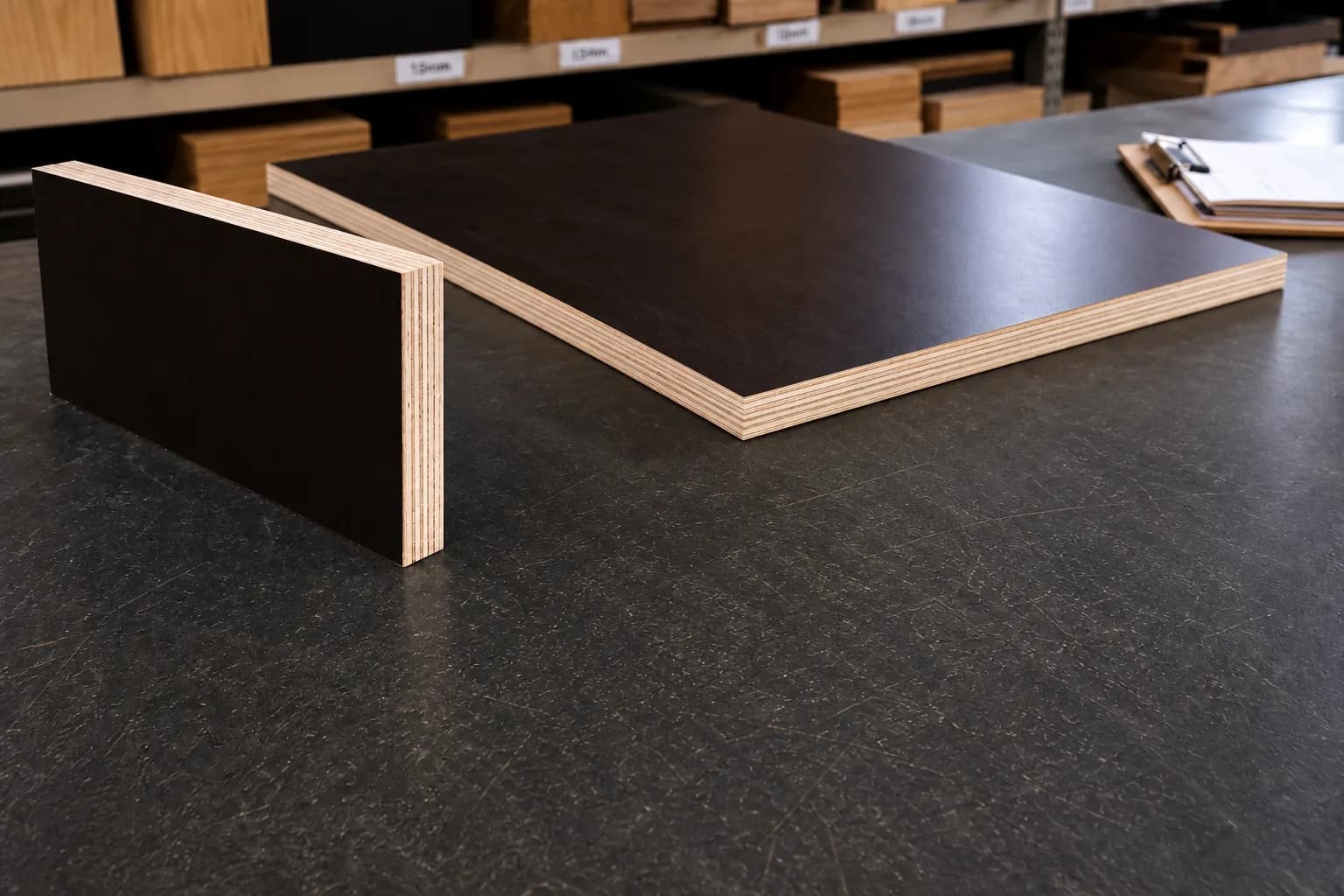
Film-faced plywood: surface and edge checks
Check the working face for scratches, damage and finish consistency. Inspect corners and cut edges against the agreed construction, then record the panel and pack where a concern was found.
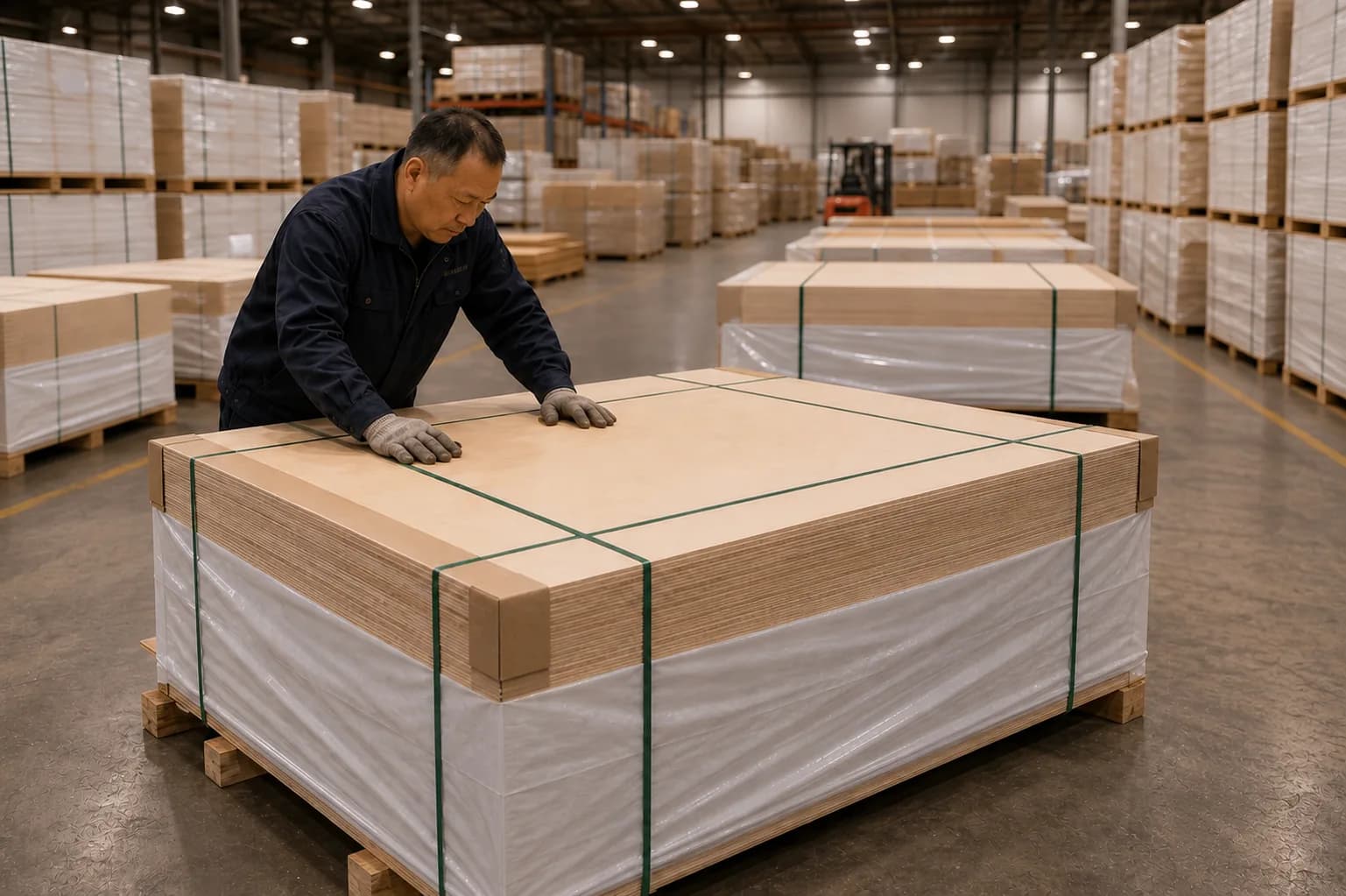
Export plywood packing: support and protection
Check pallet support, wrapping, corner protection and strap condition before loading. Keep the bundle identification with the packing list so your receiving team can match each pack to the order.
For Film Faced Plywood, include the overlay and edge protection in the inspection requirements. For Furniture Grade Plywood, identify the visible face, finish and machining that your finished part needs.
Agree sampling and acceptance before inspecting the lot.
Define the lot by product, construction and thickness, then agree how panels will be selected across its packs. Arrange access to the selected locations; checking only convenient top sheets can leave the rest of the lot unrepresented.
Separate the inspection tasks
A pack count, random panel inspection, full sorting exercise and destructive laboratory test have different scopes. State the quantity and selection method for each. Record the actual sheets inspected and any inaccessible packs rather than treating a partial check as complete coverage.
Choose the right acceptance plan
Where attribute sampling is agreed, define defect categories, inspection level, lot size, acceptance quality limits and acceptance/rejection numbers with the inspection party. ISO 2859-1:2026 covers AQL-indexed schemes for lot-by-lot inspection; select a suitable approach for the actual supply arrangement, including an isolated order.
Acceptance sampling supports a decision about a lot; it is not a guarantee that every unexamined sheet is defect-free. AQL is not permission to deliberately ship a set percentage of defects. See ISO 2859-1 and the NIST introduction to acceptance sampling for the scope of the method.
Read bond and performance records alongside the visual checks.
Face colour, a clean cut edge or a dry moisture reading cannot establish every performance requirement. Name the property and method needed for the intended use, and arrange any testing early enough to inform the shipment decision.
Product documents
Check the covered product family, construction, intended use, issuer and applicable scope. A normal made-to-order size change does not automatically need a separate certificate for every millimetre. Review changes that could affect coverage with the relevant document.
Order and test records
Connect the tested material to the identified product or lot as the requirement demands. Keep the test method, conditioning, date and results together. Distinguish a product certificate from an inspection report for this shipment, and identify any pending result before agreeing dispatch.
For moisture checks, record instrument suitability, calibration status, settings and any required corrections. Where readings conflict, use the reference method agreed for the order. Explore Bonding & Emission Options and Standards & Certifications to identify the documents your project needs.
Check packing and loading as separate stages.
Confirm supports, edge and corner protection, wrapping, straps and bundle identification against the agreed packing arrangement. Match the pack list to the loading quantities and your unloading equipment.
Container and loading condition
At loading, record container identification and visible cleanliness, dryness, damage or leaks. Check the load arrangement and restraints, then record the loaded packs and final seal where included in the agreed scope. If inspection happens earlier, add these records when loading takes place.
Solid-wood packaging requirements
Check destination requirements for pallets, supports and dunnage separately from the plywood cargo. For US imports, APHIS requires regulated wood packaging to meet ISPM 15; its guidance lists processed plywood among alternatives outside those WPM rules. Solid-wood components still need their own check.
See Packing & Container Loading for planning protection and handling, and Export Process for shipment and document arrangements.
Keep the inspection report tied to the order.
A useful report lets your buyer, factory contact and receiving team find the same panel or pack. Ask for these fields in the agreed report format.
- Purchase order and specification revision, product, lot and bundle references.
- Inspection date, place, inspecting party and finished or packed quantities available.
- Selection plan, actual quantities checked, methods, instruments and acceptance criteria.
- Individual measurements, defect descriptions, affected quantities and identified photographs.
- Required test and product documents, results and any outstanding checks.
- Inspection conclusion, agreed corrective work, reinspection results and shipment decision.
Keep product test results and loading records attached to the same order, even when completed on different dates. A report should make those stages clear rather than compressing them into one unexplained “passed” statement.
For each required check, state whether it meets the agreed requirement, differs or remains unchecked. Name the person responsible for the next action and agree any corrective work, reinspection or outstanding test before dispatch. Keep the shipment decision with the final report, separate from the inspector's findings and any agreement to change the specification.
Plywood receiving inspection checklist.
Use the packing list and shipment records to check quantities, condition and identity at arrival. Record transport or handling concerns before the packaging is discarded or the panels are mixed into stock.
Record the delivery as it arrives
Before unloading, record the delivery reference and visible condition. For container deliveries, photograph the container number and seal and compare them with the transport records. Use safe access and handling arrangements.
Count and identify the packs
Match bundle numbers and pack counts to the packing list. Note missing, mixed or unidentifiable packs. Record a discrepancy on the receiving paperwork where possible, following the agreed delivery procedure.
Look for handling or moisture damage
Photograph torn wrapping, broken straps, crushed corners, wet areas and damaged supports before removing protection. Include an overall view and close-up so the position and scale remain clear.
Check the panels when packs are opened
Reconcile sheet quantities by construction, size and thickness. Apply the agreed receiving inspection to dimensions, faces, edges and any critical machining. Retain the bundle reference as panels move into storage.
Record differences consistently
State the expected requirement, actual reading, checking method, affected quantity and panel location. Use the same measurement and conditioning basis as the shipment checks where relevant.
Protect the stock and keep traceability
Move panels into suitable dry storage, supported flat and protected from further damage. Keep affected stock identifiable and separate while our factory team reviews the issue with you.
Report an issue with the pack reference and the facts.
Contact our factory team promptly with the order number, bundle identification, affected quantity, photographs and measurements. State what you expected and what you found. Keep the relevant panels and packaging identifiable while the issue is reviewed.
Before shipment
Agree whether the affected goods need sorting, rework, replacement or further checking before dispatch. Keep any revised quantity or specification in the written order, and confirm the reinspection scope and result after corrective work.
After delivery
Follow the reporting procedure and time limits in the sales contract and relevant transport or insurance arrangements. Notify the responsible carrier or insurer where required. Our team reviews the order and records with you to agree the next action; the remedy depends on the facts and agreed terms.
Shipment and receiving
Questions about checking your plywood order.
What should a plywood inspection checklist include?
Include the order and lot identification, quantity, dimensions, thickness, flatness, face/back condition, cut edges, machining, required tests, marks and packing. For each check, specify the method, coverage, acceptance limit and record needed. Add receiving checks so the same order can be followed after transport.
When should plywood pre-shipment inspection take place?
Arrange it when the relevant finished goods are ready and selected packs can be accessed, with time for agreed corrective work and rechecking before dispatch. Confirm the proportion completed and packed with the inspection scope. Loading and container-seal checks occur at a separate stage if loading has not yet happened.
Can I arrange an independent inspection at CUZI PLY?
Discuss the appointed inspector, scope, dates, access, required reports and costs with our factory team before booking. Agree how inspection results and any corrective work affect the shipment decision. Product testing may need separate arrangements and lead time.
Do you check every sheet or inspect a selection?
Agree the coverage for each characteristic. A lot-acceptance inspection normally checks a defined selection, while a critical dimension or sorting task may require a different scope. The report should state the actual quantity examined rather than implying that every sheet was checked.
Which AQL should I use for plywood?
There is no single AQL that fits every plywood order. Agree the lot definition, defect categories, inspection level and appropriate sampling scheme with the inspection party. The intended use and consequences of a defect matter. Record the chosen plan and its acceptance and rejection numbers before inspection.
Does a smooth film face prove the bond is suitable?
No. Surface condition, veneer bonding and intended exposure are separate checks. Define the bond requirement and any required test method and report in the order. A visual check or an informal water soak does not replace the specified test.
Does a custom panel size need a separate certificate?
Not automatically. Check the scope covering the product family, construction and intended use. Ordinary dimensional customisation does not mean inventing a certificate for every millimetre, but relevant changes to construction, thickness or application should be checked against the document's scope.
Why inspect plywood again when the shipment check passed?
Receiving checks reconcile what arrived and record its condition after loading, transport and unloading. They also help identify quantity differences or handling damage. Keep the shipment report and bundle references so any concern can be traced to the same order.
What should I send if I find damage or a specification difference?
Contact our factory team with the order and bundle references, affected quantities, clear photographs, actual measurements and the requirement you expected. Retain the relevant packaging and product identification. Follow the reporting procedure and deadlines in your contract and transport or insurance arrangements.
Who decides whether inspected plywood can be shipped?
Identify the person authorised to make the shipment decision and agree specification changes when you place the order. The inspecting party reports findings against the agreed scope. Our factory team and your purchasing contact agree any corrective work, further tests, revised quantities and dispatch arrangements, keeping the decision with the final report.
Does a passed inspection cover every sheet and transport condition?
The conclusion concerns the identified lot, checks and coverage stated in the report. Keep laboratory tests, loading and container records, and receiving checks separate when they occur at different stages. Request full sorting or additional checks when a critical feature needs wider coverage, and agree the scope and costs before proceeding.
Plan the order with our factory.
Send the construction, dimensions, quantity, destination and inspection requirements. Regular sizes: 1220×2440, 1250×2500, 1525×3050 mm. On-request sizes: 1250×3050, 1250×3660, 2100×2800, 1830×3660, 1250×3800 mm. Confirm finished thickness, tolerances and any cut-to-size or machining needs with the order.
- Order quantity & mix
- Tell us the sheet size, thickness mix and quantity you need. We confirm the minimum order and available mix for your selected construction.
- Production lead time
- We confirm the production schedule with your specification, order quantity and sample requirements. Production lead times are planning estimates, not transit times.
- Price & quotation unit
- Currency and price unit stated in your quotation. Your quote is based on the agreed dimensions, construction and quantity. Processing and requested testing are stated separately where applicable.
- Samples
- Tell us the plywood, thickness, finish and delivery country. We confirm sample availability, any sample and courier costs, and dispatch arrangements before proceeding.
- Packing & delivery
- We agree export packing, labels and the loading plan for your order. Share the destination country, named port or delivery point and preferred delivery term. Freight, insurance, duties and taxes are included only when stated in the quotation.
- Payment & order confirmation
- We agree the payment method, currency and any deposit and balance schedule in the quotation or proforma invoice. Your order confirmation sets out the product, quantity, packing and delivery arrangements.
Get the panels—and the checks—right for your order.
Tell us what you are making, the quantity and where it will ship. Add the inspections, documents and receiving arrangements your business needs. Our factory team will help you complete the specification and quotation.
For samples, name the finish, construction or machining you want to assess. We confirm availability, sample and courier costs, and dispatch arrangements before proceeding.