Plywood fire performance for your project.
Bring the fire requirement into your plywood order before choosing the finish. Whether you are buying interior linings, furniture components or panels for a specified building system, start with the required class, destination and installed use. Then agree the construction, treatment and final surface with the documents your project needs.
CUZI PLY is your plywood manufacturer and direct supplier in Linyi, China, with 10 production lines. Work directly with our factory team on Fire-Retardant Plywood, product reports and export terms. Reaction-to-fire results and a complete assembly’s resistance time answer different purchasing requirements.
Which fire requirement does your plywood need to meet?
An exposed lining, a specified treated-wood product and a time-rated building element call for different information. Send the requirement from your project specification so we can discuss the right plywood and documents from the outset.
| Your project | What to specify | What to check |
|---|---|---|
| An interior lining or exposed surface | The specified reaction-to-fire class or surface-burning requirement, test system and end use. | The finished panel, facing, thickness, mounting and applicable product report. |
| Fire-retardant-treated wood specified by the project | The accepted treatment route, relevant extended-test requirements and permitted service conditions. | Treatment identification, conditioning, installation instructions and any structural adjustments. |
| A time-rated wall, floor, roof or other element | The complete assembly design, required duration, test or classification and installation details. | All layers, framing, joints, fixings, cavities and penetrations; not the plywood sheet in isolation. |
If you are searching for “fireproof plywood,” specify the actual fire requirement instead. Fire-retardant treatment can improve the intended fire response; it does not make plywood noncombustible or give every assembly a resistance time.
Plywood reaction to fire concerns the finished product in use.
Reaction-to-fire testing and classification describe fire behaviour under a defined system. The final face, treatment, thickness and installation matter. A class should be read with its covered product range and intended use, not as a property of every panel sold under the same material name.
A lining or exposed surface
State whether the panel is used on a wall, ceiling, floor or another component. Include the required classification, finish and mounting. A flooring classification is a different route from the classification for other construction products.
A complete building element
If the project needs a resistance duration, retain the complete wall, floor or roof design. A reaction-to-fire class for a surface does not establish how long that whole element performs during fire exposure.
BSI’s EN 13501-1 overview distinguishes product categories and considers their end-use application.
Specify EN 13501-1 plywood with its complete classification.
Give the class your project requires and whether it concerns a wall or ceiling product, or flooring. Where applicable, smoke and flaming-droplet classifications form part of the result. Keep the complete designation and report rather than shortening the requirement to “EN,” “fire rated” or a letter alone.
- Product: match the plywood construction, treatment, thickness range and final facing to the classification report.
- Installation: read the permitted substrate, air gap, orientation, joints and fixings relevant to the end use.
- Test route: EN 13823 and EN ISO 11925-2 are used where applicable to the selected construction-product classification; flooring follows its relevant test route.
- Permitted variations: use the report’s field of application and any stated extensions when choosing a different thickness, finish or mounting.
The European reaction-to-fire classification tables separate construction products and floorings. Confirm the applicable project requirements with the designer or authority for the destination.
ASTM E84 plywood: read flame spread, smoke and mounting together.
ASTM E84 reports flame spread and smoke developed indices under its defined surface-burning test. It does not establish heat transmission through a panel, noncombustibility from the flame spread index alone, or a complete wall or floor resistance time. Its set-up and support can affect how results are interpreted. See ASTM’s E84 scope and significance.
Keep the result with the construction
Request the method and edition, flame spread and smoke developed indices, panel construction, thickness, finished surface and test mounting. If the project specifies a surface-burning class, confirm the relevant acceptance criteria for the intended use.
Check extended treated-wood requirements
ASTM E84 is a 10-minute method; ASTM identifies E2768 for the extended 30-minute tunnel test. A project calling for fire-retardant-treated wood can have additional requirements. Do not treat an E84 surface-burning class alone as the complete treated-wood qualification.
ASTM E84 and EN 13501-1 are different systems. There is no automatic relabelling of an ASTM surface-burning result as a European reaction-to-fire class. Request the documentation named in the project specification.
Plywood fire resistance is not a surface-burning class.
Fire resistance concerns performance during fire exposure, including load capacity or limiting heat and fire passage where required. For a rated wall, floor or roof, state the duration and complete design: layers, framing, joints, fixings, cavities, insulation and penetrations. The panel is one part of that construction.
Use the relevant assembly test, classification or accepted design route and installation details. For US wood construction, the American Wood Council Fire Design Specification distinguishes surface-burning performance from fire resistance based on ASTM E119, UL 263 or its design provisions. EN 13501-2 addresses classification using fire-resistance or smoke-control test information, separately from the reaction-to-fire route in EN 13501-1.
Do not assign a 30-, 60- or 90-minute assembly rating from a plywood sheet’s thickness or reaction-to-fire class alone. Ask the project designer to confirm the complete design and the permitted panel specification.
Fire retardant plywood vs untreated plywood.
Compare the base panel, finish, conditioning and mounting using the same method. Treatment is selected for an intended fire response, while the component still needs the right surface quality, bond, strength and handling characteristics. One result should not be used as a substitute for all of these requirements.
| Purchasing point | Untreated plywood | Fire-retardant plywood |
|---|---|---|
| Response to fire | Use the classification or test information for the specified untreated construction and installed use. | Use the result for the identified treatment, base panel and finished surface. Do not assume a class from the word treated. |
| Material construction | Specify face and core, adhesive, density and finished thickness for the component. | Retain those details and identify the treatment process and its documented product range. |
| Paint, laminate or overlay | A finish changes the exposed surface; check the finished construction required by the project. | Check the intended finish and application instructions against the covered treated construction. |
| Moisture and service conditions | Choose the bond, protection and storage conditions for the expected wetting and drying. | Also confirm the treatment’s permitted humidity or weather exposure, conditioning and handling instructions. |
| Structural performance | Use the relevant structural grade, design values and support arrangement where required. | Ask for applicable treatment and re-drying adjustments. A fire result does not supply structural design values. |
| Installation and resistance time | A panel can be part of a designed assembly; the assembly’s performance depends on its complete construction. | Treatment does not assign a resistance duration to every wall or floor containing the panel. Retain the complete system design. |
Confirm treatment identification and service conditions, including humidity or weather exposure. For structural use, treatment and re-drying can require design adjustments. AWC FDS sections 2.3.3 and 2.3.4 distinguish treated wood from coated products and address these additional considerations. Confirm the applicable requirements for your destination and product.
Choose treatment, machining and final finish together.
Tell us whether you need a wood face, paint, laminate or another surface, and whether cutting or machining happens before or after treatment. Include exposed edges and any site finishing. Follow the product instructions and confirm coverage of the final construction before changing a finish or treatment.
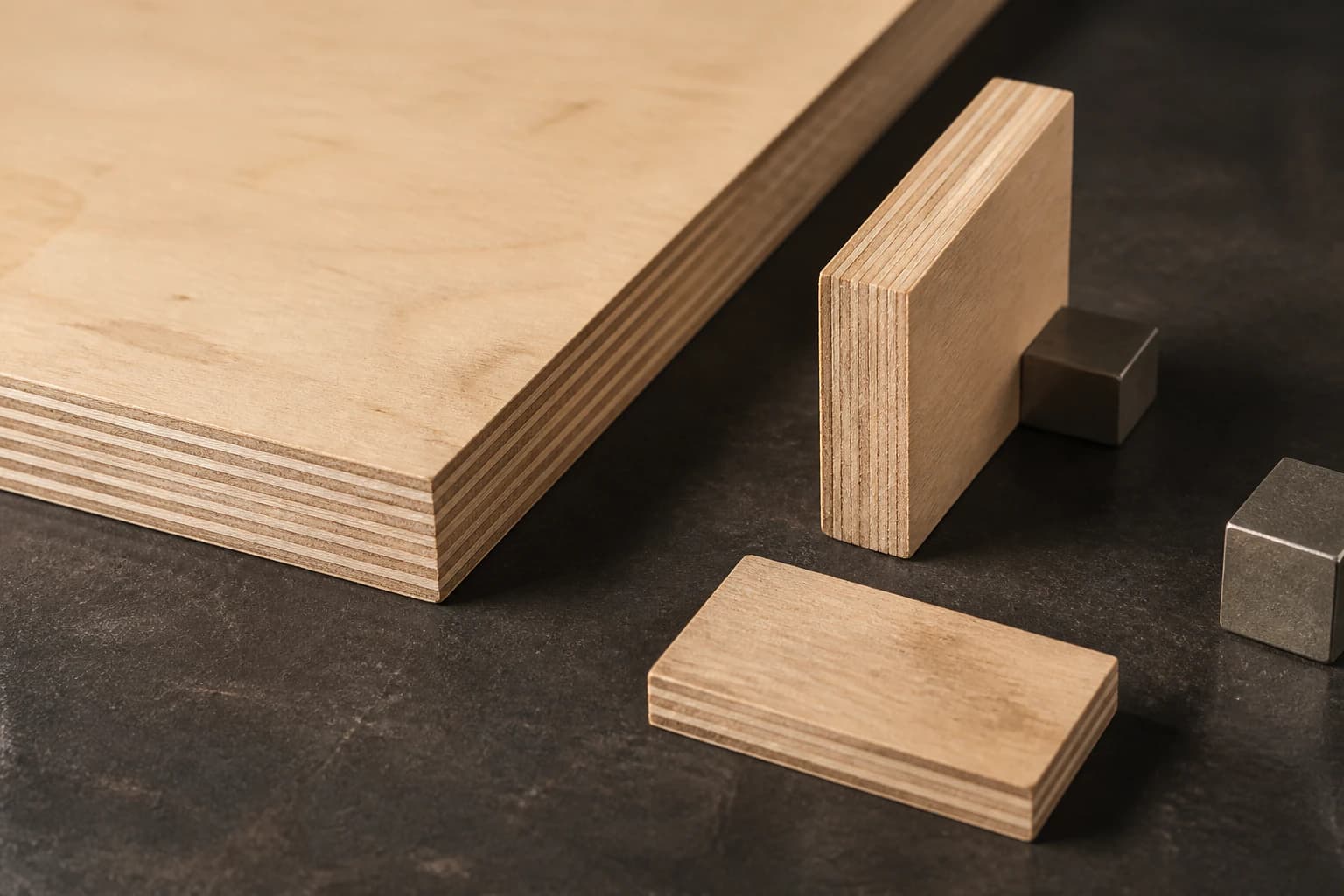
Fire-retardant plywood veneer faces and layered edges
Specify face and core, finished thickness, fire-retardant treatment and final surface together. Include the required classification and installed use so we can confirm the relevant product reports with your quotation.
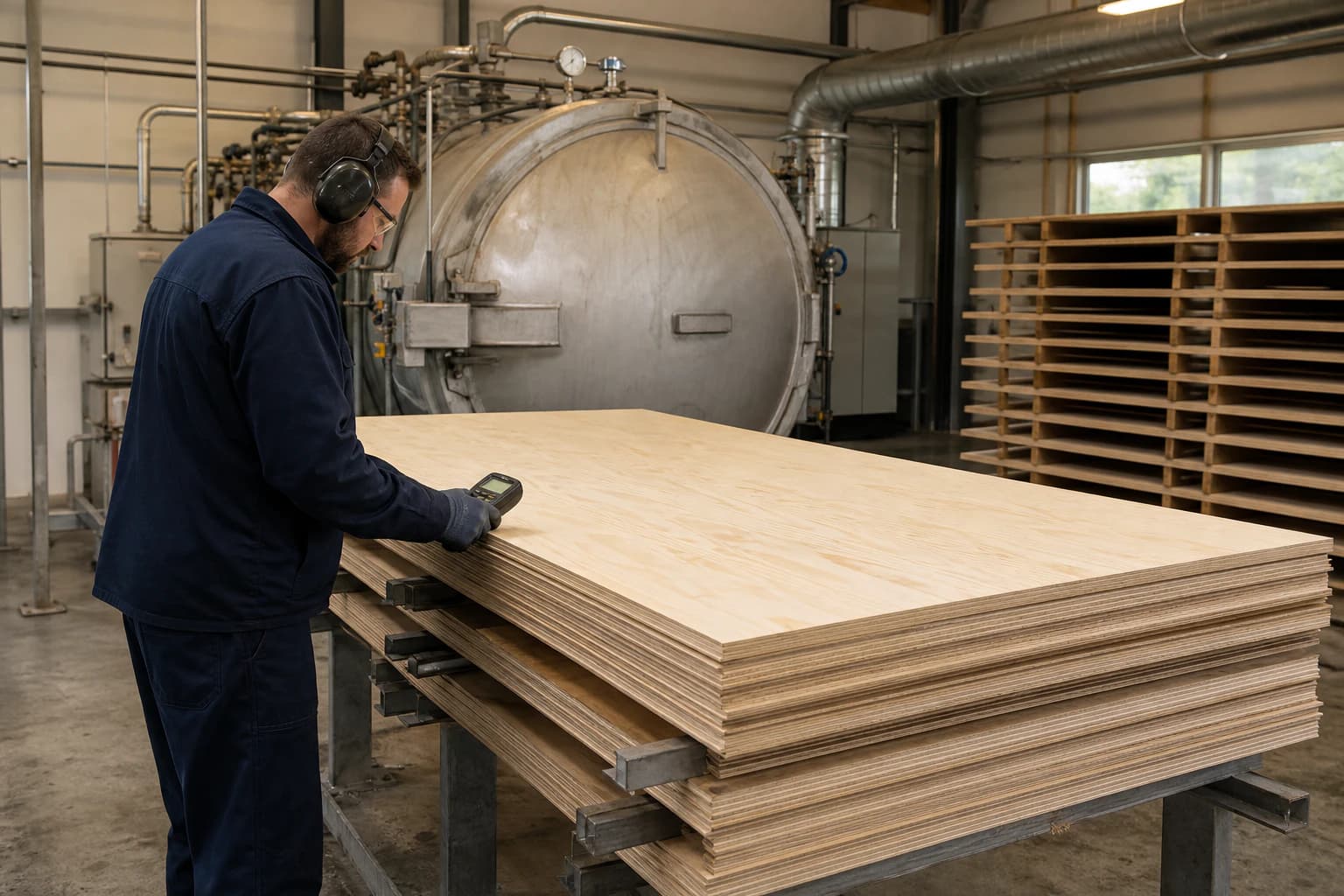
Fire-retardant plywood conditioning before machining
Agree the finished moisture and treatment instructions before cutting or applying a coating. Keep the selected panel, final finish and installation requirements with the product documents for your order.
Discuss the base panel through Fire-Retardant Plywood and any decorative surface through Surface & Overlay Options. A laminate or decorative facing needs to be considered as part of the final construction, not as an assumed continuation of an unfinished panel’s class.
Read plywood fire classification and test reports for the offered product.
Ask for the relevant report and classification information with the quotation. These checks help your project team decide whether the proposed plywood suits its specified use and whether additional assessment or testing is needed.
Product and report identity
Match the report number, issuing laboratory, named manufacturer or holder and product description to the proposed supply. Include referenced annexes and installation instructions.
Panel construction
Read the face and core, adhesive, density, thickness or covered range, and treatment identification. Connect these details to the product offered in your quotation.
Finished surface
Identify the tested facing, paint, coating or laminate and its application information. Include any permitted variations in the final product specification.
Conditioning and test set-up
Check moisture or conditioning, exposed face, orientation, backing, support, fixings, joints and air gap where relevant to the method. These help you compare the tested and installed construction.
Result and permitted applications
Retain the test method and edition, reported metrics, classification and field of application. Use any stated extensions or restrictions rather than assuming every finish and mounting is covered.
Your project and order
Confirm the report information your designer or authority requires. Include the agreed product, finish, instructions and document requirements in the purchase order and delivery identification.
A company management or sourcing certificate answers a different question from product fire performance. Continue with Plywood Testing Methods and Standards & Certifications to plan the required documents.
Include mounting and service conditions before ordering.
Record backing, cavities, orientation, fixing, joints, exposed edges and final facing where relevant. A panel used as a lining is not the same application as a finished floor or a load-bearing assembly. Keep the agreed installation instructions available to the team processing and fitting the plywood.
Custom dimensions
Custom length and width are manufacturing choices within the agreed construction. Order the dimensions your component needs and keep the relevant product range and field of application with the panel. Use the report’s permitted variations and installation specification when thickness, facing, joints or mounting change.
Handling and later changes
Store sheets flat, supported and protected from unsuitable moisture. Follow machining, coating and treatment instructions. Confirm the effect of a proposed substitution or site finish with the project team before changing the specified construction.
Get a quote with the fire requirement included.
Regular sizes: 1220×2440, 1250×2500, 1525×3050 mm. On-request sizes: 1250×3050, 1250×3660, 2100×2800, 1830×3660, 1250×3800 mm. Include the product construction, finished thickness and quantity with your project’s fire requirement.
- Application, destination and the designer’s or buyer’s specification.
- Required method and edition, complete class or assembly duration, and the relevant installation design.
- Face and core, adhesive, treatment, thickness, sheet dimensions and machining requirements.
- Final facing, coating or laminate, processing sequence and service conditions.
- Required reports, classifications, treatment instructions and any additional testing to quote.
- Quantity, packing, delivery point and target date.
Our factory team confirms the offered plywood, relevant available product documents, manufacturing arrangements and export terms with the quotation. For a time-rated building system, retain the designer’s complete assembly specification.
If extra assessment or testing is needed, we agree the responsible issuer or laboratory, the final panel and finish to assess, costs and timing before commissioning. Include your document deadline with the delivery date, and keep the agreed construction and installation requirements in the purchase order so later processing and repeat supply follow the same specification.
- Order quantity & mix
- Tell us the sheet size, thickness mix and quantity you need. We confirm the minimum order and available mix for your selected construction.
- Production lead time
- We confirm the production schedule with your specification, order quantity and sample requirements. Production lead times are planning estimates, not transit times.
- Price & quotation unit
- Currency and price unit stated in your quotation. Your quote is based on the agreed dimensions, construction and quantity. Processing and requested testing are stated separately where applicable.
- Samples
- Tell us the plywood, thickness, finish and delivery country. We confirm sample availability, any sample and courier costs, and dispatch arrangements before proceeding.
- Packing & delivery
- We agree export packing, labels and the loading plan for your order. Share the destination country, named port or delivery point and preferred delivery term. Freight, insurance, duties and taxes are included only when stated in the quotation.
- Payment & order confirmation
- We agree the payment method, currency and any deposit and balance schedule in the quotation or proforma invoice. Your order confirmation sets out the product, quantity, packing and delivery arrangements.
Plywood, treatment and installed use
Questions about plywood fire performance.
Is fireproof plywood the same as fire-retardant plywood?
Fireproof plywood is a common search phrase, but it does not identify a test method or prove that wood cannot burn. Specify fire-retardant plywood with the required classification, finish and installed use. If your project requires noncombustible material, tell us that requirement explicitly rather than substituting a surface-burning result.
What does plywood reaction to fire mean?
It describes how a product contributes to fire development under the relevant test and classification system. The exposed surface, construction and installation can matter. It is different from the time a complete wall, floor or other element performs during fire exposure.
How should I specify EN 13501-1 plywood?
Send the complete required class, intended wall, ceiling or flooring use, finished thickness and surface, and installation details. Request the relevant classification report with its covered product range and field of application. The class belongs to the covered construction and end use, not simply to any plywood with the same colour or a fire-retardant description.
Does ASTM E84 plywood meet an EN fire classification automatically?
No. ASTM E84 reports surface flame spread and smoke developed under its own conditions; EN 13501-1 uses a different classification route. Keep the specified method, edition and reported result with the product. A project asking for EN documentation needs the corresponding EN classification rather than a relabelled ASTM result.
Does an ASTM E84 Class A result establish noncombustibility or a resistance time?
No. A surface-burning classification does not establish noncombustibility or a time rating for a wall or floor. If the specification calls for fire-retardant-treated wood, check its additional requirements, including an extended test where required. For a rated assembly, use the complete system design and accepted test or classification.
How is plywood fire resistance different from fire classification?
Reaction-to-fire classification addresses the product’s contribution to fire development. Fire resistance addresses performance during fire exposure, such as maintaining load capacity or limiting heat and fire passage, for the specified member or assembly. State the required duration and complete construction; do not assign a wall rating from a panel’s reaction-to-fire class.
How should I compare fire retardant plywood vs untreated plywood?
Compare the same base construction, thickness, finish, conditioning and mounting, using the same method. Keep fire results separate from strength, moisture durability and machining requirements. Treatment can improve the intended fire response, but the actual class or result must come from the relevant product documents, not an assumed universal improvement.
Can I paint, laminate or machine fire-retardant plywood?
Tell us the final finish, coating system, machining sequence and exposed edges before ordering. Use the treatment and finishing instructions, and confirm that the final construction is covered by the relevant report or assessment. A decorative laminate or site-applied coating should not be treated as an automatic continuation of the unfinished panel’s result.
Does every custom sheet length need a new fire certificate?
Custom length and width are manufacturing choices within the agreed panel construction. Order the dimensions you need and retain the product range and field of application in the relevant report. Where the finished component changes thickness, facing, joints or mounting, use the report’s permitted variations and the project designer’s installation specification.
Can I use interior fire-retardant plywood outdoors or structurally?
Describe weather exposure, humidity, load and support separately. Confirm the treatment’s service conditions, suitable bond and protection, and any applicable structural design values or treatment adjustments. An interior fire-performance result does not by itself answer exterior durability or structural design requirements.
What should I send CUZI PLY for a fire-retardant plywood quote?
Send the destination and application, required test system and class or assembly duration, panel construction, thickness and sizes, final finish, installation details, quantity and delivery date. Our factory team confirms the offered plywood and relevant available product documents with the quotation, together with the manufacturing schedule, packing and export terms. If extra assessment or testing is needed, we agree the responsible issuer or laboratory, costs and timing before commissioning.
What if my planned finish or mounting is outside the report’s coverage?
Send the final build-up and the proposed change before ordering, including the facing, thickness, backing, joints and air gap where relevant. We review the available product information with your requirements. Your project designer and the relevant report issuer can determine whether a permitted variation, further assessment or testing is needed. Agree that work and its schedule before manufacture rather than choosing a different finish after delivery.
Which fire documents should be agreed before production?
Agree the offered panel identity, treatment and final surface, the required test or classification report and its applicable annexes, and the installation information your project needs. Retain the method and edition and the complete result, not just a shortened class name. Our quotation identifies the relevant available documents and any extra assessment to arrange. Keep these requirements with the purchase order and supplied-panel identification for repeat orders.
Bring your fire requirement to our factory team.
Send the application, classification or test requirement, finished panel construction and destination. We help you define the plywood order and confirm the relevant documents, price, manufacturing schedule and export arrangements.
For a physical panel assessment, specify construction, thickness and finish. We confirm availability, sample and courier costs, and dispatch arrangements. A physical panel for assessment is not a fire classification; request the relevant reports separately.