CUZIPLY
Get a quote
LIGHTWEIGHT PLYWOOD · DIRECT FROM OUR FACTORY

Lightweight plywood. Build more into less weight.

Make room for the features your customers want without letting the interior become unnecessarily heavy. CUZI PLY manufactures lightweight plywood in Linyi, China, for campervan and caravan interiors, cabinets and furniture. Choose poplar or falcata veneers, a decorative face or an ultralight sandwich construction around your component and weight target. Work directly with our factory on the finish, machining, fixing details and export order—so the panel you buy fits the way you build.

Veneer options
Poplar · falcata · decorative faces
Weight planning
Finished kg/m² · kg per component
Order format
Sheets · laminates · machined parts
Made by
CUZI PLY · Linyi, China
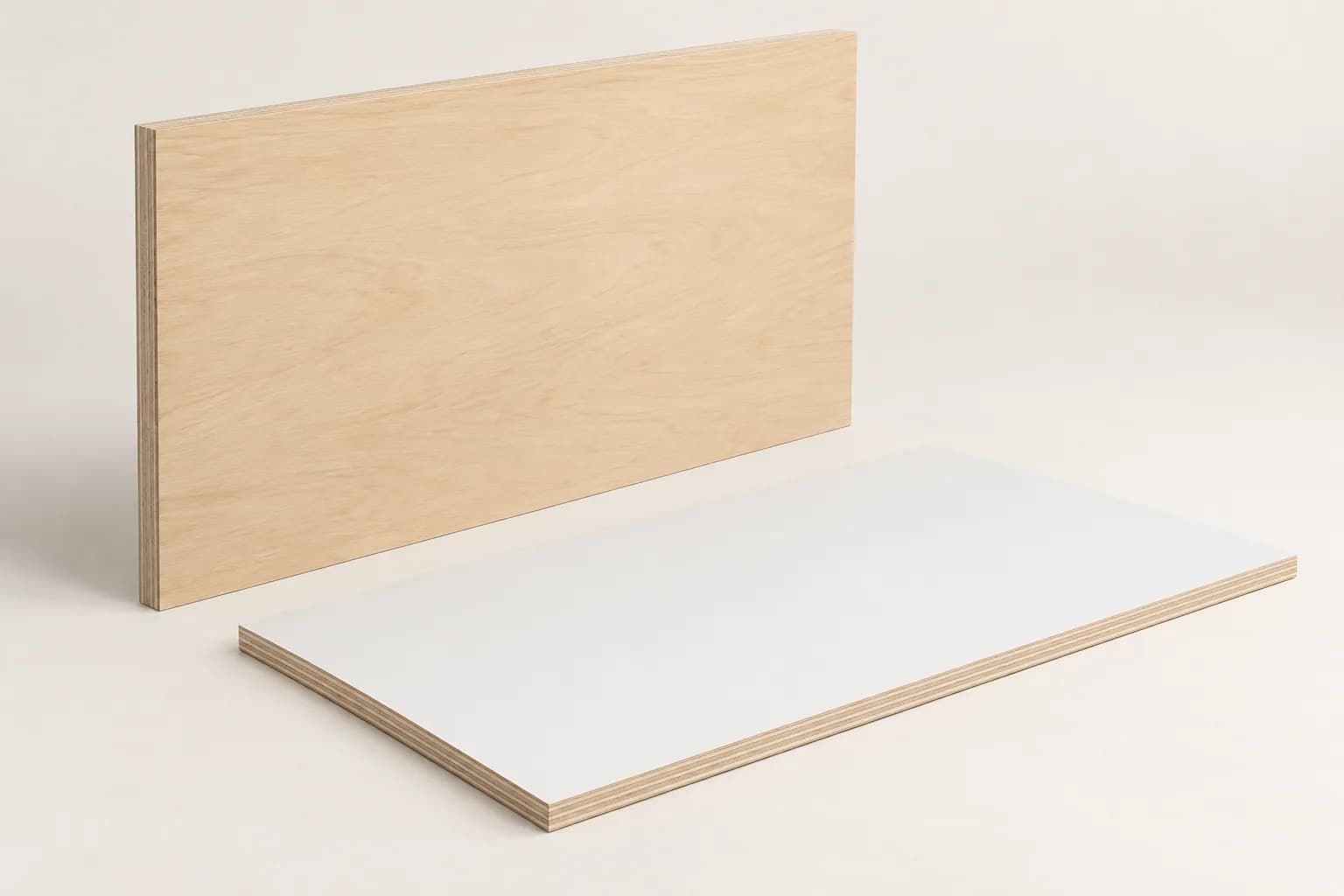
Complete plywood panels with a pale natural wood face and a white laminate face, with veneer layers visible on narrow cut edges
Lightweight plywood with natural and laminated faces

Choose a natural wood face or laminate for the interior you are building. Include the reverse finish, edge treatment and hardware in the component specification, then compare the complete panel’s mass at the required thickness.

Keep the finish. Plan the weight.
CHOOSE THE CORE AROUND THE COMPONENT

Lightweight plywood is more than one construction.

A low-mass interior panel still needs the right face, edge and joint. Start with what you are making, then choose wood veneers or a sandwich core with the finished surface and attachment method included.

Poplar lightweight plywood

Start with a cross-laminated poplar construction for cabinet bodies, interior panels and parts you will paint or laminate. Select the face quality, veneer lay-up and finished thickness around the component, then compare the offered panel mass and fixing performance.

For your enquiry: Poplar face and inner veneers, grade, lay-up, thickness, finished kg/m², finish and joint details.

Falcata lightweight plywood

Choose falcata veneers when reducing panel mass is a priority. Specify whether the face is falcata or a separate decorative veneer, and coordinate the core with edge machining, hardware and loaded areas rather than choosing on weight alone.

For your enquiry: Falcata core and face arrangement, veneer quality, thickness, mass target, machining and fastener locations.

Birch-faced lightweight plywood

Combine a birch wood appearance with a specified lower-density core. A birch face does not mean an all-birch panel: identify the inner veneers and compare the complete finished construction, including any coating or laminate.

For your enquiry: Birch face grade and matching, poplar or other agreed core, reverse face, finish, thickness and finished panel mass.

Ultralight sandwich panels

For larger parts where weight is especially important, specify plywood skins with a lightweight internal core. Define the core material and skin thicknesses, then design edges, inserts and hardware attachment for that sandwich construction. List any reinforcement and additional materials in the order.

For your enquiry: Core material, each skin, overall thickness, finish, reinforced edges, inserts, joint detail and component requirements.

COMPARE THE FINISHED MASS

Compare kilograms, not just the word lightweight.

Specify kg/m² for the finished panel and kg per sheet or component. Keep thickness, veneer and core, decorative layers and moisture condition with the figure. Include edges, reinforcement and hardware when working out the complete assembly weight.

For a full sheet, mass in kg = length in metres × width in metres × finished thickness in metres × complete-panel bulk density in kg/m³. For a 1.22m × 2.44m sheet, use the factors below with the offered construction’s density; the factors are geometry, not measured product weights.

12mm panel weight

kg/m² = 0.012 × complete-panel density.

kg per 1.22m × 2.44m sheet = 0.0357216 × complete-panel density.

15mm panel weight

kg/m² = 0.015 × complete-panel density.

kg per 1.22m × 2.44m sheet = 0.044652 × complete-panel density.

18mm panel weight

kg/m² = 0.018 × complete-panel density.

kg per 1.22m × 2.44m sheet = 0.0535824 × complete-panel density.

Ask for the finished weight your design needs.

For laminated sheets, use the complete faced panel’s bulk density or measured mass—not the bare core’s density. A sandwich panel also needs the skins and internal core considered together. Give your target, tolerance and component cut list; compare calculated values and measured finished-panel figures on the same basis.

THE RIGHT TRADE-OFF FOR THE PART

Keep weight, appearance and the joint in the same decision.

Choose the construction that meets the component’s job with the least unnecessary mass. A lighter core, a different skin or a thinner board changes more than the weight: compare the loaded part, surface and fastening arrangement together.

Lightweight core or all-birch plywood?

Keep the face you want while comparing the inner construction. An all-birch panel and birch-faced poplar or falcata plywood can look similar but differ in mass, rigidity and fastener behaviour. Compare finished parts at the required thickness, span and loading, not just the veneer name.

Compare birch plywood constructions

Wood veneers or a sandwich core?

Cross-laminated wood veneers provide a different edge and fixing arrangement from a low-density sandwich core. Compare component mass after adding skins, laminate, reinforced edges and hardware. The lighter bare panel is not necessarily the lightest complete usable component.

Compare plywood skins and sandwich cores

Plywood, MDF or another panel?

For a lightweight plywood alternative, compare the finished part’s mass, surface, span, joints, moisture exposure and processing. MDF, other wood panels and foam or honeycomb sandwich boards use different machining and attachment details; select the material that fits the complete design.

Compare plywood and MDF for the component
VEHICLE INTERIORS CABINETS AND FURNITURE

Put the weight saving where your design benefits.

Plan each part around its actual use. Lining panels, shelves, cabinet doors and hull components need different thicknesses, joints and exposure specifications; one lightweight board does not make them interchangeable.

Campervan, caravan and motorhome interiors

Plan cabinetry, lining panels and storage around the vehicle’s overall weight budget. Include doors, fittings, appliances and fixings when comparing the finished interior. Match each board to its component, supports, vibration, condensation and cleaning conditions.

For your enquiry: Vehicle interior part list, weight budget, supports, hardware, finish, moisture conditions and destination requirements.

Cabinets and furniture components

Reduce unnecessary mass in cabinet bodies, doors and furniture panels while keeping the appearance your customers expect. Door size, shelf span, hinge screws, routed joints and edge treatment decide which construction and thickness suit the part.

For your enquiry: Part sizes, loads and spans, hinges and joints, face finish, cut list, edge treatment and production quantities.

Interior partitions and display furniture

Make larger panels and movable fittings easier to plan within a component weight target. Include the frame, joints, surface protection and repeated handling. For permanent building work, bring the relevant project requirements into the panel specification.

For your enquiry: Finished assembly size, handling, frame and joints, visible finish, impact conditions and project documents.

Boat interiors and canoe components

Begin with the boat design and the conditions each part will face. An interior cupboard, a canoe hull and a structural marine component need different plywood specifications. Select veneers, bond, thickness, edge protection and applicable marine requirements with the designer’s drawings.

For your enquiry: Interior or hull use, boat drawing, wet exposure, veneers, bond, thickness, supports, finish and required marine information.

Plan plywood for furniture production
FROM LIGHT PANEL TO WORKING COMPONENT

Design the finish and fixings before ordering the core.

Give us the surface schedule and machining drawing with the mass target. Edges, laminate balance, hinge locations and inserts belong in the same factory order as the plywood—not as surprises when your workshop starts assembling it.

Build the fixing into the choice

Identify hinge cups, screw engagement, edge joints, inserts and loaded attachment points before choosing the core. A sandwich panel may need local reinforcement or a filled edge. Evaluate the intended joint and hardware with the offered construction before a production run.

Include both faces and finished edges

Specify laminate or coating on the face and the balancing treatment on the reverse, with adhesive, grain direction and edge finish. Keep the finished thickness and mass in the same specification; a bare-board weight does not include decorative layers or hardware.

Match the panel to exposure and loads

Name humidity, condensation, repeated wetting, cleaning and any exterior exposure. Choose the bond, veneers and protection together. For load-bearing parts, use the required mechanical values and design conditions; low mass does not establish a structural or marine grade.

Keep the weight target with the part list.

Identify each part’s finished dimensions, core, face and reverse finish, grain direction and target or maximum mass. Mark hinge cups, bores, inserts, reinforced areas and edge closure on the drawing, with part codes and revision. Agree which machining, edging, reinforcement and hardware are included, then align labels and packing with the assembly sequence. Check finished surfaces, dimensions, cut edges and the agreed mass basis on receipt.

DEFINE THE PANEL YOUR TEAM WILL BUILD WITH

Turn the component drawing into a clear panel specification.

Start with use, sizes and quantities. Add the mass target, core, finish, joints and processing so the quotation covers the finished board or part, with the product information your team needs for selection.

Lightweight panel and component requirementsMass, cores, decorative surfaces, thickness, joints and project documentsView specificationsHide specifications
Lightweight plywood supply specification
FieldOptions and order requirements
Component and weight budgetName the vehicle, furniture or interior component, with its finished dimensions, loading, support span and target mass. Separate the panel allowance from hardware and the rest of the assembly.
Veneer species and lay-upSpecify poplar, falcata or the agreed inner veneers, with face and reverse species, veneer quality, layer arrangement and grain direction. Do not identify the core solely by the visible face.
Sandwich core and skinsFor an ultralight construction, identify the internal core material, each plywood skin and its thickness, bonding, reinforced areas and edge closure. Keep these dimensions with the finished panel specification.
Overall finished thicknessState 12mm, 15mm, 18mm or the thickness required by the drawing, with tolerance and decorative layers included. A 3/4-inch requirement converts to 19.05mm; agree the required finished thickness rather than silently replacing it with 18mm.
Panel mass and comparison basisSpecify maximum or target kg/m² and kg per stated sheet or component, with finished surfaces and moisture condition. Identify whether values are measured, calculated from complete-panel bulk density or a manufacturing target.
Face and reverse finishChoose natural veneer, clear finish, laminate, colour, texture, sheen and matching. Identify each overlay and adhesive, the balancing reverse treatment and requirements for cleaning and visible surface quality.
Dimensions and nestingProvide sheet or finished component dimensions, squareness, flatness, tolerances, grain direction, quantities and cut-list reference edges. Specify exact millimetres for nominal 4×8-ft orders.
Core continuity and cut edgesAgree permitted gaps and repairs, edge appearance, clean routing and the substrate under joints. Identify exposed veneer edges or the reinforcement and closure needed for a sandwich core.
Hinges, fasteners and jointsProvide screw, hinge, insert and connector requirements, engagement, positions, edge distances and loaded points. Include any local reinforcement, filled edges and hardware machining in the drawing.
Load and stiffness requirementsState the component loading, span, supports, grain orientation and deflection requirement. Request applicable stiffness, bending, fastener or joint information for the offered construction and intended use.
Moisture and service conditionsDescribe indoor humidity, condensation, wetting, drying, cleaning and any outdoor exposure. Specify veneers, bond, coating and edge protection for those conditions and any exterior or marine requirements.
Machining and edge finishList grooves, cut-outs, bores, rebates and routed profiles, with depth and tolerances. Identify edge banding, coating, laminate trimming and whether parts arrive ready for assembly or require further processing.
Emissions, fire and market requirementsName the destination, intended vehicle or building use and the required product documents. Identify plywood, surface, adhesive and core scope; keep vehicle or final-assembly requirements with the project.
Mass check and first componentAgree the finished panel mass basis and tolerance, the dimensional checks and a component or joint evaluation where required. Include the chosen finish, edge treatment and hardware so the check represents the part you will build.
Quantity, protection and deliveryList quantities by core, thickness, finish and part, with labelling and pack sequence. Provide destination, target date, face and edge protection, shipment mix and the delivery terms needed for the quotation.
SHEET FORMATS AND FINISHED PARTS

Choose formats that work with your cut list.

Compare the sheet layout with component sizes, veneer direction, trim allowances and machining. For nominal 4×8-ft or 3/4-inch orders, put exact millimetre dimensions and finished-thickness tolerances in the specification.

Custom length and width are made with the selected product construction. Specify core, skins, finish and service requirements with applicable product documents; dimensions alone do not determine performance.

Review sheet sizes and thicknesses
Regular factory formats
1220×2440, 1250×2500, 1525×3050 mm
Made-to-order formats
1250×3050, 1250×3660, 2100×2800, 1830×3660, 1250×3800 mm
Thickness and finished components
Specify 12mm, 15mm, 18mm or the thickness your component needs. Include decorative layers, tolerances, weight target, cut list, joints and quantities. For sandwich panels, identify skin and internal-core thicknesses separately.
PRODUCT INFORMATION FOR THE PART AND MARKET

Get answers for the way the panel will be used.

Send the component design and destination requirements. We identify the offered core, surfaces, mass basis and processing in the quotation, with applicable product information for your furniture, vehicle interior or project use.

DIRECT FROM THE FACTORY MAKING YOUR PANELS

Get a factory quote around your component schedule.

Compare the same core, thickness, finished surfaces, mass basis and processing scope. Include cut parts, edges, inserts, labels and protection so the price represents the product your workshop will receive.

CUZI PLY is your lightweight plywood manufacturer and direct supplier in China. For export orders, send your delivery location and quantity mix to compare production timing, freight and import responsibilities—not just a bare-sheet price.

Start your lightweight plywood enquiry

  • Component use, loads, supports and finished mass target.
  • Poplar, falcata or sandwich construction; face and reverse finish.
  • Thickness, tolerances, cut list and quantity mix.
  • Edges, hardware, reinforcement, machining and documents.
  • Part labels, protection, destination and target delivery date.

For a sample, identify the finish, cut edge or joint you want to evaluate. We agree the pieces, any sample and courier costs and dispatch arrangements before sending them.

Order quantity & mix
Tell us the sheet size, thickness mix and quantity you need. We confirm the minimum order and available mix for your selected construction.
Production lead time
We confirm the production schedule with your specification, order quantity and sample requirements. Production lead times are planning estimates, not transit times.
Price & quotation unit
Currency and price unit stated in your quotation. Your quote is based on the agreed dimensions, construction and quantity. Processing and requested testing are stated separately where applicable.
Samples
Tell us the plywood, thickness, finish and delivery country. We confirm sample availability, any sample and courier costs, and dispatch arrangements before proceeding.
Packing & delivery
We agree export packing, labels and the loading plan for your order. Share the destination country, named port or delivery point and preferred delivery term. Freight, insurance, duties and taxes are included only when stated in the quotation.
Payment & order confirmation
We agree the payment method, currency and any deposit and balance schedule in the quotation or proforma invoice. Your order confirmation sets out the product, quantity, packing and delivery arrangements.

Your quotation states currency, price unit, quantities, core, finished-panel scope, machining, payment, packing, delivery terms and validity. Production time is separate from shipping transit; freight, insurance, duties and taxes are included only when listed.

BUYER QUESTIONS

Panel weight, interior components and factory purchasing

Questions before you order lightweight plywood.

What makes plywood lightweight?

The complete construction matters: veneer species, density, layer thicknesses, internal core and decorative surfaces all contribute to mass. Poplar and falcata veneer constructions and plywood-skinned sandwich panels are different options. Compare the finished panel at a stated thickness and format, with the strength and fixing details needed by the part.

Is birch plywood lightweight?

Distinguish all-birch plywood from birch-faced plywood with a lower-density core. A birch wood face can be combined with poplar or another agreed core for a lightweight interior panel. Compare the actual finished mass, rigidity and joint performance rather than assuming that every birch-faced sheet has the same construction.

Do you manufacture falcata and ultralight plywood?

Yes. CUZI PLY manufactures lightweight plywood, including specified falcata veneer and ultralight sandwich constructions. Choose face and core, overall thickness, finish, edges and attachment details around the component. The quotation identifies the selected construction and the mass basis for your order.

Should I choose 12mm, 15mm or 18mm lightweight plywood?

Start with the part: a lining, cabinet side, shelf or door has different spans, fixings and loading. Compare the required finished thickness, panel mass, face finish and relevant mechanical information. Decorative layers count toward thickness and weight; reducing thickness alone is not a substitute for checking the component design.

How much does 15mm lightweight plywood weigh in kilograms?

There is no single weight for every 15mm construction. For a 1.22m by 2.44m sheet, the geometric volume is 0.044652m³: multiply this by the offered complete panel’s bulk density in kg/m³ to calculate kg per sheet. See Panel weight for all three thickness factors. Request measured finished mass where weight is important, with the laminate or coating and moisture condition included.

Is 3/4-inch lightweight plywood the same as 18mm?

No: 3/4 inch converts to 19.05mm. A nominal market label and an exact finished-thickness requirement are different. Send the drawing, tolerances, decorative layers and hardware details; agree the actual supplied thickness in the quotation rather than using 18mm as an automatic replacement.

Can I buy lightweight plywood in a 4×8-foot format?

Yes. State the exact millimetre dimensions and tolerances needed for your order, as 4×8 ft is a nominal purchasing description. Choose a regular factory format from Sheet sizes or send a component cut list, with face grain direction, trim allowance and the quantity mix.

Can lightweight plywood be supplied laminated?

Yes. Specify the laminate design, surface performance and thickness, with its adhesive, balancing reverse and finished edges. Compare mass and overall thickness after those layers are included. We manufacture the specified lightweight laminated plywood sheets or processed components for your furniture or interior order.

Which lightweight plywood suits a campervan or caravan interior?

Compare the cabinetry and lining parts separately. Include vehicle weight allowance, shelf and door sizes, hardware attachment, vibration, humidity and cleaning. Poplar, falcata, decorative-faced or sandwich panels offer different choices; coordinate the finished mass, supports and fixing arrangement with the conversion design.

Can I use lightweight plywood for cabinet doors and shelves?

Yes, with a construction and thickness selected for the component. Door proportions, hinge screws, shelf span, loading and edge machining shape the specification. For a sandwich core, identify any reinforced fixing zones or closed edges. Check the intended joint or component with the selected panel before ordering production quantities.

Is lightweight exterior plywood also marine or structural plywood?

These describe different requirements. Low mass does not establish an exterior bond, durable veneers, marine grade or load-bearing classification. Tell us the exposure, boat or building use, loading and required documents so the specified lightweight construction also addresses the service conditions.

What should I order for a lightweight plywood canoe?

Use the boat designer’s specification for the hull and joints, including veneers, bond, thickness, bending, supports, finish and wet exposure. Lightweight interior furniture plywood is not an automatic substitute for a hull panel. Compare the required marine construction and performance before selecting material for the canoe.

What can I use as a lighter alternative to plywood?

First compare the complete finished part. Lower-density veneer plywood, plywood-skinned sandwich panels and other engineered boards use different skins, cores, edge closures and attachment methods. Include decorative surfaces, reinforcement and hardware in the mass comparison, then match moisture and loading requirements.

Can buyers in Australia order directly from CUZI PLY?

Yes. We manufacture in Linyi, China, and quote export orders for Australian buyers, including projects in Sydney, Melbourne, Brisbane and Adelaide. Send the delivery location, quantity, construction, documents and target date so we can set out shipping and import responsibilities. Our factory supplies export orders from China. If you need a few sheets immediately, compare local stock availability with the production and shipping time of a factory order.

What product information should I request?

Ask for the offered face and core construction, finished thickness, mass basis and tolerance, moisture conditions, surface specification and relevant mechanical or joint information. Add destination emission, fire, sourcing and marine requirements where applicable. Custom length and width are specified with the product construction, not treated as a separate certificate for every millimetre.

How can I keep panel weight consistent on repeat orders?

Keep the core, lay-up, finished thickness, face and reverse finish, edge treatment and part drawing with the order reference. State whether the mass requirement is a target or a maximum, with its tolerance, units and moisture condition. Agree how finished panels or parts will be weighed and which layers are included. A changed laminate, insert or reinforcement can change finished mass, so include it when comparing the repeat order.

How should I compare lightweight plywood quotations?

Compare the same usable part list, finished construction and mass requirement. State whether the price is per sheet, square metre or finished component. Include cutting yield, machining, edge finish, inserts, reinforcement, protective packing and delivery terms; identify hardware supplied separately. Compare the delivered usable parts and the work still required in your workshop alongside their specified finished mass.

Is CUZI PLY the factory, and how do I request a quote or sample?

Yes. CUZI PLY is the factory and direct supplier in Linyi, Shandong, China, with 10 production lines across our plywood range. Send the use, component list, weight target, thickness, core, finish, joints, quantities and destination. For a sample, identify the surface, cut edge or fixing you want to inspect. We agree the pieces, any sample and courier costs and dispatch arrangements before sending them.
COMPARE VENEERS FACES AND SERVICE REQUIREMENTS
LESS UNNECESSARY WEIGHT MORE ROOM FOR YOUR DESIGN

Bring us the parts for your next interior.

Send the component list, weight target, core, finish, joints and quantities. Our factory team will help prepare a clear lightweight plywood quotation for your furniture or vehicle interior order.