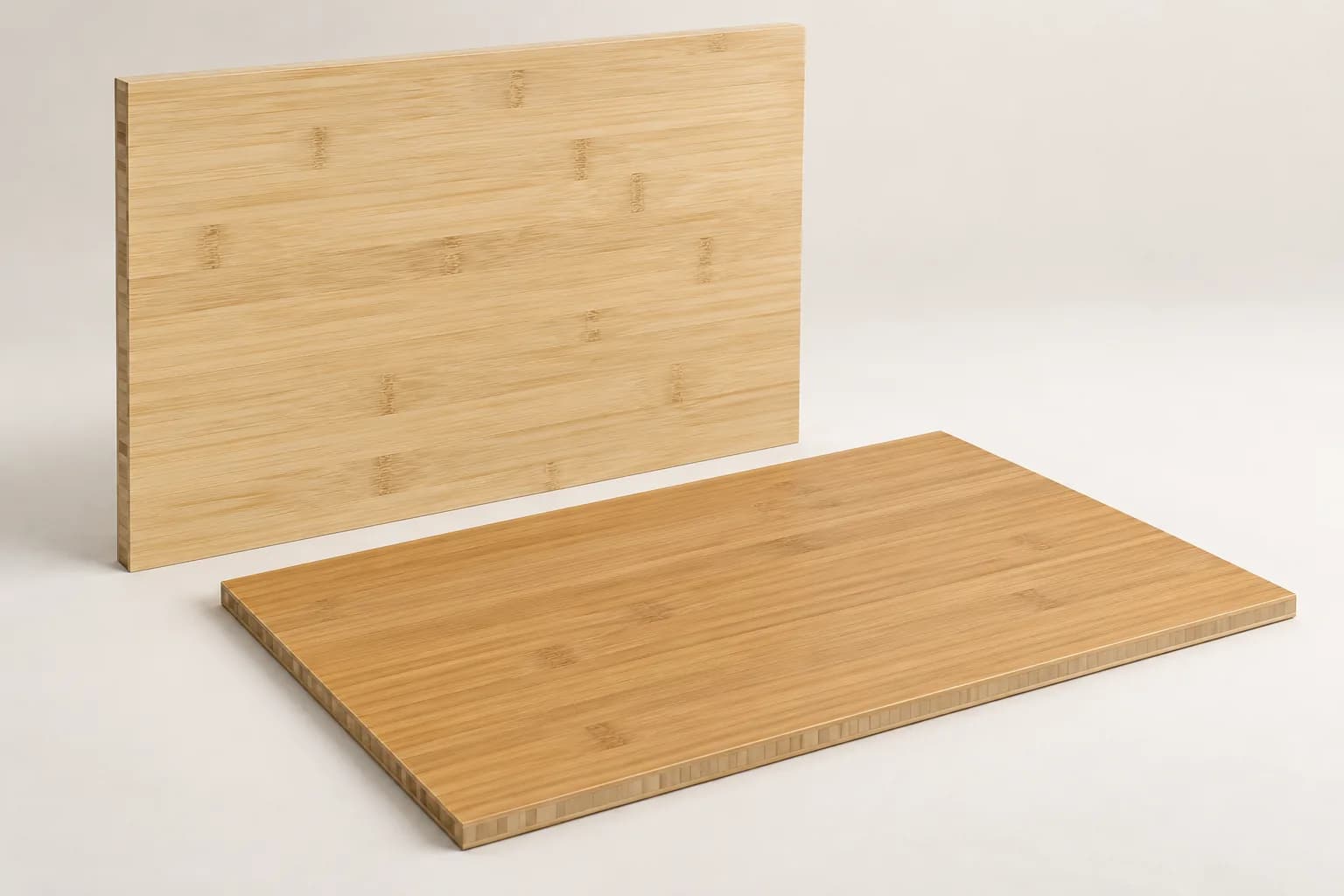
What is bamboo plywood?+
Bamboo plywood is an engineered panel made with bonded bamboo layers, or bamboo faces combined with a specified wood-plywood core. The lay-up, grain directions and face arrangement determine the construction you are buying. Choose those details with the finished thickness, edge appearance and component use.
Does CUZI PLY manufacture bamboo plywood?+
Yes. CUZI PLY is the factory and direct supplier in Linyi, Shandong, China, with 10 production lines across our plywood range. We manufacture bamboo plywood to your selected construction and appearance, with full-sheet, cut-to-size and machining requirements included in the factory order.
What is the difference between horizontal and vertical bamboo grain?+
Horizontal, flat or plain-pressed faces show the broader face of the bamboo strips and their node pattern. Vertical, edge or side-pressed faces have a narrower linear strip appearance. These describe how the face looks; specify cross-grain or linear inner layers separately and mark the face grain arrow on the component drawing.
Should I choose all-bamboo or bamboo-faced wood plywood?+
Compare the component’s face, exposed edges, weight, machining, joints and relevant mechanical requirements. An all-bamboo panel has bamboo layers through its build-up; a bamboo-faced wood panel has a separately specified wood core. Tell us which edges are visible and how the part is supported and fixed so the quote covers the construction you need.
Can I order bamboo plywood cut to size?+
Yes. Send a part list with finished dimensions, quantity, thickness, presentation face, grain direction and tolerances. Include matching sets, reference edges, banding or trim allowance, and any drilling or routed detail. We confirm the cut-to-size scope, part labels and packing sequence with your quotation.
Can you cut, drill and route bamboo plywood components?+
Yes. Provide the component drawing, datum face and edge, hole locations, cut-outs, groove depths and required tolerances. Identify the intended hinge or joint and which faces or edges will remain visible. Your quotation lists factory processing and any finishing or assembly your workshop will complete.
How should I specify natural and caramel colours?+
State the tone, grain style, coating and acceptable variation together. Natural bamboo and a warmer caramel appearance can look different after coating, and adjoining doors or panels benefit from matching sets. Mark the sequence on the cut list and include the reverse and exposed-edge appearance.
Which thickness and sheet format should I order?+
Choose finished thickness around the part’s span, loading, hinge and joint details, with dimensional tolerances. Use the regular or made-to-order formats in Sheet sizes, or give us a component cut list. A 4×8-ft label is a nominal buying description; write the actual millimetres. Custom length and width follow the selected product construction and its applicable documents.
Can bamboo plywood be supplied with a finished surface?+
Yes. Specify sanding, coating, colour and sheen, with the cleaning and wear requirements of the finished furniture or interior. Include the reverse and all exposed edges in the finish schedule. Check the coating appearance and compatibility on the chosen construction before ordering matching production parts.
Is bamboo plywood suitable for outdoor or load-bearing work?+
Those uses need a construction specified for the exposure, loading, supports and project requirements. This page focuses on furniture and interior panels. For outdoor or load-bearing work, send the design, wetting conditions and required mechanical and bonding information so our factory team can address that application in the quotation.
Which bamboo plywood documents should I request?+
Ask for the supplied layer construction, thickness, finish and relevant bonding, emission or mechanical information, with destination sourcing and fire requirements where needed. Use documents for the supplied product and intended use. Custom length and width are manufacturing dimensions, not a new certification requirement for every millimetre.
How do I compare full-sheet and cut-to-size bamboo plywood prices?+
Compare the same finished part list, construction, grain, colour and coating—not only the sheet price. Grain direction and adjoining matching sets can affect how many usable parts come from a sheet. Include cutting, machining, edging, labels, protective packing and delivery, then account for the finishing and assembly still done by your workshop. Ask for the price unit and included work to be listed so a sheet quotation and a processed-component quotation are comparable.
How do I keep grain and colour consistent on repeat orders?+
Keep the face style, natural or caramel tone, layer construction, coating, sheen and acceptable variation with the order reference. Use the same part codes, drawing version, grain arrows and matching-set sequence for the next run. Bamboo has natural colour and grain variation; define which adjoining surfaces must match rather than expecting every panel to be identical. If adding parts to an existing installation, identify the surfaces and finish they need to match before we prepare the quotation.
How do I get a price or request a bamboo plywood sample?+
Send the component use, construction, face grain, colour, thickness, dimensions, quantity and destination. Add the cut list, edge detail and processing requirements so the price covers full sheets or finished parts on the same basis. For a sample, tell us which face, colour or cut edge you want to evaluate; we confirm the pieces, any sample and courier costs and dispatch arrangements with you.