Plywood vs solid wood, blockboard, LVL and CLT.
Choose the material for the part you are making, not just a familiar board name. Veneer plywood, solid-strip blockboard, solid timber, LVL, CLT and fibre-based boards have different inner constructions. A decorative surface can make them look similar without making their machining, joints or installation the same.
Compare the visible finish, supports, fixings, moisture conditions and cost of the completed component. CUZI PLY is your plywood manufacturer and direct supplier, with 10 production lines in Linyi, China. Bring us the part you need to make; we can help select its plywood face, core and processing.
The same panel outline can hide a different material.
Use the construction and intended job to narrow the choice. Then compare the actual grade, dimensions and complete finishing or installation work.
On a phone, swipe across the table to read every column.
| Material | Inner construction | What to compare for your part |
|---|---|---|
| Veneer plywood | Bonded wood veneers, commonly arranged with alternating grain directions. | Select face, inner core, bond, finished thickness, machining and grade for the panel's job. |
| Blockboard | A solid-wood strip core with veneer layers on its faces; a core-plywood construction. | Compare strip direction, face build-up, inner joints, supports and the fixing locations in the actual part. |
| Solid wood | Sawn timber, or pieces edge-glued into a wider solid-wood panel, rather than thin veneer plies. | Plan species, grain, moisture movement, joinery and finishing for the component. |
| LVL | Laminated wood veneers oriented primarily along the length of a structural member. | Use the specified member grade, dimensions, design properties, connections and structural design. |
| CLT | Large engineered timber panels with crossing layers, typically made from lumber laminations. | Choose the complete structural panel, lay-up, supports, connections and building-system details. |
| Hardboard | Wood fibres consolidated into a panel under heat and pressure, not layers of wood veneer. | Specify the grade, surface, thickness, fastening and backing for a lining, door skin or other part. |
| Bamboo panels | Bamboo strips or other specified bamboo elements bonded into a selected panel construction. | Compare strip pattern, layer direction, colour, finished weight, machining and coating. |
| Fibre cement | A cement-based sheet reinforced with fibres, rather than a bonded wood-veneer panel. | Follow the selected product's use, support, fixing, joint, cutting and finishing instructions. |
Plywood is manufactured wood, not its opposite. Manufactured or engineered wood is a wider description that includes different wood-based products. For veneer construction, faces and cores, start with Plywood Types, Construction & Uses. Compare fibre and particle substrates in our Plywood vs MDF, Plywood vs Particleboard and Plywood vs OSB guides.
Plywood vs blockboard: compare the core and the joints.
Blockboard has solid-wood strips inside its veneered faces. In wider panel terminology it is a core-plywood construction; here the comparison is with veneer plywood made from sheets of wood veneer.
Shelves, doors and furniture parts
For blockboard, identify the strip species and direction, strip joints, face build-up and any inner gaps. For veneer plywood, identify the face species, inner veneer arrangement and bond. Give the load, clear span, supports and acceptable deflection for a shelf, and the hinges or other fixings for a door.
Compare the machined part with its edging, joints and finish. A solid-strip core and a layered veneer core can need different fixing and routing details. See Furniture Grade Plywood for our plywood component options.
Marine plywood vs plyboard
“Plyboard” on an offer is not enough to identify the construction. Ask for the layer description or a cut-edge photograph: is it veneer plywood, strip-core blockboard or another board? Then put the actual material and grade beside the dimensions and finish.
For a marine plywood comparison, include the veneer faces, inner core, bond, exposure, cut-edge protection and required product documents. Our Marine Plywood and Marine vs Exterior Plywood pages help define the plywood specification.
The DYAS panel terminology distinguishes veneer plywood, core plywood and solid-strip blockboard. Use a written construction description to make your comparison clear.
Plywood vs solid wood, including birch wood.
Birch names a wood species. Plywood names a panel construction. Solid birch, birch-faced plywood and all-birch plywood are three different starting points for a component.
Choose timber for the joinery you want
Solid wood keeps the timber's grain through the piece; wider panels may be edge-glued from timber sections. It can suit grain-led joinery and shaped parts. Plan the species, grain orientation, moisture condition and joints around the finished component.
Wood changes dimensions as moisture changes, most notably across the grain. The WoodWorks shrinkage explanation describes that direction-dependent movement. For furniture, include the movement allowance and the fitting method in the design.
Choose veneer plywood for the sheet-cut part
Veneer plywood uses thin wood layers, commonly in crossing directions. Specify the natural face, inner core, finished thickness and visible cut edge for cabinet parts, shelves or other sheet-cut components.
A birch face can sit over a different core; all-birch describes the veneer construction more fully. Use Birch Plywood, Baltic Birch Plywood and Core Materials & Species to plan the face and core. Compare naming in Birch vs Baltic Birch Plywood.
Plywood vs LVL and CLT: start with the structural job.
Wood layers do not make these products interchangeable. Choose the product, grade and connections that the project's structural design calls for.
LVL and veneer plywood
Laminated veneer lumber uses bonded wood veneers oriented primarily along the member length. It is used for structural members such as beams and headers. Veneer plywood commonly crosses grain directions within a sheet panel.
The APA LVL description explains its member construction. A plywood sheet is not an ordinary replacement for a specified LVL beam; compare the actual design properties, dimensions, loads and connections with the project engineer.
CLT and veneer plywood
Cross-laminated timber is a large engineered timber panel, typically made from crossing lumber laminations, rather than thin wood veneers. Some CLT specifications also permit structural-composite-lumber laminations. It is a different product and structural system from a conventional plywood sheet.
The APA CLT guide describes its wall, floor and roof roles. Compare the panel lay-up, supports, connections, openings and assembly details required by that system.
For plywood sheet-panel work: tell our factory the sheathing, deck, wall or other panel role, with the required rating, orientation, support layout and project documents. See Structural Plywood and Structural Construction Applications for the plywood route.
Plywood vs hardboard is not hardwood vs softwood.
Hardboard is a fibre-based panel. Hardwood plywood is a wood-veneer product with a specified face and core. Similar names do not describe the same construction.
Linings, skins and backing parts
Hardboard uses wood fibres consolidated under heat and pressure. Applications include furniture components, door skins, wall panelling, underlayment and perforated boards. Select the actual grade, surface and fastening arrangement for that role.
The Composite Panel Association's hardboard page explains the fibre construction and uses.
Veneer-faced components
For plywood, choose the natural veneer face and core, finished thickness, machining and edge appearance. If a thin board is replacing a hardboard back or lining, check how it sits in grooves, how it is supported and which face will show.
Our Hardwood Plywood and Furniture Grade Plywood pages describe the plywood choices; a furniture lining and a load-bearing panel need different specifications.
Marine plywood vs fibre cement, including HardieFlex.
Fibre cement is a cement-based sheet reinforced with fibres. Marine plywood uses bonded wood veneers. Choose around the wall, soffit, ceiling or other component and its installation, not a general “wet-area board” description.
Identify the specified fibre-cement product
HardieFlex is a James Hardie product name, not a marine plywood grade. James Hardie describes its fibre cement as a cement, sand and cellulose-fibre formulation, and Hardie Flex Sheet as a flat cladding and soffit product. Use the relevant regional specification and installation instructions for the selected sheet.
Plan the plywood component
For a plywood alternative, describe the exposure, required fire or other performance, supports, fixings, joints, coating and handling weight. Include openings, cut-edge protection and how the assembly drains and dries.
Use Marine Plywood for veneer and bond selection, or T1-11 Plywood Siding when the grooved timber appearance is part of the wall design. The chosen product and complete assembly must suit the project's requirements.
Before a material change: compare the specified product documents, structural role, support and fixing system, fire and moisture requirements, finish, maintenance and total installed cost. Use the selected material's cutting-safety and installation guidance; do not carry over another board's tooling or fixing details without checking them.
Bamboo plywood vs wood plywood: choose the visible character and construction.
Bamboo strip patterns and wood veneers give different face and edge appearances. Compare the offered panel's layer arrangement, finished weight and processing as well as the colour.
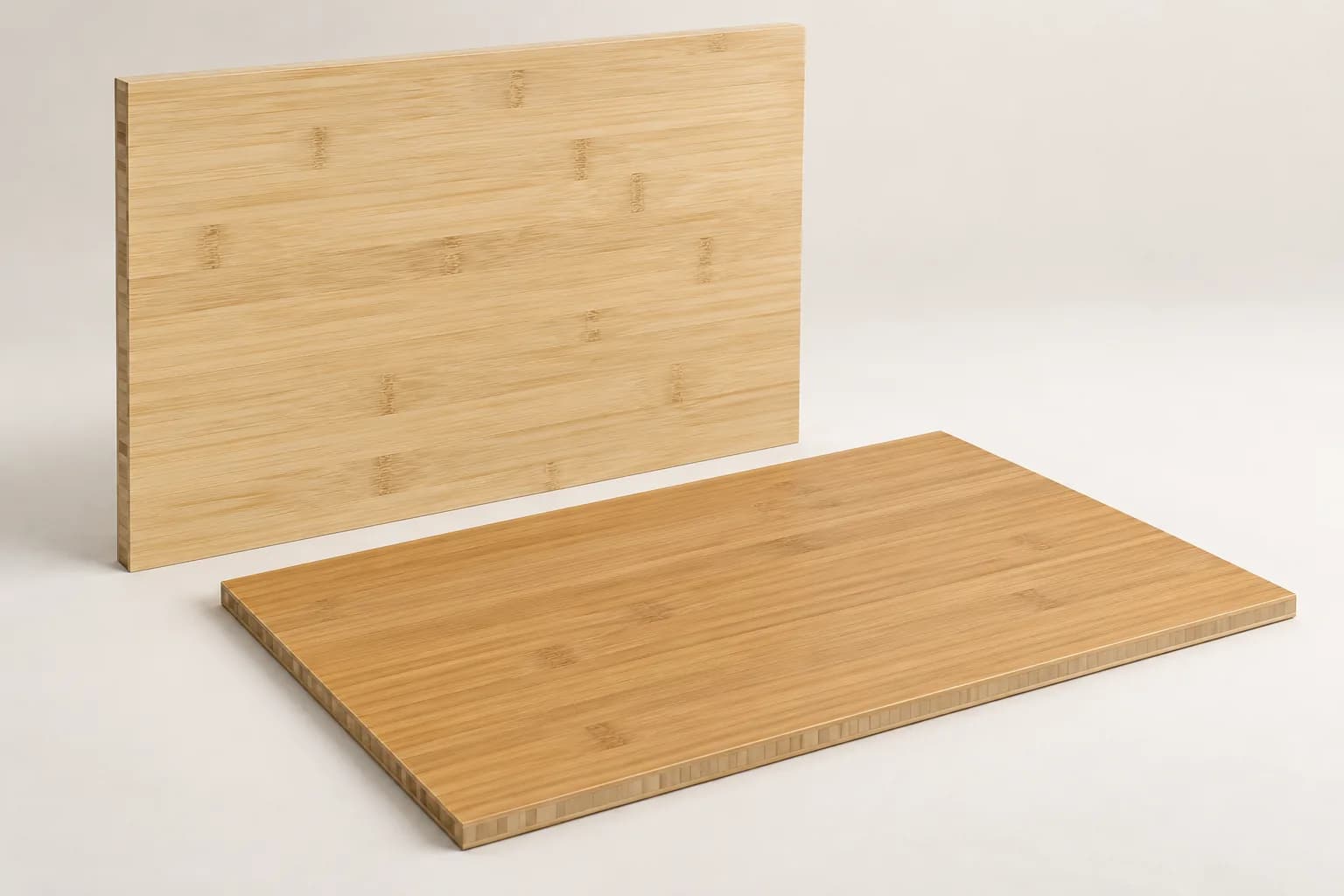
Agree the complete bamboo panel
Bamboo panels can be made from bonded strips in different layer arrangements. The MOSO solid-panel description shows that bamboo panels are a family of constructions, not one universal density or strength.
CUZI PLY manufactures Bamboo Plywood. Tell us the face pattern, natural or caramel colour, finished dimensions, visible edge, machining and coating you want. We confirm the construction, finish and order requirements with you.
For a wood-veneer option, select the face species and inner core separately. Compare equal finished dimensions and use the offered sheet mass or relevant grade properties for weight and loading decisions.
Select special plywood by the finished component.
Thin veneer panels, sandwich cores and metal-faced plywood address different fabrication needs. Put the layers, edges, supports and connections on the component drawing.
Thin birch and aircraft plywood
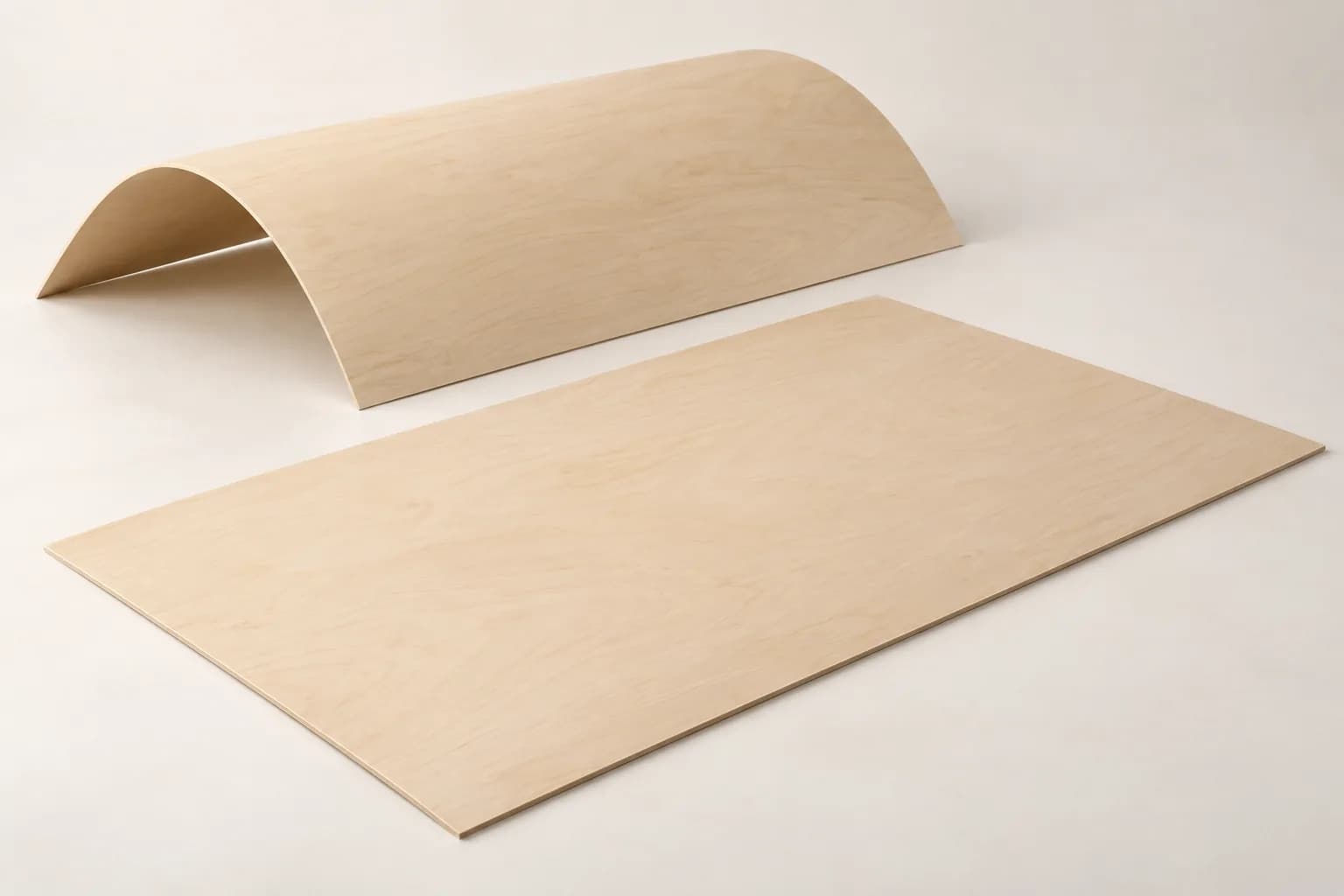
For lightweight skins, precision parts or a formed component, agree the veneers, finished thickness, flatness, bond, grain direction and machining. Include the forming radius, adhesive, support and finished-weight target where relevant.
Our Aircraft Plywood page covers thin-veneer production choices. For flight-critical parts, provide the required material specification, qualification and test documents with the project requirements so these can be discussed with the order.
Composite and sandwich panels
A plywood skin over a honeycomb or foam core, and an aluminium face bonded to plywood, are different layer systems. Describe the complete construction, edge closures, inserts, local supports, machining and finish. See Composite Plywood Panels for our component options.
A useful comparison includes production work and delivery.
Start with the same component drawing and conditions of use. Then compare the board, surface, joints, machining, installation and usable yield that each option needs.
Finished part and cutting yield
Compare the same component dimensions, finished thickness and appearance. Include grain or decor direction, trimming, kerf and the number of usable parts from the offered sheet or timber format.
Surface, edges and processing
Include veneer or coating, reverse-face balance, edging, drilling, routing and assembly work. Price the finish your customer receives, not a raw board against a ready-finished component.
Fit, supports and handling
Compare the installed thickness, hardware, supports, finished weight and handling method. A material change can alter joints, fixing details and transport payload as well as the purchase price.
Order and delivery basis
Use the same quantity, currency and delivery term. Include protective packing, freight and stated destination charges, and discuss production timing separately from transit time.
CUZI PLY plywood formats: regular 1220×2440, 1250×2500, 1525×3050 mm; on request 1250×3050, 1250×3660, 2100×2800, 1830×3660, 1250×3800 mm. Choose the sheet format around your cutting layout and tell us the finished thickness, construction and quantity.
For a wall, ceiling or floor, compare cost per completed installed area using the same design. Include supports, joints, fixings, cutting waste, finishing, handling and installation as well as the supplied sheet price.
Use our Plywood Price Guide for quotation units and delivery costs, then prepare the order details below for your plywood enquiry.
Agree the construction, component and purchase terms.
Changing the material should give you a part that fits your production and project. Share what you already know; our factory team will help complete the plywood specification and quotation.
Describe both complete materials
Put the current material and proposed plywood specification beside the component drawing. Include face, core or inner layers, grade, finished thickness and tolerance, sheet format and grain direction. A matching face colour or thickness does not describe the whole board.
Compare properties on the same basis
Use data for the offered grade, thickness, loading direction and service conditions. Compare the test method, conditioning and reported property; a design value, a declared minimum and an individual test result are not interchangeable. For weight, use finished sheet mass at the same dimensions.
Check the finished component
Include routed grooves, drilled holes, edge treatment, hinges, inserts, joints and coating. Check dimensional fit and assembly with the intended supports and hardware. For a structural change, have the project designer check the proposed product and connections against the required performance.
Agree the plywood order with our factory
Send quantity, destination, delivery date and any required product or project documents. We help select the plywood construction and finishing, then confirm quotation units, packing, payment terms and sample arrangements. Keep the agreed material and processing details with repeat orders.
Use Plywood Testing Methods to compare performance information and Bonding & Emission Options to describe the intended exposure and interior requirements. These are the shared purchase conditions to agree with CUZI PLY:
- Order quantity & mix
- Tell us the sheet size, thickness mix and quantity you need. We confirm the minimum order and available mix for your selected construction.
- Production lead time
- We confirm the production schedule with your specification, order quantity and sample requirements. Production lead times are planning estimates, not transit times.
- Price & quotation unit
- Currency and price unit stated in your quotation. Your quote is based on the agreed dimensions, construction and quantity. Processing and requested testing are stated separately where applicable.
- Samples
- Tell us the plywood, thickness, finish and delivery country. We confirm sample availability, any sample and courier costs, and dispatch arrangements before proceeding.
- Packing & delivery
- We agree export packing, labels and the loading plan for your order. Share the destination country, named port or delivery point and preferred delivery term. Freight, insurance, duties and taxes are included only when stated in the quotation.
- Payment & order confirmation
- We agree the payment method, currency and any deposit and balance schedule in the quotation or proforma invoice. Your order confirmation sets out the product, quantity, packing and delivery arrangements.
Plywood and other material choices
Questions before you change the material.
Is plyboard always the same as blockboard?
Do not choose by that trade word alone. Identify whether the quoted board has wood-veneer plies, a solid-wood strip core or another construction. An edge photograph and a written layer description help resolve the name before comparing thickness, finish, grade and price.
How should I compare marine plywood and plyboard?
First identify what plyboard means in the offer. If it is blockboard, compare its solid-strip core with the marine plywood's veneer construction. Then compare the intended use, faces, core, bond, finish, cut-edge protection and required product documents. Send those conditions to CUZI PLY for a marine plywood specification and quote.
Is blockboard or plywood better for a long shelf?
Compare the actual shelf dimensions, clear span, supports, load and acceptable deflection. For blockboard include strip direction and fixing locations; for veneer plywood include core, ply arrangement and orientation. Select the offered grade and thickness for the supported shelf rather than assuming one material name guarantees a sag-free design.
Is plywood different from manufactured wood?
Plywood is one type of manufactured or engineered wood panel. The wider description also includes products with different constructions, such as fibreboard, particleboard and laminated timber products. Specify the actual material, layers and grade when ordering.
Is birch wood the same as birch plywood?
Birch names a wood species, while plywood describes a panel construction. Solid birch is timber; birch-faced plywood has a birch veneer surface and may use another wood in the core. All-birch plywood specifies birch through the veneer construction. Tell our factory which face, inner core, visible edges and finish your part needs.
Should I choose solid wood or plywood for furniture?
Choose for each component. Solid wood can suit grain-led joinery and shaped parts; veneer-faced plywood can suit sheet-cut cabinet parts, natural faces and selected layered edges. Compare moisture movement, joints, hardware, finish, usable yield and complete component cost with the drawing you will manufacture.
Can an ordinary plywood panel replace an LVL beam?
An LVL beam and a plywood sheet are different structural products. LVL veneers are oriented primarily along the member length; veneer plywood commonly uses crossing directions. A structural substitution requires the specified grade, design properties, member dimensions, loads and connections to be reviewed in the project design.
Is CLT just thick plywood?
No. CLT is a large engineered timber panel, typically formed from crossing lumber layers, whereas veneer plywood uses thin wood veneers. Their lay-ups, dimensions, design properties, connections and installation are different. Choose the product specified for the structural system rather than comparing thickness alone.
Is hardboard the same as hardwood plywood?
No. Hardboard is a wood-fibre panel; hardwood plywood uses wood veneers, with the face and core specified separately. Hardboard can serve lining, furniture-component or door-skin roles in an appropriate grade. Compare the surface, thickness, support and fastening for the particular part.
Should I use marine plywood or fibre cement for a wall or ceiling?
Start with the complete wall or ceiling system: location, moisture, required fire or other performance, supports, joints, fixings, coating and handling weight. Fibre cement and marine plywood have different constructions and installation requirements. Use the selected product's documentation with the project specification; a marine label alone does not define the finished wall or ceiling.
Is HardieFlex another name for marine plywood?
No. HardieFlex is a James Hardie fibre-cement product name, not a wood-veneer plywood grade. Check the relevant regional product and its installation guidance when it is specified. For a plywood alternative, give our factory the component and complete performance requirements so the construction, finish and fixing details can be discussed.
Is bamboo plywood stronger or lighter than wood plywood?
Compare the offered constructions at the same finished dimensions and use conditions. Bamboo strip arrangement, layer direction, processing and surface finish differ, as do wood-veneer species and plywood cores. Use the relevant grade properties or finished sheet mass for the comparison, not the bamboo or wood name alone.
Does the name aircraft plywood make a part suitable for flight?
Select thin plywood for the component and its fabrication requirements. A flight-critical application needs the required material specification and qualification within that project's approval process. Agree veneer construction, thickness, bond and required tests with the order; the product name alone is not an airworthiness approval.
What should I send CUZI PLY when changing to plywood?
Send the current material description and component drawing, finished dimensions, visible faces and edges, machining, hardware and supports. Add loads, weight targets, moisture conditions and required documents, plus quantity and destination. Our plywood factory can help choose the face, core, surface and processing, then arrange a plywood sample and quotation.
Can the same thickness be used when I change the board material?
The same thickness may preserve a groove or hardware fit, but does not establish the same stiffness, strength, fixing capacity or finished weight. Compare the offered constructions, grade data, supports and joints for the component. Include the finished thickness tolerance when agreeing the machining.
Which documents should I request for a plywood alternative?
Send the material specification or project clause you need to meet. Request the relevant product declaration, certificate or test report and check the product family, construction, grade, property and intended use it covers. For load-bearing work, include the required design properties and installation details; for interior components, include the specified emissions and finish requirements.
How do I compare prices for different wood materials?
Compare the same finished part or completed installed area. Include cutting yield, surface finishing, edges, machining, hardware, installation, packing and delivery, not just the raw board price. Use the same quantity, currency, destination and delivery term, then compare the cost per usable component.
Find the plywood construction for the part you make.
CUZI PLY manufactures plywood in Linyi. Share your current material and component requirements; we will help choose the face, core, surface and processing for your order.
- Component drawing, dimensions, finished thickness and visible faces or edges.
- Machining, joints, hardware, supports, loads and moisture conditions.
- Quantity, destination, delivery timing and required product documents.
We can discuss the plywood construction and finishing with your quotation, then confirm sample availability, costs and courier arrangements before dispatch.
Need to describe the plywood in a purchase order? Use How to Specify Plywood, Surface & Overlay Options and Standards & Certifications to prepare the product and project requirements.